Abbadia Lariana

Edited by:
Massimo Martini
Access
The municipality can be reached by car via the state road of Lake Como and Spluga, which runs along the eastern shore of the lake with a dedicated junction to the town centre. Motorway access is from the Milan-Venice motorway via the junction to Lecco and the subsequent entry onto the , or from the Milan-Varese motorway via the connection to the Cinisello Balsamo junction. The Abbadia Lariana railway station is on the Milan-Lecco-Sondrio-Tirano line, served by Trenord with frequent regional connections to Lecco and the Valtellina. Public transport by road is guaranteed by extra-urban bus services connecting the municipality to Lecco and the towns in the foothills of the Alps. In conditions of heavy traffic or heavy rainfall, the can be slowed down in sections with tunnels and in high altitude variants, particularly in summer.
.Introduction
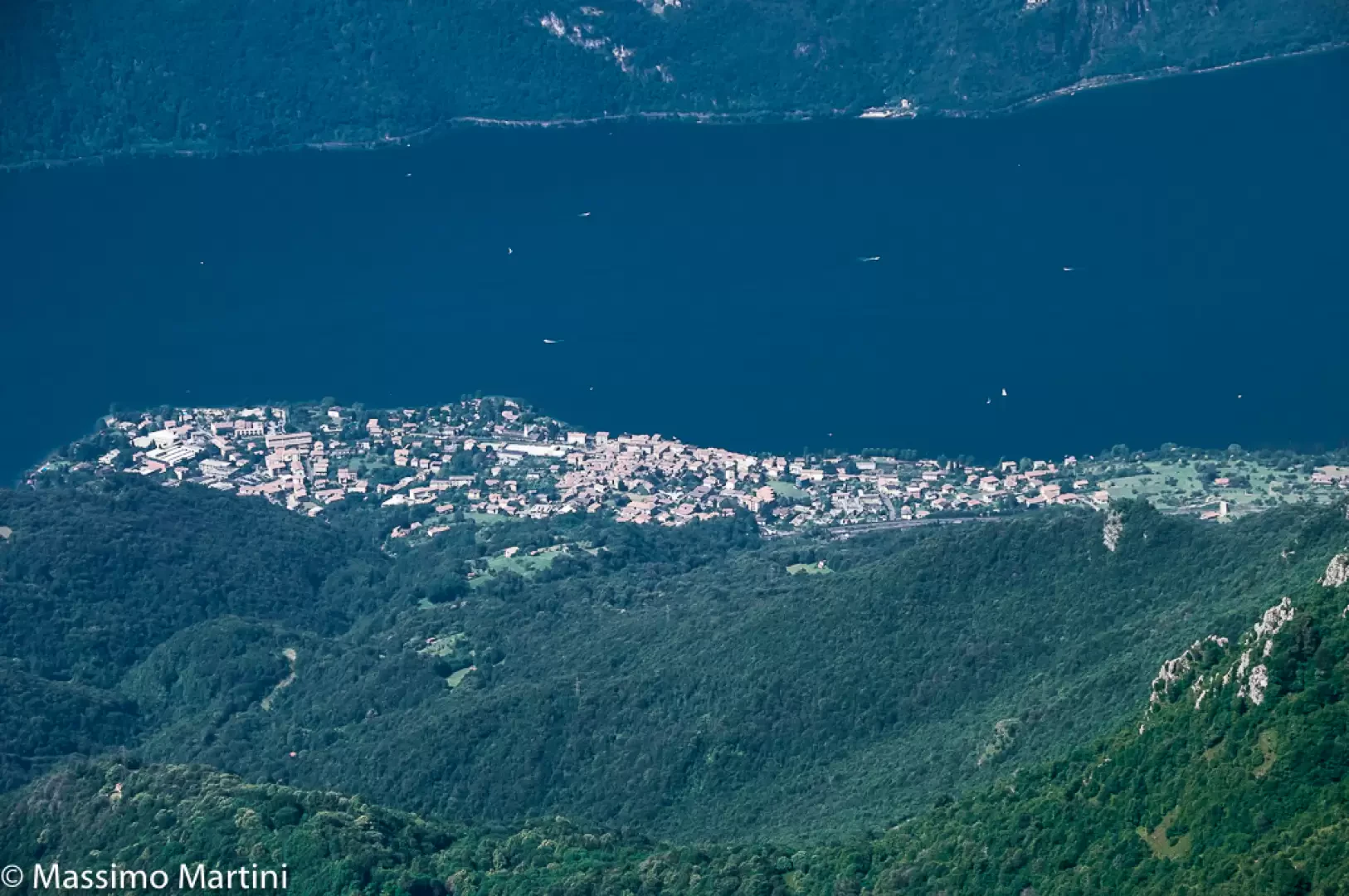
Abbadia Lariana is a municipality in Lombardy located on the eastern shore of Lake Como, in the northern sector of the province of Lecco, at the mouth of the Val Meria. The built-up area lies on a flat strip of land in direct contact with the lake, about 204 metres above sea level, while the territory rises steadily towards the calcareous slopes of the Southern Grigna, reaching pre-alpine environments in the area of the Larian Triangle. The municipal border is shared with Lecco to the south, with Mandello del Lario to the north and with Ballabio, Oliveto Lario and Valbrona towards the interior. The place name refers to the presence of an early medieval Benedictine monastic settlement, which structured the first forms of stable occupation of the territory. Between the 19th and early 20th century, the municipality was involved in the development of silk processing, a production activity that characterised the local economy until the phase of progressive industrialisation and subsequent tertiarisation.
Description
The municipal territory stretches from the shore of the lake to the limestone ridges of the Southern Grigna, with an overall height difference of more than 1,600 metres. The coastal strip, flat and densely built-up, quickly gives way to slopes cut by torrential valleys: the Val Meria and the Valle dei Mulini articulate the inland relief, channelling the waters towards the lake through wooded ravines and steeply sloping stretches. The lithological component is dominated by limestone and dolomite, with widespread karst phenomena and rock walls that markedly characterise the landscape at higher altitudes. The coastline features stretches of cobblestones alternating with equipped green areas, while inland the walled structures of ancient hydraulic factories linked to the processing of local raw materials are still recognisable.
The settlement system articulates the main town with hamlets located at higher altitudes, including Linzanico and Borbino, connected to the main road system by secondary roads and ancient halfway tracks. The documented origins of the municipality date back to the early Middle Ages, a period when a Benedictine monastery organised the surrounding area ecclesiastically and economically. The church of San Lorenzo retains elements that can be traced back to the original Romanesque layout, with stratified transformations over the following centuries. The manufacturing phase is documented by the Civic Museum Setificio Monti, which collects machinery, samples and documentation related to silk spinning and weaving practised between the second half of the 19th century and the 20th century.
The Sentiero del Viandante traverses the municipal territory along the mid-coast strip between Lecco and Colico, on a historical route of medieval origin connecting villages and places of worship along the eastern shore of the lake. The paths towards the Sasso di Preguda and along the Cresta Cermenati allow the connection with Mandello del Lario, Ballabio and the Lecco side of the Grigna Meridionale, in a context frequented by summer hiking and, at higher altitudes, by rock climbing.
Information
General Data
Area: 16.67 km²
Main town elevation: 204m
Maximum elevation: 1,875m - Cresta Cermenati / Grigna Meridionale
Number of inhabitants: 3.135 (as at 30.11.2025)
Name in dialect: Badia
Name of inhabitants: Abbadiensi
Patron saint: San Lorenzo
Bordering municipalities: Ballabio - Lecco - Mandello del Lario - Oliveto Lario - Valbrona
Province: Lecco
Region: Lombardia
Country: Italy
Institutional site: https://www.comune.abbadia-lariana.lc.it