Apulia

Edited by:
Massimo Martini
Access
La regione è attraversata dall’autostrada Bologna–Taranto, asse portante adriatico che collega Foggia, Bari e Taranto con il nord Italia, e dall’autostrada Napoli–Canosa, direttrice trasversale verso il versante tirrenico. La viabilità statale principale comprende la strada statale Adriatica, la strada statale Appia, la strada statale di Gioia del Colle, la strada statale Jonica, la strada statale dell’Appennino Abruzzese e Appulo-Sannitico e la strada statale Maglie–Santa Maria di Leuca. La rete ferroviaria è imperniata sulla linea Adriatica (Foggia–Bari–Brindisi–Lecce) e sulla Bari–Taranto, integrate da linee regionali (Ferrovie del Sud Est, Ferrovie del Gargano, Ferrotramviaria, Ferrovie Appulo Lucane). Gli aeroporti principali sono Bari-Karol Wojtyła e Brindisi-Papola Casale; operativo anche lo scalo di Foggia per traffico regionale. I porti di Bari, Brindisi e Taranto svolgono funzioni commerciali e passeggeri, con collegamenti verso Grecia e area balcanica. Non sono presenti valichi terrestri internazionali. Nei periodi estivi si registrano incrementi di traffico lungo le direttrici costiere.
Introduction
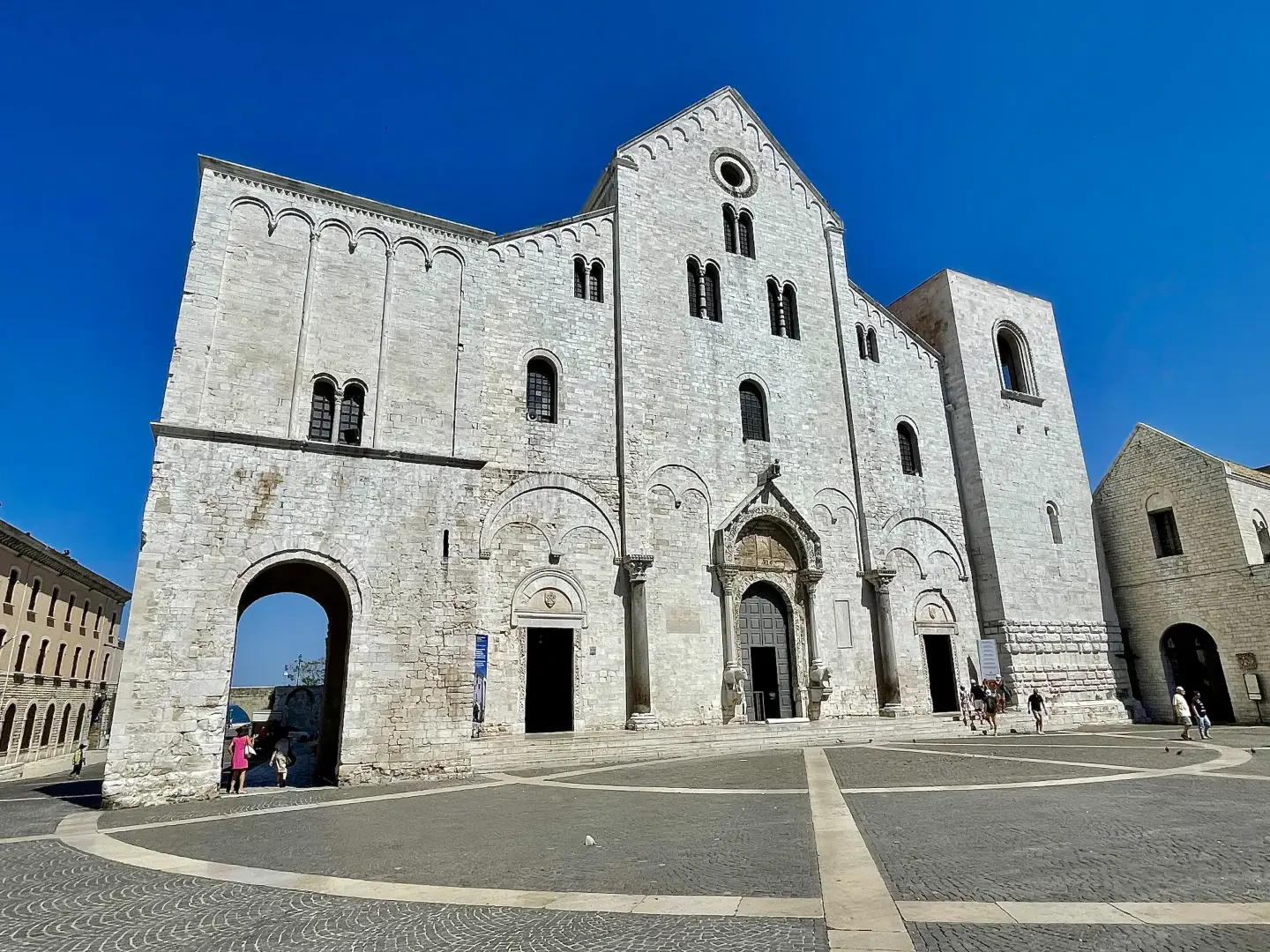
Puglia, located in the 'heel' of the boot, is a fascinating and varied region that offers a unique combination of nature, history, tradition, taste and spirituality, making it an ideal destination to visit at any time of year. With its beautiful coastlines, such as those of Otranto, Santa Maria di Leuca, Gallipoli and the Gargano, Apulia is a paradise for sea lovers. The region also boasts unspoilt nature with the Murge National Park, the Gargano Park with the Foresta Umbra, and the unique landscapes of the Laterza ravines and the Altamura dolines. For history enthusiasts, Apulia offers a rich heritage ranging from prehistoric times to Magna Graecia, the Imperial Age, the Renaissance and the splendour of the Baroque in Lecce and Salento.
Description
A land in the plural, a place that hides different souls: this is Puglia, the 'heel' of the Boot, an enchanting region, suspended between nature, history, tradition, taste and spirituality, to be visited twelve months a year. Those who love the sea will be spoilt for choice here, being able to choose between the cliffs of Otranto and Santa Maria di Leuca, where the Ionian and Adriatic seas meet, or between Gallipoli the 'Gem of Salento' and Gargano the 'Spur of Italy', stretching out into the clear waters of the sea that is home to the splendid Tremiti Islands. Nature is still the protagonist with the Murge National Park and the Gargano National Park with the wild Umbra Forest, the salt pans and lakes, the deep ravines of Laterza and the wide dolines of Altamura that, with their evocative landscapes, characterise the inland part of the region. And for those who want to take a journey through history, Apulia offers a wide range of places that tell the story of the ancient origins of this land: from prehistory to Magna Graecia, from the imperial age to the Renaissance, to the Baroque splendour of Lecce and Salento.
Information
Capital: Bari
Area: 19,358 sq. km
Minimum elevation: 0m
Maximum elevation: Monte Calvo (1065m)
Number of inhabitants: 4,051,059 (as of 30.11.13)
Name in dialect: Púgghie, Puje or Pujje
Inhabitants: Apulians
Province:Province of Bari, Province of Barletta-Andria-Trani, Province of Brindisi, Province of Foggia, Province of Lecce, Province of Taranto
Municipalities: 258
Bordering regions: Basilicata, Campania, Molise
Institutional site: www.regione.puglia.it