Arabia Sadita
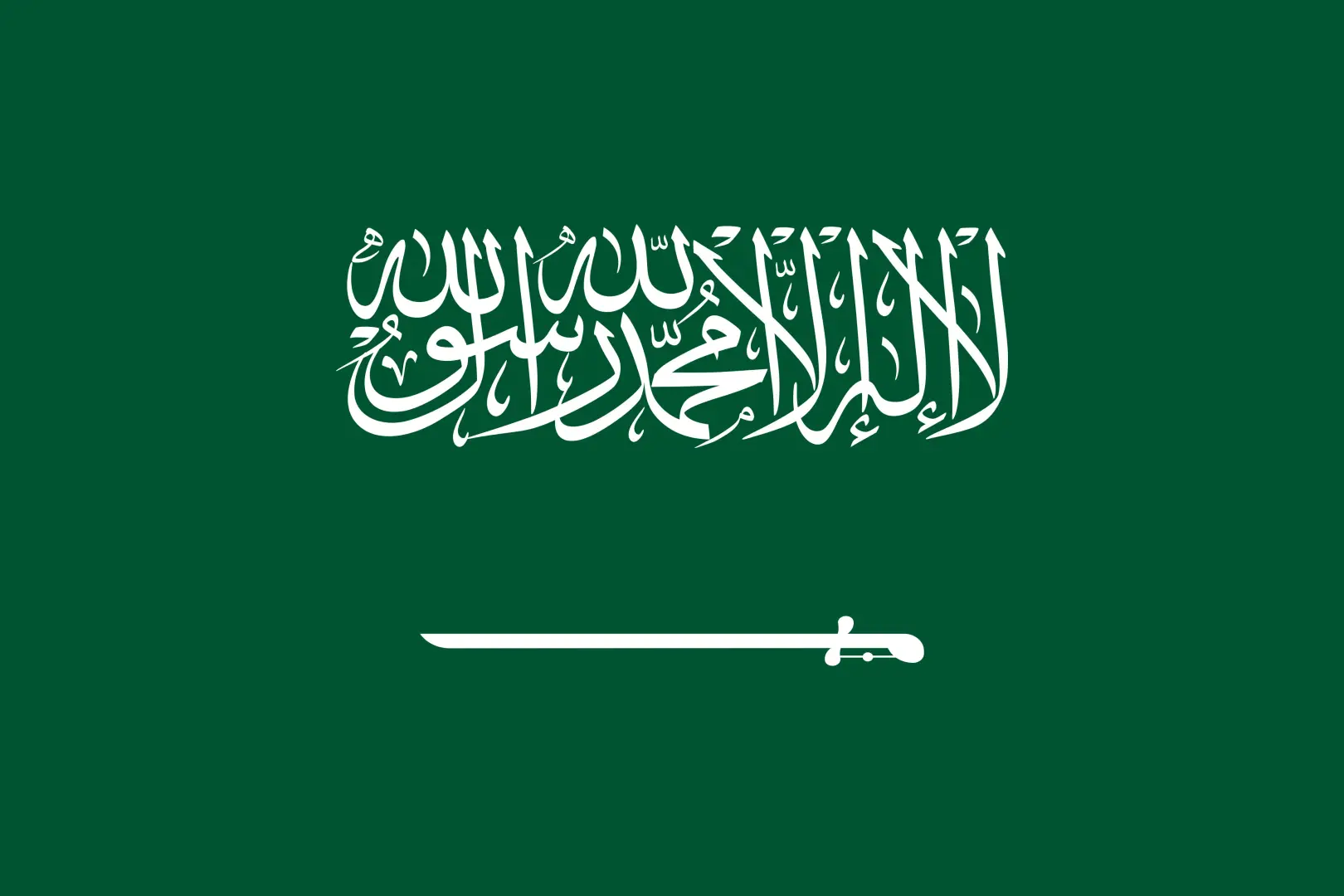

Edited by:
Massimo Martini
Access
Saudi Arabia can be reached from Italy mainly by air, with direct flights to Riyadh and Jeddah from several Italian airports, taking about five to six hours. The main international airport is the King Abdulaziz International Airport in Jeddah, the main gateway for pilgrims heading to Mecca and for tourist flows from the Red Sea coast; the King Khalid International Airport in Riyadh is the main hub of the capital, while the Dammam King Fahd International Airport serves the eastern oil region. Important secondary airports for access to the mountainous areas are Abha International Airport in the Asir region and AlUla Airport, which has grown in importance with the development of archaeological tourism. Entry by land is possible from Jordan through the Haditha-Mudawwara pass, which allows motorway transit; land borders also exist with Iraq, Kuwait, Qatar, the United Arab Emirates, Oman and Yemen, each with specific access features that require up-to-date verification. The internal motorway system is developed: the network of express roads connects the main cities, with long distances between urban centres. The railway network is limited: the Haramain High Speed Railway line connects Jeddah, Mecca and Medina; the Riyadh-Dammam line is the other main railway route. Internal transport for areas not served by rail is mainly by car or intercity bus services.
Introduction
Saudi Arabia occupies most of the Arabian Peninsula, stretching between the Red Sea to the west and the Persian Gulf to the east, at the crossroads of Africa, Asia and the eastern Mediterranean. It is the fourth largest country in Asia and one of the largest in the world, with a largely desert terrain, where rocky plateaus, sand dunes and consolidated lava fields alternate between environments of rare ruggedness and fertile oases that have determined the historical distribution of populations. Along the western edge is the Sarawat mountain range, which reaches its highest altitudes in the Asir region in the south-western quadrant of the country, bordering Yemen. The country is the cradle of Islam: Mecca and Medina, the two holiest cities for Muslim believers, are located in the Hejaz region, and their spiritual weight structurally defines the kingdom's identity, shaping the country's institutions, social life and international relations. Founded in its current form in 1932 by King Abdulaziz Al-Saud, the kingdom is ruled as an absolute monarchy by the House of Saud and has built up a global prominence in the second half of the 20th century thanks to the huge hydrocarbon reserves in the eastern region.
Description
The morphology of Saudi Arabia is defined by the juxtaposition of large desert systems and a western mountain belt. In the central part lies the Najd, a rocky plateau that descends from about 1,400 metres on the western edge to 750 metres in the eastern depression, furrowed by uadi - almost always dry riverbeds that are activated during rare rainfalls. To the south-east is the Rub al-Khali, the largest sandy desert on Earth, extending over some 650,000 km² and for a long time unexplored even by the Bedouin people who lived on its edge; its dunes reach a height of 250 metres and the red-orange colour of the sands is due to the presence of iron oxides. To the north-east lies Nafud, the country's second largest sandy desert, covering some 74,000 km² with reddish dunes up to 100 metres high. The Sarawat range, on the western edge, reaches its highest altitudes in the Asir massif, where Jabal Sawda touches 3,133 metres - the highest peak in the kingdom - while in the northern region of the Hejaz, the peaks do not exceed 2,100 metres. The territory is criss-crossed by more than 2,000 extinct volcanoes, and in the Hejaz region itself, the consolidated lava fields, known as harrat, form one of the largest alkaline basalt systems on Earth, with an area of about 180,000 km². The country has no perennial rivers or lakes: water resources depend entirely on fossil aquifers and some of the largest desalination plants in the world.
The history of the Arabian Peninsula is more than 200,000 years of documented human presence. The first great sedentary civilisations developed in the oases and along the caravan routes that linked southern Arabia - rich in frankincense and myrrh - to the markets of the Mediterranean and Mesopotamia. The kingdom of Dadan and the later kingdom of the Lihyanites, with their capital in the AlUla region, were among the most elaborate political expressions of the Arabian Peninsula in the first millennium BC. The Nabataeans, the same people who built Petra in Jordan, established at Hegra - in the AlUla territory - the main southern city of their kingdom, with more than a hundred monumental tombs carved in red sandstone that constitute one of the most extraordinary archaeological sites in the Near East. In the 7th century A.D., Islam spread from the Hejaz region, whose expansion reached a territory stretching from the Iberian Peninsula to Central Asia within a few decades. The current Saudi state was formed in stages between the 18th and 20th centuries, with the alliance between the Al-Saud family and the Wahhabi religious movement. In 1932 King Abdulaziz unified the Hejaz, Najd and outlying provinces into the Kingdom of Saudi Arabia. The discovery of oil in 1936 radically transformed the country, propelling it in just a few decades from a predominantly nomadic and agricultural reality to a major player in the world economy.
The Saudi Arabian economy has historically been dominated by the oil sector, with reserves accounting for about a fifth of the world's proven reserves. The state-owned Saudi Arabian Oil Company (Aramco) is the world's largest oil company by production. Vision 2030, an economic and social reform plan launched in 2016 by Crown Prince Mohammed bin Salman, aims to diversify the economy by reducing dependence on hydrocarbons, developing tourism, entertainment, manufacturing and technology sectors. Agriculture, practised in the oases and irrigated areas of southern Najd and the Asir region, mainly produces wheat, dates and fruit. The cultivation of date palms (Phoenix dactylifera) has roots dating back thousands of years and Saudi dates, particularly those from the oases of Medina and the Al Ahsa region, are among the most renowned in the world.
Saudi culture is deeply rooted in Islamic values and nomadic Bedouin traditions. The ardha dance, a collective war ritual with sabres, is the symbolic expression of national identity. Traditional handicrafts include the weaving of carpets and saddles, silver work in the Asir region - where women and men wear garlands of fresh flowers as ornaments and where houses are decorated with colourful geometric patterns - and incense making, linked to the ancient Arab trade routes. Gastronomy revolves around kabsa, a national dish of spiced rice with mutton or chicken, and mansaf in its northern variants; unfiltered Arab coffee, flavoured with cardamom, is a ritual element of hospitality.
Saudi Arabia has eight sites on the UNESCO World Heritage List. The site of Hegra, in the AlUla region, inscribed in 2008 as the country's first UNESCO World Heritage Site, preserves more than one hundred monumental Nabataean tombs carved out of sandstone, second in importance only to Petra. The At-Turaif Quarter in Ad-Dir'iyah, the first capital of the Saudi kingdom founded in the 15th century, is an outstanding example of earthen Najdi architecture. Historic Jeddah, gateway to Mecca, is a dense urban fabric of tower-houses built of fossil coral with inlaid wooden balconies known as rawasheen. The rock art in the Hail region, at the sites of Jubbah and Shuwaymis, includes engravings documenting more than 10,000 years of human presence in the Nafud. The Al-Ahsa oasis in the eastern region is the largest irrigated palm grove in the world, with over 2.5 million date palm trees. The cultural landscape of Al-Faw, at the foot of Jabal Khashm Qaryah, preserves layers of civilisation from the Palaeolithic era to the 5th century AD. The ancient walled oases of northern Arabia and the cultural landscape of Al-Faw complete the UNESCO picture. Asir National Park, the country's first national park, protects the Jabal Sawda mountain massif and its forests of Arabian juniper (Juniperus excelsa), one of the most unusual environments in the Arabian Peninsula, a refuge for the Arabian leopard (Panthera pardus nimr), Arabian baboon (Papio hamadryas) and numerous species of migratory birds of prey. The Farasan Islands Marine Reserve, in the Red Sea off the coast of Jizan, protects an archipelago of 176 islands with mangrove forests, coral reefs and one of the most important dugong (Dugong dugon) populations in the Red Sea.
Mountain hiking has developed mainly in the Asir region, where the Sarawat Mountains offer the most favourable terrain due to mild temperatures, vegetation and a landscape free of the extremes of desert heat. Abha, the capital of Asir at an altitude of around 2,200 metres, is the starting point for hikes to Jabal Sawda, which can also be reached by cable car to the highest altitude in the kingdom. The hanging village of Al Habala, built on a cliff face by the Qahtan clans and reached by cable car, and the village of Rijal Alma, made of brightly coloured stone and wood, are combined destinations with walking trails in the terraced landscape. In the AlUla region, nature trails lead past sandstone formations, ancient oases and Nabatean sites. The Tabuk region in the north-west offers canyon and harrat landscapes accessible by four-wheel drive. The trails of Wadi Hanifah, in Riyadh, are popular for walking and hiking. The Rub al-Khali and Nafud deserts are travelled by organised expeditions on camelback or in all-terrain vehicles.
Mountaineering in the technical sense of the discipline is still a marginal practice in the country, where the highest altitudes do not reach the levels of classical mountaineering. The south-western wall of the Sarawats, with sandstone and basalt cliffs, offers space for rock climbing, which is mainly developed around Tanomah, in the Asir region, and in the granite gorges of the Wadi Tayyib al-Ism in the Tabuk region. The Lebanese-Saudi climber Nelly Attar, who trained on the slopes of Jabal Sawda, is the first Arab woman to reach the summit of K2, in 2022, and is the country's most representative mountaineering figure. The opening up of tourism and Vision 2030 are fostering the development of outdoor infrastructure in Asir, with the Soudah Peaks project, which envisages the development of the highest altitudes in the massif.
Trail running in Saudi Arabia has developed rapidly thanks to the country's opening up to international tourism and the AlUla project. The AlUla Trail Race, organised every January in the AlUla region since 2023, is the flagship event: it offers distances from 10 to 100 km through sandstone rock formations, Nabatean Hegra sites and ancient oases, with the 100 km Hegra Hundred and a positive altitude difference of around 1,770 metres among the most challenging courses. The race takes place in a unique desert and rocky landscape, with winter temperatures favourable for running. The Asir region, with its high plateau between 2,000 and 3,000 metres, offers the most favourable terrain for the development of mountain trail running in the Arabian Peninsula, and the tourism infrastructure being developed as part of Vision 2030 is creating the conditions for future competitions in this context.
.Information
General Data
Capital: Riyadh
Area: 2,149.690 km²
Minimum elevation: 0m (coastline of the Red Sea and Persian Gulf)
Maximum elevation: 3,133m - Jabal Sawda
Number of inhabitants: 32,175.000 (2022 census)
Official name: المملكة العربية السعودية (Al-Mamlaka al-Arabiyya as-Suudiyya)
Name of inhabitants: Saudis
Provinces: Ar Riyad - Mecca - Medina - Al-Qasim - Eastern Region - Asir - Tabuk - Hail - Northern-border - Jizan - Najran - Al-Baha - Al-Jawf
Bordering nations: United Arab Emirates - Jordan - Iraq - Kuwait - Oman - Qatar - Yemen
Institutional website: https://www.my.gov.sa