Armenia
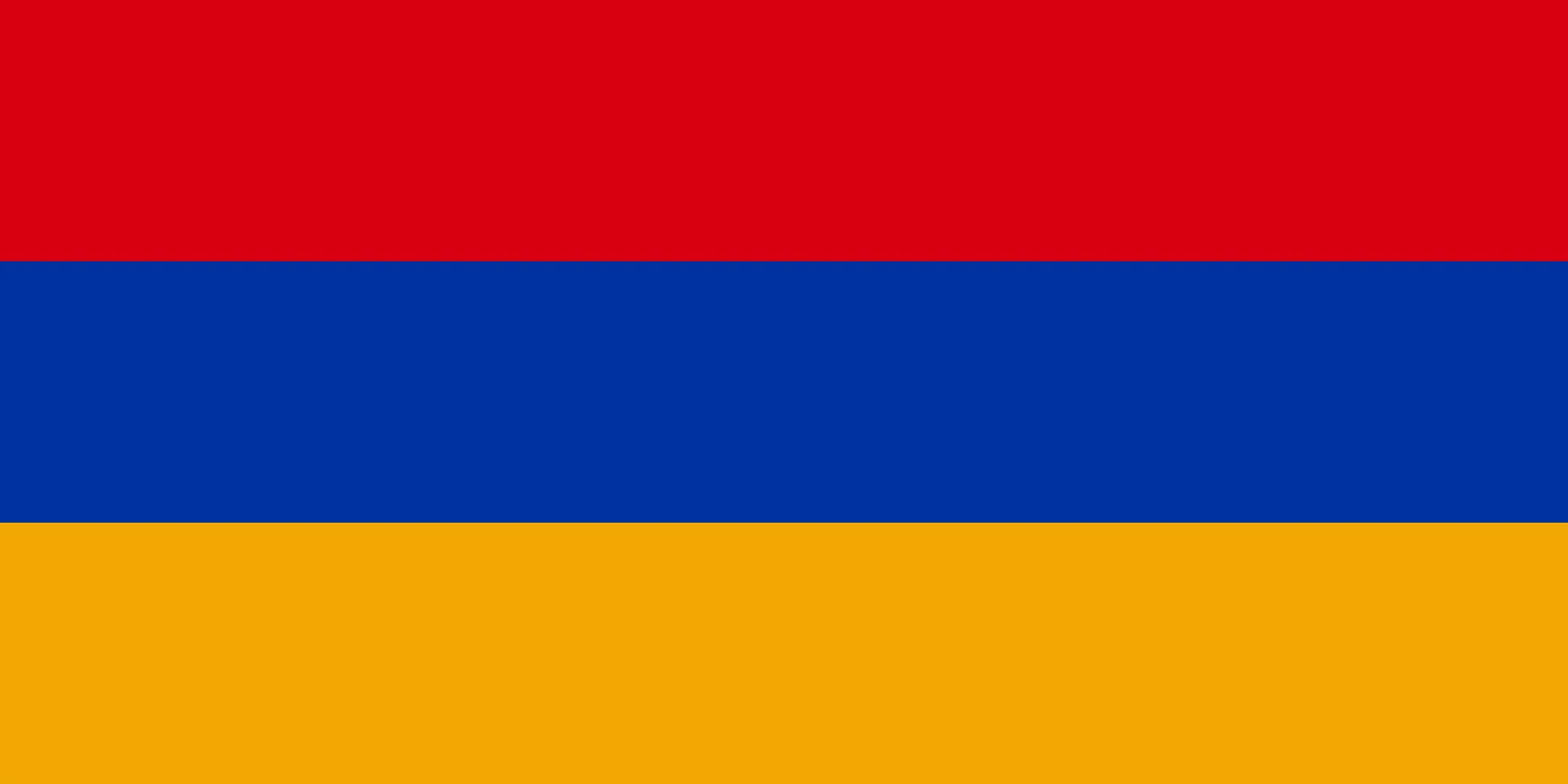

Edited by:
Massimo Martini
Access
Armenia has no direct land borders with Italy or major Western European countries. The main international access point is Zvartnots International Airport (IATA code: EVN), located about 12 km west of Yerevan, which handles flights from numerous European and Middle Eastern destinations. From Italy there are direct flights from Milan, Rome and Venice with journey times of less than four hours. The airport is served by companies including Wizz Air, Austrian Airlines, Qatar Airways and various regional carriers. A second airport, Shirak Airport in Gyumri, the country's second largest city, serves some less frequent domestic and international routes. Entry by land is possible from Georgia, via the Bagratashen-Sadakhlo border crossing, which can be reached from Tbilisi; the border with Turkey is closed, the border with Azerbaijan is inaccessible due to ongoing political tensions, and the border with Iran is open but requires up-to-date verification of entry requirements. The railway network is operated by the South Caucasus Railways: the main route connects Yerevan to Gyumri and Vanadzor, while an international connection reaches Tbilisi in Georgia with departures several times a week. Internal transport is provided by a network of city buses and marshrutkas (minibuses) connecting Yerevan to all the main cities and mountain villages, with varying frequencies. The capital has a metro system with a line operating since 1981.
Introduction
Armenia is located in the Southern Caucasus, at the crossroads of Western Asia and Europe, landlocked and surrounded by Georgia, Azerbaijan, Iran and Turkey. The territory is predominantly mountainous, with an average altitude of about 1,800 metres above sea level: plains are almost absent, while the Little Caucasus ranges, volcanic plateaus and deep river valleys define a rugged and varied morphology. The country is rich in fresh water, including Lake Sevan, at an altitude of almost 1,900 metres, one of the largest alpine lakes in the Caucasus. Armenia is home to one of the oldest civilisations in the Near East and was the first state in the world to proclaim Christianity the official religion, in 301 AD. Its national identity has been built through millennia of domination, dispersion and cultural resistance, and is still linked to language, scripture and the apostolic religious tradition as foundational elements of Armenian belonging. An associate member of the Council of Europe, the country maintains strong ties with the Armenian diaspora around the world, which numbers several million people spread across five continents.
Description
Armenia covers an area of some 29,743 km² in the Armenian Plateau, a system of reliefs and volcanic basins formed by tectonic processes over millions of years. The Lesser Caucasus range runs from north-west to south-east, while the Ararat Plateau, in the plain of the same name at the foot of the Turkish border, forms the country's main agricultural area. The highest peak is Mount Aragats, an extinct stratovolcano with four distinct peaks - of which the northern one reaches 4,090 metres - while the historical symbol of the Armenian people remains Mount Ararat, at 5,165 metres, rising on the Turkish side of the border. The main watercourse is the Aras River, which flows along the southern border with Turkey and Iran; the Hrazdan, on the other hand, springs from Lake Sevan and flows through Yerevan before flowing into the Aras. The country is in a high seismic risk zone: the earthquake of December 1988, with epicentre in Spitak, claimed tens of thousands of lives and destroyed entire urban centres in the north of the country.
Armenian history has its roots in the 2nd millennium BC, when Proto-Armenian peoples settled on the eastern Anatolian plateau. In the 1st century BC, the Empire of Tigrane the Great reached its greatest extent, encompassing territories from the Caspian Sea to the Mediterranean Sea. The conversion to Christianity in A.D. 301 by St. Gregory the Illuminator under King Tiridates III opened a period of extraordinary cultural production: in A.D. 405, the monk Mesrop Mashtots created the Armenian alphabet, an instrument of national identity still in use in its original form. In the following centuries, the country experienced successive dominations by Persians, Arabs, Seljuks, Mongols and Ottomans. The medieval reign of the Artsrunids and then the Bagratids was a period of renaissance, with the founding of capitals such as Ani and the building of monasteries and churches that have remained intact to this day. The most dramatic phase in modern history was the Armenian genocide of 1915, during which over a million Armenians were killed or deported by the Ottoman Empire, an event recognised by many states but not yet by Turkey. In 1920, Armenia became a Soviet republic and in 1991, with the collapse of the USSR, declared its independence.
Armenia's economy is mainly based on services, light industry and agriculture in the Ararat plain areas, where the cultivation of vines, fruit and wheat has a thousand-year-old tradition. Armenian wine, produced in particular in the Vayots Dzor region around the village of Areni - whose vine cultivation has been documented since at least 4000 BC - is an identity component of the local gastronomic heritage. Armenian cognac, produced since the Tsarist era and renowned throughout the Caucasus, is another recognised excellence. The country has developed a technology and IT sector, a legacy of its strategic role in the Soviet scientific industry, when Yerevan was a research centre in physics and computer science.
Armenian culture is characterised by artistic expressions rooted in the Christian tradition: the carving of khachkars, the carved stone crosses that dot the landscape from antiquity to the present day, and the art of medieval miniatures, preserved in Yerevan's Matenadaran library, which houses one of the most important archives of ancient manuscripts in the world. The duduk, an apricot wood wind instrument, is at the heart of traditional Armenian music, recognised by UNESCO as an intangible cultural heritage. The local cuisine is based on lavash bread, grilled meat, cheese, mountain herbs and dried fruit, with Middle Eastern and Caucasian influences. Lavash is also a UNESCO intangible heritage site.
Armenia has three sites inscribed on the UNESCO World Heritage List, all cultural in character. The monastic complexes of Haghpat and Sanahin, in the Lori region, founded between the 10th and 13th centuries, represent the pinnacle of Armenian medieval architecture and were centres of intellectual production, calligraphy and theological instruction. The Geghard Monastery and the Upper Azat Valley comprise a rock complex of churches and tombs carved into the tuffaceous rock in the 13th century, in a landscape of vertical walls on the river of the same name. The cathedral and churches of Echmiadzin, seat of the Catholicos and spiritual centre of the Armenian Apostolic Church, together with the ruins of the early Christian church of Zvartnots, complete the country's UNESCO heritage. In addition, there are more than 4,000 historical monuments distributed throughout the territory, including temples, fortresses and churches. The fauna of the plateau includes the Caucasian mouflon (Ovis gmelini gmelini), Caucasian leopard (Panthera pardus ciscaucasica), brown bears (Ursus arctos) and golden eagles (Aquila chrysaetos). The flora of the highlands includes numerous species of gentian (Gentiana spp.) and rhododendron (Rhododendron caucasicum). The Dilijan National Park in the Tavush region protects one of the few temperate forests in the South Caucasus, rich in beech, oak and maple trees. The Sevan National Park protects the shores of the lake of the same name and its endemic fish species.
Hiking is practised along the entire mountain arc of the Lesser Caucasus, with a network of trails linking medieval monasteries, volcanic plateaus and spectacular river gorges. The most significant long-distance route is the Transcaucasian Trail (TCT), an itinerary nearing completion that crosses Georgia and Armenia following the ridges of the Lesser Caucasus: the Armenian section runs from the Tavush region to the border with Iran, touching on the Dilijan reserve, the shores of Lake Sevan and the mountains of southern Syunik. Mount Aragats is the most popular excursion destination: the ascent to the southern peak (3,879 metres) is a day trip starting from Lake Kari, at an altitude of 3,200 metres. In the winter season, the Tsaghkadzor and Jermuk slopes offer alpine skiing opportunities, while ski mountaineering is practised particularly on the slopes of the Aragats. Snowshoeing on the snow-covered plains of the Ararat Plateau and around frozen Lake Sevan round off the winter offer.
Mountaineering in Armenia has its roots in the Soviet period, when active mountaineering clubs in Yerevan organised expeditions to the Caucasus, Pamir and Tian Shan. Climbers such as Aghvan Chatinian and Haoutyun Yesian represented Armenia in the USSR championships, which also took place in the Noravank and Bjni gorges. The landmark peak is Aragats, a stratovolcano with four peaks between 3,879 and 4,090 metres, which can be reached by mountaineering trekking routes along the ridges of the main crater. The basalt walls of the Garni Gorge, with its characteristic hexagonal columns known as the Symphony of Stones, are a rock-climbing site of increasing interest. The symbolic mountain for Armenians, however, remains the Ararat, the first documented ascent of which was made on 27 September 1829 by the Russian physicist Friedrich Parrot together with the Armenian poet Khachatur Abovjan: being today on the Turkish side of the border, it is inaccessible from the Armenian side, and its silhouette from the western edge of the Yerevan plain is a presence charged with identity significance.
Trail running in Armenia is an emerging discipline, practised mainly on unstructured trails but growing in organisation. The main competitive event is the Vineyard Trail Armenia, organised in the region of Vayots Dzor among the vineyards and mountains of the village of Rind, with distances of 13.5 and 21 km and a limited positive altitude difference of between 350 and 500 metres, which takes place in spring. Mount Aragats, Mount Ara (2,606 metres) and the Geghama mountains are home to the most popular routes for local and international trail runners, with high-altitude features and open volcanic terrain. The Dilijan Park, on the other hand, offers more technical trails in a forested environment.
Information
General Data
Capital: Yerevan
Area: 29,743 km²
Minimum elevation: 375m (Aras River Gorge, Ararat region)
Maximum elevation: 4.090m - Mountain Aragats
Number of inhabitants: 2,977,000 (as of 01.01.2023)
Official name: Հայաստանի Հանրապետություն (Hayastani Hanrapetut'yun)
Name of inhabitants: Armenian
Province (marzpetaran): Aragatsotn - Ararat - Armavir - Gegharkunik - Kotayq - Lori - Shirak - Syunik - Tavush - Vayots Dzor - Yerevan
Bordering countries: Azerbaijan - Georgia - Iran - Turkey
Institutional website: https://www.e-gov.am