Brugnato

Edited by:
Massimo Martini
Access
Introduction
Description
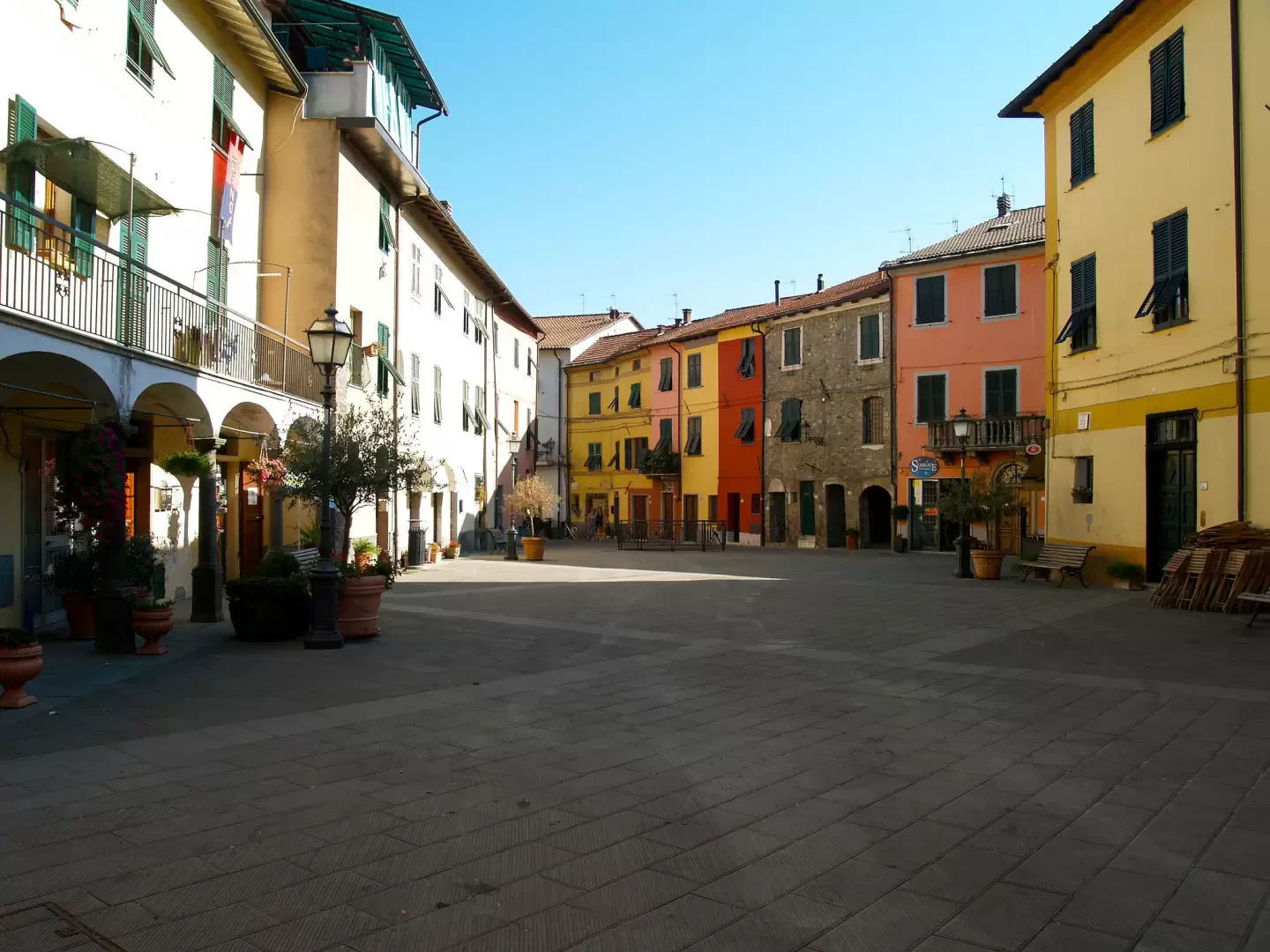
Around the middle of the 7th century AD, the Lombards, led by their king Rotari, conquered Liguria. At the same time as this event, the monks of the order of Saint Columbanus arrived here from Bobbio. After reclaiming the entire area, they founded the abbey (the remains of which can still be seen) and the original village, whose characteristic round shape, in addition to responding to defence needs, reveals its monastic 'origins': the village in fact developed all around the church to emphasise the centrality of religious power. If you enter the hamlet from the west, passing under Porta Soprana, you will find yourself in front of the Oratory of San Bernardo, built during the abbey period for wayfarers. Continuing along Borgo San Bernardo, you reach the cathedral of Saints Peter, Lawrence and Columbanus, whose faces, it is assumed, are reproduced in the three masks walled in the right wall next to the altar. The cathedral dates back to the 11th century and stands on two pre-existing churches, the fascinating remains of which are visible from the floor of the two naves through the stained glass windows. he Brugnato monastery, in the course of time, thanks to conspicuous donations made also by the Lombard kings themselves, acquired enormous power, including political power: for this reason it became the object of fierce struggles for conquest. Among its fiercest enemies were the bishops of Luni, who were however forced to renounce it when Pope Innocent Il elected Brugnato as a suffragan diocese of Genoa in 1133. he first bishop was Abbot Ildebrando, to whom a square is dedicated. Next to the cathedral is the old Episcopio, where all the successive bishops lived from 1133 onwards. Since 17 May 2000 it has housed the new Diocesan Museum, in which the precious furnishings and, in the reception room, the ancient portraits are kept. The Malaspina and Fieschi families, for example, also contended for dominion of the town. The latter, supported by the Republic of Genoa, managed to rule over Brugnato until the mid-1500s, when it passed - by the will of the citizens of Brugnato themselves - under Genoa and set up its own small army: the Compagna dei Scelti. Leaving the village, before Porta Sottana. one passes under the 'Arco dei Sessanta', where the entrance to the barracks of the Company was located. In 1603, the Convent was founded, first by the Order of St Francis, then by the Passionist Fathers (from 1843). Also worth a visit is Bozzolo, the only hamlet of the town that served as a defence for the Brugnato plain and is semicircular in shape; the Sanctuary of the Madonna dell'Olivo and the Roman bridge over the river Vara.which still stands although it has been undermined over the centuries by exceptional flooding (the last in 1984) and bombing during World War I.
.Information
Area: 11.9 sq km
Altitude: 115m
Maximum elevation:
Number of inhabitants: 1275
Name in dialect: Briné
Inhabitant name: brugnatesi
Patron Saint: Saint Paschal (17 May)
Website: www.comune.brugnato.sp.it
Webcam:
Bordering municipalities: Borghetto di Vara, Rocchetta di Vara, Sesta Godano, Zignago
Villages and hamlets:
Highlands: