Canada
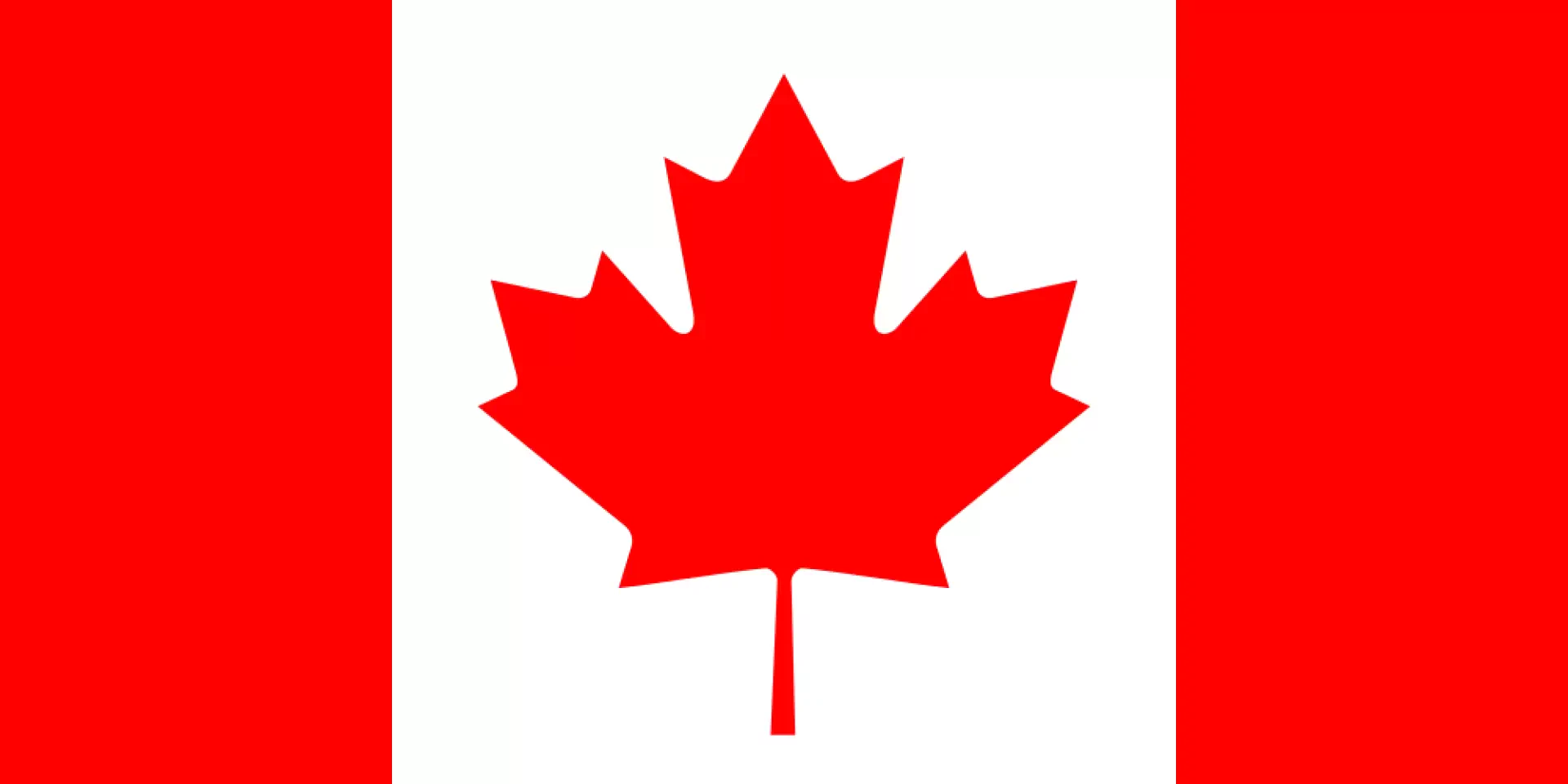

Edited by:
Massimo Martini
Access
Canada is not accessible by land from Europe: access is mainly by air, with direct flights to the country's main international airports. Toronto's Pearson International Airport is the country's busiest airport, followed by Montreal's Pierre Elliott Trudeau International Airport and Vancouver International Airport. For those coming from the United States, the land border can be travelled by car along numerous border crossings distributed throughout the southern border, the longest in the world between two states. The main arteries connecting the Canadian cities are the Trans-Canada Highway, which crosses the country from east to west for about 7,800 km, and the interstate highways connecting the western provinces. The passenger rail system is operated by VIA Rail Canada, with connections between major cities, while the private company Rocky Mountaineer offers scenic routes through the Rocky Mountains between Vancouver and Calgary or Jasper. Inland public transport varies considerably from province to province: large urban areas such as Toronto, Montréal and Vancouver have well-developed metro and bus networks. National parks are generally accessible by car; in the winter months some scenic roads, such as the Icefields Parkway between Banff and Jasper, may be subject to temporary closures due to snow or ice.
Introduction
Canada occupies the northern part of the North American continent, from the Atlantic Ocean to the Pacific Ocean to the Arctic expanses of the North. The second largest state in the world, its territory includes large-scale orographic systems, some of the largest boreal forests on the planet, continental glaciers, grasslands and more than two million lakes. The most significant mountain ranges are found in the west, where the Canadian Rockies, the Coastal Cordillera and the St. Elias Mountains draw vertical barriers between the hinterland and the Pacific; the Canadian Shield, to the east, forms a vast basement of ancient rocks that extends around Hudson Bay. The country borders the United States to the south, with which it shares the longest undefended land border in the world, while to the northwest the territory of Alaska separates Canada from the coastal Yukon. Canadian identity is structurally twofold: the coexistence of the Anglophone and Francophone traditions, rooted mainly in Quebec, has shaped bilingual federal institutions and a plural culture that includes First Nations, Métis and Inuit peoples.
Description
The Canadian territory can be divided into large geographical regions of distinct character. In the west, the Canadian Rockies stretch along the border between Alberta and British Columbia, offering a system of glacial valleys, glacial lakes and glaciers that are among the largest in the western hemisphere outside the polar regions. The Columbia Icefield, located on the border between Banff and Jasper National Parks, is one of the largest non-polar glaciers in North America: its waters feed three distinct river basins that flow into the Pacific, Atlantic and Arctic oceans. Further north-west, in the Yukon Territory, the St. Elijah Range is home to the Mount Logan, Canada's highest peak at 5,959m, home to eleven separate peaks over 5,000m in elevation. The Logan massif is surrounded by the Kaskawulsh, Columbus and Seward glaciers, comparable in extent to the great alpine glaciers of the Ice Ages. The Canadian Shield occupies the heart of the country: a plateau of Precambrian rocks stretching around Hudson Bay, characterised by thousands of lakes, coniferous forests and tundra in the northernmost latitudes. The eastern belt includes the Great Lakes region and the St Lawrence Basin, the Atlantic Plain and the maritime provinces of Nova Scotia, New Brunswick and Newfoundland.
Canada was inhabited for millennia by dozens of indigenous peoples before the European arrival in the 16th century. French and English navigators explored the coasts from the late 15th century, but systematic colonisation began in the 17th century with the settlements of New France along the St. Lawrence River. After the Franco-British wars of the 18th century, which culminated in the British victory at Quebec in 1759, the territory came under the British Crown. In 1867, the British North America Act sanctioned the birth of the Dominion of Canada, a federation of provinces with extensive internal autonomy, to which the remaining provinces and northern territories were added over the following decades. Canada gained full legislative independence in 1931 with the Statute of Westminster and completed its constitutional arrangements in 1982 with the repatriation of the Constitution from London.
The Canadian economy is one of the most robust on the American continent, supported by a major extractive sector - oil, natural gas, timber, minerals - alongside an industrial-scale agricultural sector in the Great Plains of Manitoba, Saskatchewan and Alberta. Manufacturing is concentrated in the central provinces, particularly in Ontario and Quebec, while the tertiary, financial and technology sector has expanded strongly in recent decades, with innovative hubs in Toronto, Vancouver and Montréal. The production of maple syrup, of which Canada is the world's leading producer, is a recognisable identity element also on a cultural level. Canadian cuisine reflects the diversity of regional peoples and traditions, from the French-Canadian cuisine of Quebec to the culinary traditions of the First Nations, to the Asian and Middle Eastern influences of the big cities.
Canada is home to some of the largest national parks in the world. Parks Canada, established in 1911 as the world's first national park management agency, administers 48 national parks spread across the country. The Banff National Park, founded in 1885 as Canada's first national park, is inscribed on the UNESCO World Heritage List along with Jasper, Yoho and Kootenay in the Canadian Rockies. Jasper National Park is the largest in the Rocky Mountains, with 11,000 km² of wilderness. Auyuittuq National Park, on Baffin Island in Nunavut, is home to Mount Thor, known for the highest vertical wall on Earth, and Mount Barbeau, the highest peak in the eastern Arctic chain. Kluane National Park in the Yukon contains the largest non-polar ice fields on the planet and seventeen of the twenty highest peaks in the country. Fauna in the Canadian territory include the grizzly bear (Ursus arctos horribilis), caribou (Rangifer tarandus), American bison (Bison bison), grey wolf (Canis lupus) and wapiti (Cervus canadensis); among aquatic species, the Pacific salmon (Oncorhynchus spp.) is of ecological and cultural importance in coastal regions.
The Canadian Rockies and the mountain regions of the Yukon and British Columbia offer a highly developed hiking and trekking infrastructure. The Icefields Parkway, which connects Banff to Jasper through 230 km of glacial landscapes, is considered one of the most scenic drives on the continent. The parks in the UNESCO system offer more than 3,000 km of marked trails, accessible for different levels of experience. The West Coast Trail, on Vancouver Island, is a 75 km route considered among the most challenging multi-day treks in the country. The Akshayuk Pass, in the Auyuittuq National Park, is an approximately ten-day glacial route across the Cumberland Peninsula between glaciers, fjords and vertical walls. Winter activities are an integral part of Canada's outdoor culture: alpine skiing is practised in resorts such as Whistler-Blackcomb in British Columbia and Lake Louise in Alberta; ski mountaineering and snowshoeing are widespread in all mountain provinces.
Canadian mountaineering history is closely linked to the St. Elias Range and the Rocky Mountains. The first ascent of Mount Logan took place on 23 June 1925, by an expedition led by Albert H. MacCarthy that included H.F. Lambart, Allen Carpé, W.W. Foster, N. Read and Andy Taylor: the feat required weeks of glacier advance in extreme isolation, with the base camp only reachable by air. The second ascent was only attempted in 1946, with air logistical support. Since the 1960s, the St. Elias Range has established itself as a destination for expedition mountaineering in glacial terrain and high altitude walls. In the Rocky Mountains, the limestone walls of Mount Robson - often called the "Queen of the Rockies" because of its difficulty - and Mount Assiniboine have attracted mountaineers from all over the world since the late 19th century. The Alpine Club of Canada, founded in 1906, has played a central role in the exploration and documentation of Canadian mountain routes. The Columbia Icefield, accessible from the Icefields Parkway, has been a proving ground for ski mountaineering and glacial traverses for decades.
Canadian trail running has developed particularly in the western provinces, where the mountain regions of British Columbia and Alberta offer technical terrain and significant elevation gains. The Squamish 50 in British Columbia, with distances of 23 to 80 km in the coastal reliefs near Vancouver, is one of the best-known events in the North American trail running scene. The Canadian Death Race in Alberta, starting and finishing in Grande Cache, features a course of about 125 km with 17,000 m of total elevation gain across three Alpine peaks. The Nimbus Trail Festival in Jasper uses the national park's trail network for races of varying distances in a high mountain environment. In winter, snowshoe racing and competitive ski mountaineering formats are popular throughout the mountain range.
Information
General Data
Capital: Ottawa
Area: 9,984.670 km²
Minimum elevation: 0m (Atlantic and Pacific coasts)
Maximum elevation: 5,959m - Mount Logan
Number of inhabitants: 36,992.000 (as of 2021)
Official name: Canada
Name of inhabitants: Canadians
Provinces and territories: Alberta - Columbia Britannica - Isle-of-Prince- Edward - Manitoba - New Brunswick - New Scotland - Nunavut - Ontario - Québec - Saskatchewan - Herranova and Labrador - Territories-of-the-Northwest - Yukon
Bordering nations: United-states-of-america
Institutional site: https://www.canada.ca