Croatia
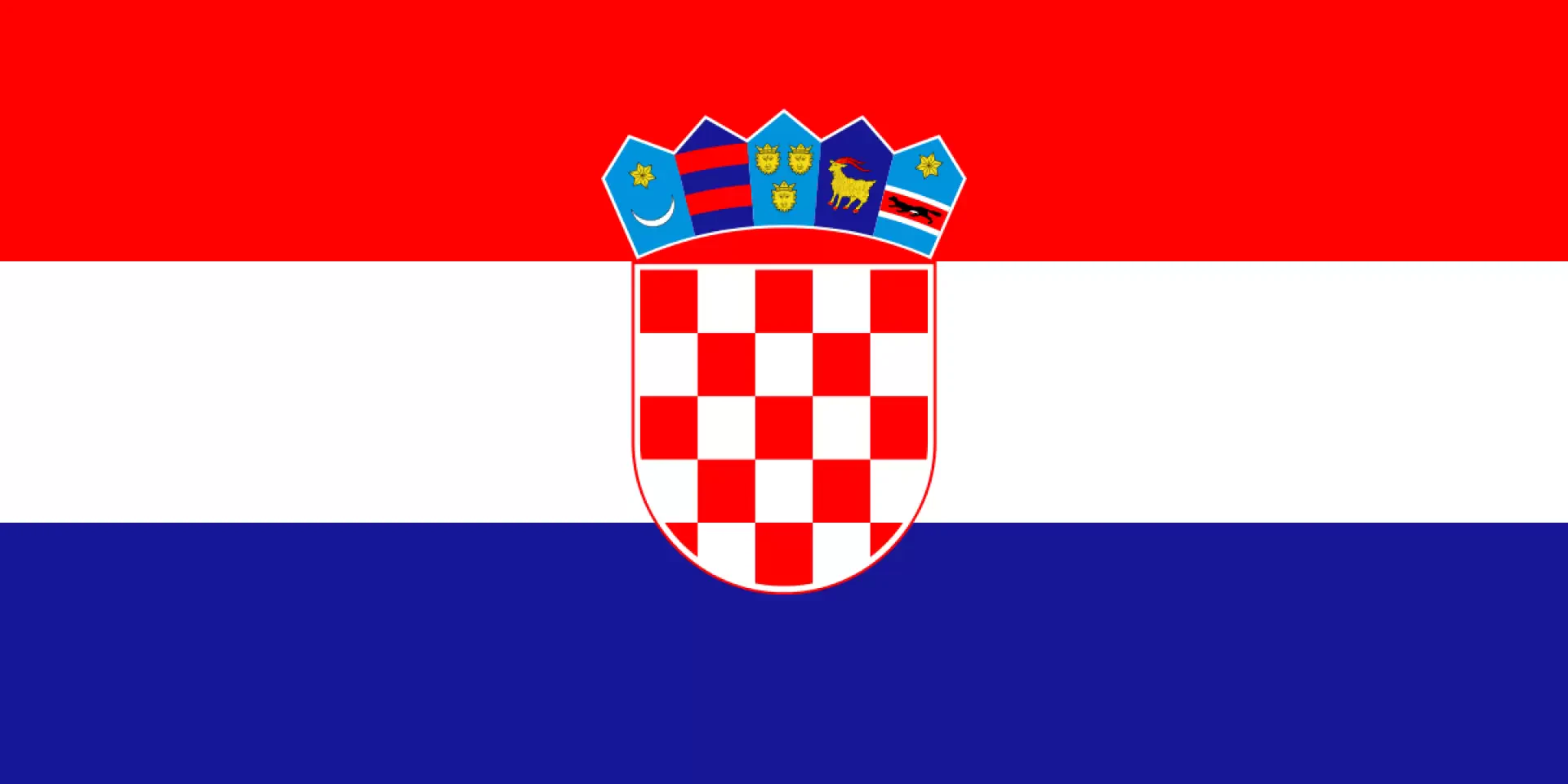

Edited by:
Massimo Martini
Access
Croatia can be reached from Italy mainly by sea and land. Ferries connect Italian ports - Ancona, Bari, Pescara, Trieste and Venice - with the coastal cities of Split, Zadar, Dubrovnik and Rijeka (Fiume), with crossings of 4-10 hours depending on the route. The overland route from Italy crosses Slovenia: from the [A4] motorway towards Trieste it joins the Slovenian and then the Croatian motorway network, with the Croatian [A1] motorway (Zagreb-Split motorway) covering the main section. Access to Dalmatia from Rome or central Italy is via Bosnia and Herzegovina. The main airports are Zagreb (ZAG), Split (SPU), Dubrovnik (DBV), Zadar (ZAD), Pula (PUY) and Rijeka (RJK); numerous direct flights serve these destinations from Italy in the summer season. The Croatian motorway network - mostly toll roads - is of good quality; the payment system accepts credit cards at toll stations. Access to the national parks (Plitvice, Paklenica, Risnjak, North Velebit) is by state roads; the high-altitude areas and the Velebit massifs require private transport to reach the starting points of the trails. Public transport between the main cities is efficient; in the mountain areas it is more limited.
Introduction
Croatia is a state in south-eastern Europe, a member of the European Union since 2013 and of the Eurozone from 2023. The country is bordered by the Adriatic Sea with approximately 1,778 km of continental coastline, plus 4,058 km of island coastline distributed among 1,244 formations (islands, islets and reefs). The 56,594 km² territory comprises four main geographical regions: the Pannonian Plain in the north-east (Slavonia), the Dinaric Alps in the centre-west, the Istrian Peninsula in the north-west and Dalmatia along the Adriatic coast. The highest peak is Dinara (1,831 m) on the border with Bosnia and Herzegovina. The country borders Slovenia and Hungary to the north, Serbia to the northeast, Bosnia and Herzegovina to the east and south, and Montenegro to the south. Croatia declared independence from the Yugoslav Federation in 1991 and, after a four-year war, completed its territorial unification in 1995. The capital is Zagreb.
Description
The Croatian territory is divided into three distinct systems. The Pannonian Plain, in eastern Slavonia, is fertile and flat, crossed by the Sava and Drava rivers. The Dinaric Alps occupy the central and western belt, with a predominantly karst landscape: polje, dolines, caves and canyons characterise Gorski Kotar, Lika and Croatian Herzegovina. The Dalmatian coastal area is the most indented in the eastern Mediterranean, with coves, peninsulas and islands spread along more than 400 km of the Adriatic coastline. The Velebit massif - the longest mountain range in Croatia (145 km) - separates Lika from Dalmatia and has two national parks (Paklenica and North Velebit). Dinara (1,831 m) is the highest peak. The system of caves and sinkholes in the Croatian Karst is among the richest in Europe: the Lukina jama - Trojama system in North Velebit reaches a depth of 1,431 m and is among the deepest caves in the world.
The history of Croatia is marked by the intersection of Roman-Byzantine, Slavic, Venetian, Hungarian and Habsburg influences. The Croats settled in the Balkans in the 7th century AD. The Duchy and later Kingdom of Croatia (9th-12th century) was one of the first Christian states in the region; in 1102, with the Pactum conventa, it entered into a personal union with the Kingdom of Hungary. Venetian rule over Dalmatia (14th-18th centuries) left a deep impression on the architecture, culture and law of the coastal towns. With the Congress of Vienna (1815), Croatia became part of the Austrian Empire; after 1867 it became part of the Austro-Hungarian Compromise with Transleitania (Kingdom of Hungary). Independence in 1918 led to the founding of the Kingdom of Serbs, Croats and Slovenes (later Yugoslavia). During World War II, the fascist regime of NDH (Independent State of Croatia, 1941-1945) committed serious crimes against Serbs, Jews and Roma. Socialist Croatia was the second largest economy in Tito's Yugoslavia, with important industrial centres in Rijeka, Zagreb and Split. The war of independence in 1991-1995 caused around 20,000 deaths and massive population displacements.
The Croatian economy is mainly based on tourism - which generated around 20% of GDP in 2023 - the pharmaceutical industry, shipbuilding, electronics and agriculture. Croatian tourism is concentrated along the Adriatic coast: the Istrian Riviera, the islands of Brač, Hvar, Korčula and Vis, and the city of Dubrovnik are the most popular destinations. Croatian wine - with indigenous grape varieties such as Plavac Mali, Graševina and Malvazija - is of increasing quality and geographically concentrated production in Dalmatia, Istria and Slavonia. The coastal cuisine, inspired by the Mediterranean, includes prstaci (sea dates), peka (meat or fish cooked under a hot lid), Istrian extra virgin olive oil and paška sir (cheese from the island of Pag).
The Croatian UNESCO heritage includes eight cultural sites: Diocletian's Palace in Split, the city of Dubrovnik, the historic centre of Trogir, the Euphrasian Basilica in Poreč, St Jacob's Cathedral in Šibenik, the necropolis of Stećci (shared with Bosnia, Montenegro and Serbia), the Venetian defence system in the 16th-17th centuries (shared with Italy and Montenegro) and the city of Zagreb (candidature pending). The Plitvice Lakes - 16 terraced lakes connected by waterfalls in the karst canyon of Lika - have been a UNESCO World Natural Heritage Site since 1979. There are eight national parks: Plitvice, Paklenica, Risnjak, Brijuni, Kornati, Krka, Mljet and North Velebit. Fauna includes the wolf (Canis lupus), bear (Ursus arctos), lynx (Lynx lynx), and griffon vulture (Gyps fulvus) populations on the islands of Cres and Krk.
Walking in Croatia is mainly developed in the North Velebit National Park, Paklenica and around the Plitvice Lakes. Paklenica National Park, in the southern part of Velebit, offers spectacular canyons and one of the most famous limestone walls in the Balkans for climbing. The Dinaric White Trail runs through Velebit and Risnjak National Park. The Velebit Transversal (e-Velebit) is a marked trail of approximately 100 km along the Velebit ridge. In Istria, the Parenzana - the route of the old railway converted into a cycling and walking track - is a 123 km long route between Trieste and Poreč.
Croatian mountaineering history is associated with Velebit and its limestone cliffs. The Paklenica National Park is home to the Velika Paklenica cliffs, among the most important in the Balkans for sport and classical limestone climbing, with over 350 routes. Dinara (1,831 m), the highest peak, can be reached by footpath from the settlement of Civljane. The Cetina gorges in Dalmatia offer opportunities for climbing and canyoning.
Trail running in Croatia has a lively scene, with events spread along the coast and inland. The Omiš Alka Ultra Trail (50 km through the Cetina gorges), Paklenica Marathon (42 km through the park), Istria100 by UTMB - an international race held annually in the spring on the Istrian plateau with distances from 10 to 170 km - and the Velebit Ultra Trail are the benchmark events. The Istria100, with its 170-kilometre course on Istrian white roads and trails, is part of the UTMB World Series circuit and is the most important trail running race in the country.
Information
General Data
Capital: Zagreb
Area: 56.594 km²
Minimum elevation: 0m (Adriatic coast)
Maximum elevation: 1,831m - Dinara
Number of inhabitants: 3,871.833 (2021 census)
Official name: Republika Hrvatska
Name of inhabitants: Croats
Countries: 20 + City of Zagreb
Border countries: Bosnia and Herzegovina - Montenegro - Serbia - Slovenia - Hungary
Institutional website: https://gov.hr