El Salvador
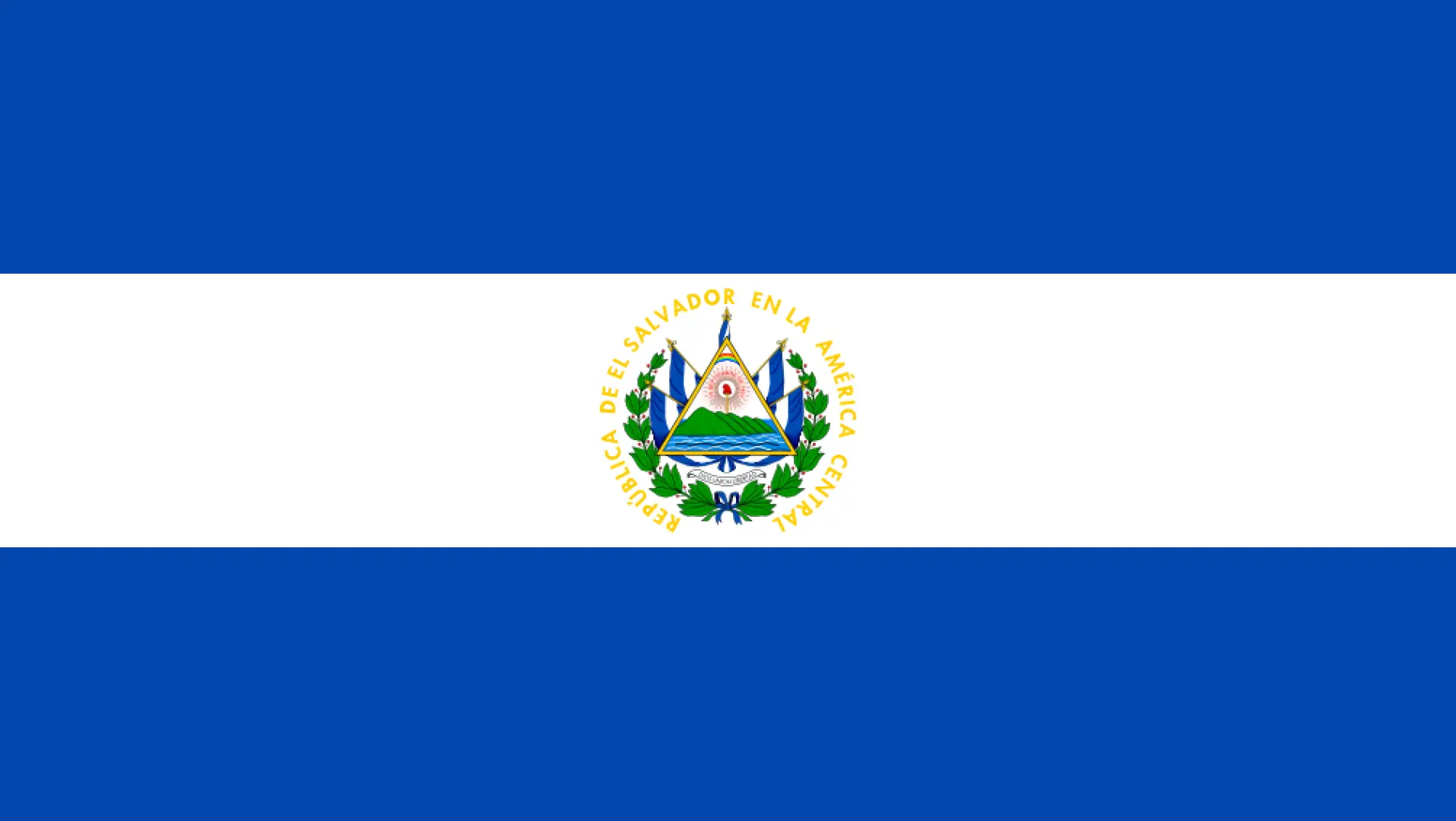

Edited by:
Massimo Martini
Access
El Salvador can be reached from Europe by air with a stopover in the United States at the El Salvador Monseñor Óscar Arnulfo Romero y Galdámez International Airport in the city of San Luis Talpa, 44 km from the capital San Salvador. From Guatemala one enters by land from the La Hachadura-Ciudad Pedro de Alvarado pass or from El Jocoal-Las Chinamas on the Carretera Panamericana. From Honduras, the border is crossed at El Poy-Ocotepeque and El Amatillo-El Puente. El Salvador is the only country in Central America without a Caribbean coastline, facing exclusively the Pacific Ocean. The road network is the best developed in the isthmus in proportion to its surface area: the Carretera Panamericana crosses the country from north-west to south-east, and dual carriageways connect the capital with the country's main cities. Intercity public transport is extensive with buses and microbuses. The Santa Ana volcano and inland national parks can be reached within a few hours from the capital.
Introduction
El Salvador is the smallest and most densely populated country in Central America, entirely facing the Pacific Ocean between Guatemala to the north-west and Honduras to the north and east. The territory is compact and predominantly mountainous, furrowed by the central volcanic chain that is home to numerous crater lakes and still active volcanoes. It is the only Central American state without access to the Caribbean Sea. The country's recent history has been marked by the civil war (1980-1992) and the subsequent democratic transition; the economic structure relies on remittances from emigrants - about one-fifth of the Salvadoran population lives in the United States - tourism and manufacturing. Despite its small size, the territory offers a variety of volcanic landscapes, lakes and coastlines that make it a growing outdoor destination.
Description
The Salvadoran territory is structured in three parallel belts: the coastal plain on the Pacific, a few kilometres wide with black volcanic sand beaches; the central volcanic chain, which runs from north-west to south-east with peaks over 2,000m and hosts the main urban centres between 650m and 900m above sea level; and the northern plains and valleys, drier and less densely populated. The volcano Santa Ana - or Ilamatepec - at 2,381m is the highest peak in the country; its crater houses a sulphuric acid lake with a characteristic greenish colour, one of the few acid volcanic lakes in Central America. The Izalco volcano, historically known as "The Lighthouse of the Pacific" for its eruptions visible from ships offshore, rises to 1,910m. Lake Coatepeque, of volcanic origin at an altitude of 740m, is one of the most picturesque lakes in the country. Lake Ilopango, on the outskirts of San Salvador, occupies the caldera of a super-eruption that occurred in 536 A.D., which, according to some scientific hypotheses, contributed to the global cooling of the climate at that time.
El Salvador's pre-Columbian history is linked to the Pipil - a Nahuatl-speaking people akin to the Aztecs - and to earlier Mayan presences. The Spanish conquest was led by Pedro de Alvarado in 1524-1525, with strenuous resistance from the Pipil chief Atlácatl. Having become part of the General Captaincy of Guatemala, the country proclaimed independence in 1821 and separated from the Central American federation in 1838. The social structure of the country was dominated for over a century by a small oligarchy of large landowners, the so-called "fourteen families" (Catorce Familias). The conflict between this oligarchic structure and left-wing political movements exploded in the civil war of 1980-1992, with around 75,000 casualties. The Chapultepec Peace Accords (1992) marked the start of democratisation, which is still evolving.
The Salvadoran economy has diversified in recent decades, moving from plantation agriculture - coffee, cotton, sugar cane - to an export-oriented manufacturing sector, with textile maquiladoras in free trade zones, and a dynamic tertiary sector. Remittances from US emigrants account for over 20% of GDP. El Salvador adopted the US dollar as its official currency in 2001, the first in Latin America. In 2021, the country adopted Bitcoin as legal tender, a controversial choice with a still uncertain scope. Salvadoran cuisine is characterised by pupusas, thick corn tortillas stuffed with cheese, beans and chicharrón, considered the national dish.
El Salvador is one of the countries with the highest percentage of protected territory in Central America in terms of its surface area. Montecristo National Park, on the border with Guatemala and Honduras, is home to a cloud forest at an altitude of 2,400m with an average temperature of 8°C and fauna that includes the puma and the tapir; it is established in a "trifinio" system between the three countries. El Imposible National Park, in the Sierra Apaneca in the south-west of the country, is the largest forest reserve in El Salvador and is home to 13 species of endangered fauna. The Santa Ana volcano and the Izalco volcano are part of the Parque Nacional Complejo Los Volcanes. The shining quetzal (Pharomachrus mocinno) is reported in the Montecristo Park.
The hiking focuses on the volcanic chain. The ascent to the volcano Santa Ana (2,381m) - from Cerro Verde in 4-5 hours - is the highest altitude trek in the country and offers views of Lake Coatepeque and the steaming Izalco. El Imposible Park offers 2-3 day treks through high altitude forests and waterfalls. The Montecristo Park trails (2,418m), accessible only with an authorised guide, cross one of the last cloud forests on the Isthmus. The Ruta de las Flores, in the Sierra Apaneca region between the villages of Nahuizalco, Salcoatitán, Juayúa and Apaneca, is a 3-4 day trekking route through cafetales and volcanic landscapes.
Classic mountaineering is limited by the country's modest altitude; the focus is on volcanic hiking. Trail running is on the rise, driven by the popularity of local races in the parks of the volcanic chain. The Ultra de los Volcanes crosses the slopes of Santa Ana and Izalco. The Santa Ana Summit Trail Run is a race up the highest volcano in the country.
Information
General Data
Capital: San Salvador
Area: 21.041 km²
Minimum elevation: 0m (Pacific coast)
Maximum elevation: 2,381m - Volcán Santa Ana (Ilamatepec) [to be verified slug]
Number of inhabitants: 6,486.000 (2020 estimates)
Official name: República de El Salvador
Name of inhabitants: Salvadorans
Border countries: Guatemala - Honduras
Institutional website: https://www.presidencia.gob.sv