Emilia-Romagna

Edited by:
Massimo Martini
Access
Emilia-Romagna is accessible from the north via the motorway (Milan–Bologna), the main access corridor from Lombardy. From the northeast converge the motorway (Padua–Bologna) and the motorway (Rimini–Bologna), the latter hugging the Adriatic coast. The motorway links the region to Tuscany, while the motorway ensures connection to Piedmont and the motorway to the Veneto. Trenitalia (TI) manages the main railway network with Bologna as its central hub: Bologna station is one of the main railway hubs in northern Europe, with frequent high-speed connections to Milan, Florence, Rome and other destinations. Regional rail service covers the entire region via lines serving the Apennine valleys as well. Regional public transport is provided by a network of regional and inter-regional buses. Reference airports are Bologna-Borgo Panigale, the region's main airport, and the secondary airports of Rimini and Parma. No significant seasonal constraints affect general access to the regional territory.
Introduction
Located between the course of the Po River to the north and the reliefs of the northern Apennines to the south, Emilia-Romagna represents one of the most developed regions of central-northern Italy. The territory is divided historically into two distinct geographic realities: Emilia, corresponding to the plain and western valleys, characterized by an administrative and cultural tradition linked to medieval duchies; Romagna, which includes the Adriatic coastal area and eastern valleys, with its Tuscan and Byzantine heritage and history. It borders to the north with Lombardy and the Veneto, to the west with Piedmont and Lombardy, to the south with Liguria, Tuscany, the Marches and the Republic of San Marino, to the east it opens onto the Adriatic. The region is characterized by a balance between fertile plains and mountain reliefs, reflecting complex and stratified economic, cultural and landscape wealth.
Description
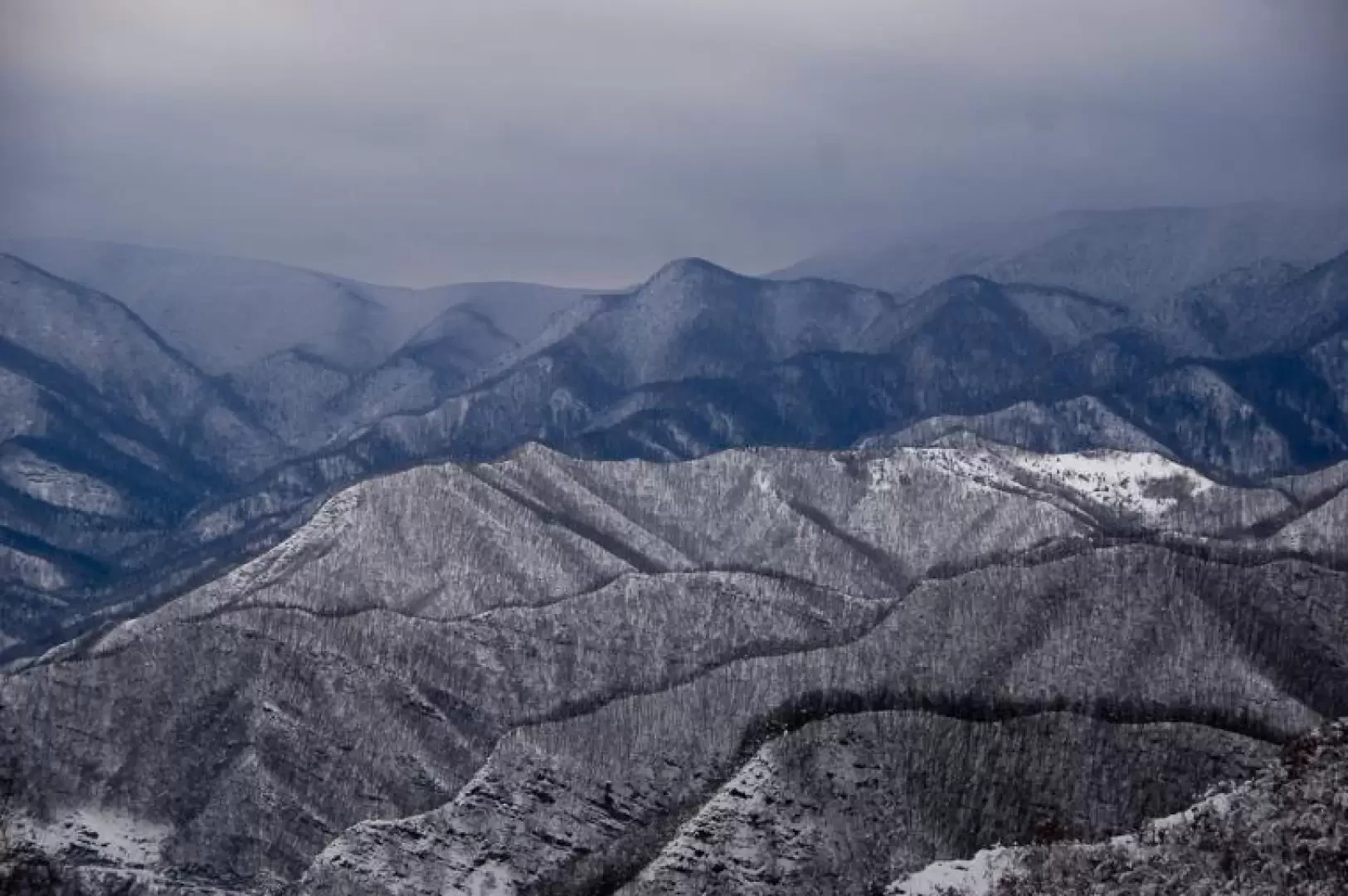
Emilia-Romagna extends over a territory of approximately 22,450 km², with a configuration unique in the Italian landscape: the Via Emilia, built by Roman consul Mark Aemilius Lepidus in 187 BC, still divides the territory today into two almost equivalent zones, the plains to the northeast and hills and mountains to the southwest. The Po Valley covers 47.8% of the total surface area and is traversed by the Po, Italy's largest watercourse, as well as numerous tributaries such as the Enza, Parma, Taro, Trebbia, Secchia and Panaro. The southern portion is occupied by the northern Apennines, subdividing between the Tuscan-Emilian Apennines and the Tuscan-Romagnol Apennines, reaching maximum altitudes in the central zone: Monte Cimone (2,165m) is the highest peak not only of the region but of the entire northern Apennines. The Adriatic coastal territory presents a low, sandy coast with extensive beaches, particularly in the Riviera romagnola, and important lagoon areas such as the Comacchio Valleys and the Po Delta.
Historically, the territory has undergone significant transformations. Emilia was subjected to the Lombards in the 6th century and became the seat of important medieval duchies (Parma, Piacenza, Modena, Reggio Emilia, Ferrara), while Romagna remained for centuries under Byzantine control and later Papal States rule. In the 12th century independent communes emerged, with Bologna becoming one of Europe's most important cultural centers (founding of the University in 1088, the oldest in the West). During the Renaissance, cities like Ferrara and Mantua were the seats of important ducal courts under the Este family. Emilia and Romagna were reunified in 1947 into a single Italian administrative region.
The economy of the region is among the most dynamic in Italy. The agricultural sector of the plains is extremely productive: the region is Italy's leading producer of peaches (Prunus persica) and pears, and among the top producers of fruits, vegetables and cereals. Cattle and pig farming is developed on a large scale, with internationally recognized Protected Designation of Origin products such as Parmigiano Reggiano, Parma Ham and Lambrusco. The industrial sector is highly diversified and represents a share above the national average of regional GDP: the provinces of Modena, Reggio Emilia and Bologna are centers of the "Land of Motors" with world-renowned mechanical industries (Ferrari, Lamborghini, Maserati, Ducati); Parma and Piacenza host major food industries (Barilla, Parmalat); Ravenna is a chemical industry center; the ceramics sector in Sassuolo is a European leader. Cooperatives, particularly widespread in Reggio Emilia, Modena and Bologna, represent a significant economic model. Coastal tourism in the Riviera romagnola is one of Italy's main tourist attractions, with over 42 million annual presences in 2022.
Emilia-Romagna possesses rich biodiversity. In the Apennines important beech forests are preserved (over 100,000 hectares), with nuclei of silver fir (Abies alba) and spruce (Picea abies); in deciduous forests live foxes (Vulpes vulpes), badgers (Meles meles), porcupines (Hystrix cristata), red deer (Cervus elaphus), roe deer (Capreolus capreolus), wolves (Canis lupus) and other ungulates. The plains preserve fragments of mixed forests with oaks, hornbeams and willows. Coastal and lagoon areas host significant colonies of greater flamingos (Phoenicopterus roseus), herons and ducks. In the Apennines are also found the southernmost populations of Scots pine (Pinus sylvestris) in Italy.
The region is protected by two national parks shared with Tuscany: the National Park of the Casentino Forests, Monte Falterona and Campigna (with the Sasso Fratino Integral Nature Reserve, a UNESCO World Heritage Site) and the National Park of the Tuscan-Emilian Apennines. There are also fourteen regional parks and numerous reserves and protected areas, with the province of Ferrara having the highest percentage of protected territory. Among the main protected areas are the Corno alle Scale Regional Park, the Alto Appennino Modenese Regional Park, the Vena del Gesso romagnola and the Po Delta Regional Park.
Hiking and outdoor activities find diversified opportunities in Emilia-Romagna. The northern Apennines offer numerous medium-difficulty treks through beech forests and high-altitude pastures, with celebrated routes such as the Lago dei Tre Signori and the Tuscan-Romagnol Ridge trails. Mountaineering finds its objectives in the Punta di Galizia group and in well-equipped alpine refuges such as the Fedare Refuge and the Bargetana Refuge. Ski-touring is practiced on the slopes of Monte Cimone and in lateral valleys, while cross-country skiing finds ideal terrain on the Cutigliano plateaus. Numerous equipped via ferrata characterize the walls of the central Apennines. Mountain biking finds technical routes in the Reggio Emilia and Modena valleys, while trail running attracts athletes to the piedmont areas. The Riviera romagnola offers coastal cycling and numerous low-difficulty hiking trails.
Information
General data
Capital: Bologna
Surface area: 22,453 km²
Minimum altitude: 0m (Adriatic coast)
Highest elevation: 2,165m – Monte Cimone
Number of inhabitants: 4,467,082 (as of 31 December 2024)
Name of inhabitants: Emilian and Romagnol
Metropolitan city and provinces: Metropolitan City of Bologna – Province of Ferrara – Province of Forlì-Cesena – Province of Modena – Province of Parma – Province of Piacenza – Province of Ravenna – Province of Reggio Emilia – Province of Rimini
Municipalities: 330 – list - map
Bordering regions and territories: Liguria – Lombardy – Marches – Piedmont – Tuscany – Veneto (Italy); Republic of San Marino
Nation of belonging: Italy
Official website: https://www.regione.emilia-romagna.it