Greece
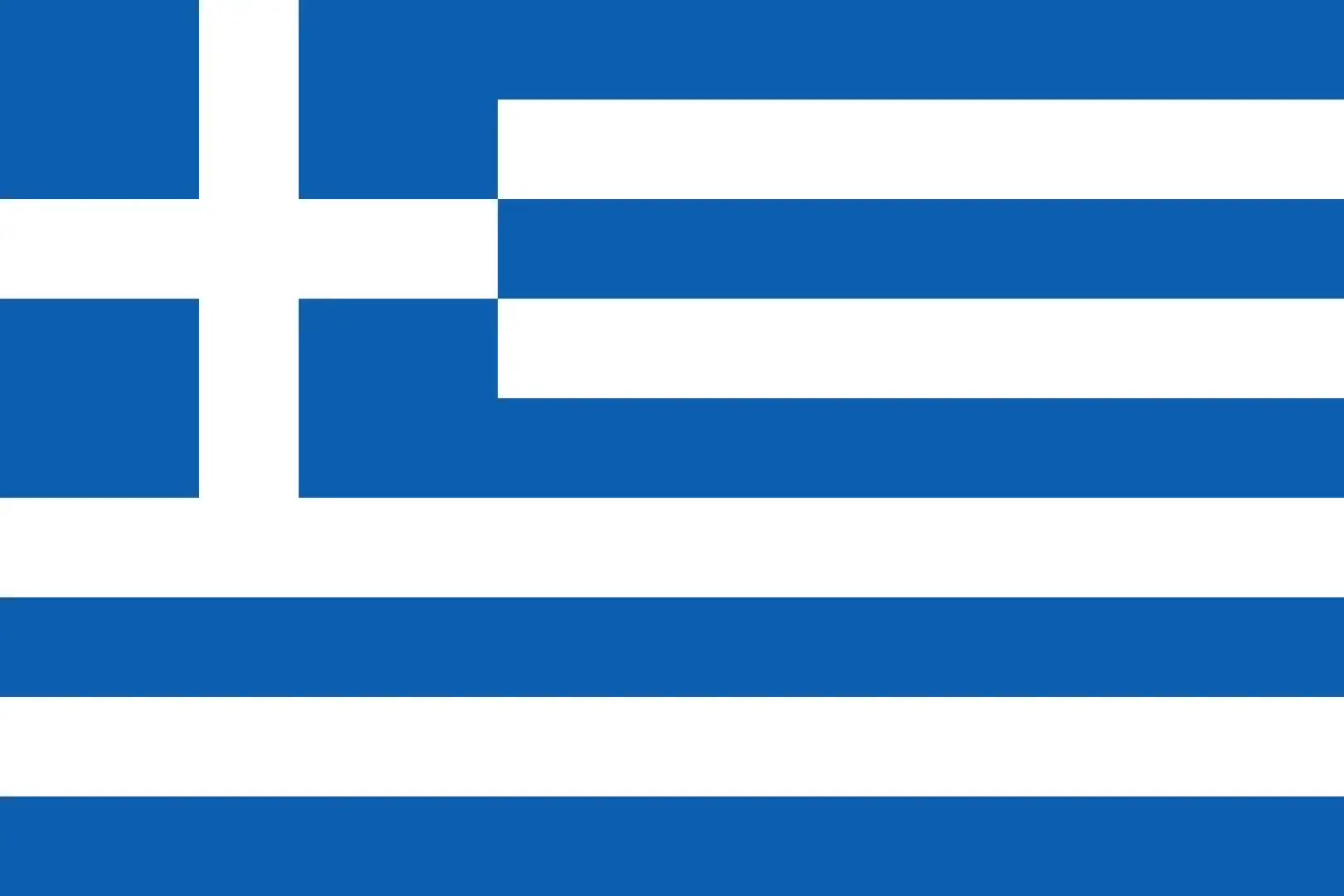

Edited by:
Massimo Martini
Access
Greece can be reached from Italy mainly by sea and air. Ferries connect the ports of Bari, Brindisi, Ancona, Venice and Trieste with the ports of Patras (main port for the Peloponnese and mainland Greece), Igoumenitsa (for Epirus) and Corfu; crossings vary from 8 to 20 hours depending on the route. The traditional overland rail link through the former Yugoslavia is less busy today; the road route passes through Slovenia, Croatia, Bosnia or Serbia and then North Macedonia or Bulgaria, with access into Greece from the northern passes. Eleftherios Venizelos International Airport in Athens (ATH) is the main port of call, with direct flights from all major cities; secondary international airports are Thessaloniki (SKG), Crete (HER, CHQ), Rhodes (RHO) and several Aegean islands, served by seasonal flights. The Greek motorway network - the Egnatia Odos (A2) crossing northern Greece from west to east and the PATHE linking Patras to Athens and then Thessaloniki - is of good quality and tolled. Access to Mount Olympus is from Litochoro, on the eastern side, by the state road [E75] from the Thessalian plain; the road climbs up to the village of Prionia (1,100 m), the starting point of the main path. The roads on the islands are generally provincial; inter-island ferries complete the network.
Introduction
Greece is a southern European state, a member of the European Union since 1981, located at the south-eastern tip of the continent, with a large portion of island territory distributed in the Aegean, Ionian and Mediterranean Seas. The Greek territory is divided into a continental peninsula comprising Macedonia, Thrace, Thessaly, Epirus, Boeotia, Attica and the Peloponnese, and an archipelago of some 6,000 islands and islets, of which some 230 are inhabited. The total area is 131,957 km². Eighty per cent of the territory is mountainous: the Pindus mountain range crosses the country from north to south as the main ridge, with Mount Smolikas (2,637 m); Mount Olympus (2,917 m), in eastern Macedonia, is the highest peak in the country and the second highest in the entire Pindinaric-Balkan chain. Greece borders Albania, North Macedonia and Bulgaria to the north, Turkey to the northeast, and is bordered by the Ionian Sea to the west, the Mediterranean Sea to the south and the Aegean Sea to the east. The capital is Athens. Greece is recognised as the cradle of Western civilisation, democracy, philosophy and the Olympic Games.
Description
The Greek territory is one of the most fragmented and morphologically complex in Europe. The Pindus mountain range is the backbone of the Greek continent, with its peaks above 2,000 m, deep gorges (Vikos Gorge, the deepest in Europe) and intramontane basins (Thessaly). Olympus - Greece's first national park (1938) and a UNESCO Biosphere Reserve (1981) - dominates the north-eastern sector with its main peak, Mitikas (2,917 m), which can be reached from the Spilios Agapitos refuge. The massif has over 1,700 plant species, 25 of which are endemic. On the island of Crete, Mount Ida (Psiloritis, 2,454 m) is the highest peak on the island; the White Mountains (Lefka Ori, 2,452 m) complete the Cretan mountain system. The Peloponnese is home to the Taigeto (2,404 m) and the Parnon and Erimanto massifs. The main rivers - Vardar, Strimone, Nestós, Acheloo, Peneio - have irregular flows and torrential regimes in dry summers. The main lakes are artificial or lagoon lakes; the most important natural ones are Presp in the north and Trichonida in Aetolia-Akarnania.
The Greek civilisation is the oldest in the western world. The Minoan and Mycenaean cultures (3000-1100 BC) precede the so-called Dark Ages. Archaic Greece (8th-6th century BC) saw the birth of city-states (poleis), alphabetic writing (derived from the Phoenician script), lyric poetry and epics (Homer). Classical Greece (5th-4th centuries BC) was the period of cultural and political splendour: the Athens of Pericles, Plato, Aristotle, Thucydides, Sophocles, Phidias - builder of the Parthenon - are the emblematic figures. The Persian Wars (490, 480 BC) and the subsequent hegemony of Alexander the Great (336-323 BC) transformed the eastern Mediterranean. The Roman conquest (146 BC) and then the Byzantine Empire (330-1453 AD) with Constantinople as its capital extended the influence of Greek culture. The fall of Constantinople (1453) brought four centuries of Ottoman rule. The War of Independence (1821-1829) led to the birth of the modern Greek state. The 20th century was marked by World War I, the Asia Minor disaster (1922), the Metaxas dictatorship (1936-1941), the German occupation (1941-1944) and the subsequent civil war (1946-1949). The dictatorship of the Colonels (1967-1974) was followed by the restoration of parliamentary democracy.
The Greek economy is based on tourism (around 25 per cent of GDP), the merchant navy (the Greek fleet is the first in the world in terms of tonnage), agribusiness (olive oil, wine, olives, yoghurt, cheeses such as feta) and manufacturing. The sovereign debt crisis (2009-2018) required three international bailout programmes (Troika) with drastic austerity measures and led to a significant drop in GDP. The shipping industry, maritime insurance and financial services related to maritime transport are sectors of international excellence. Greek gastronomy - moussaka, souvlaki, loukoumades, spanakopita, dolmades, tzatziki, retsina wines and Assyrtiko from Santorini - is among the most popular in the Mediterranean. Greece is home to 18 UNESCO sites, including the Acropolis of Athens, Olympia, Delphi, the Monastery of Meteora, the early Christian city of Thessaloniki and the Islands of Delos.
The Greek protected areas system includes 12 national parks. The main ones by outdoor interest are the Olympus National Park, the Pindos National Park (Vikos-Aoös), the Prespa National Park and the Rhodope Mountains National Park. The Pindos National Park, with the Vikos Gorge (up to 1,200 m deep, Guinness World Record for the deepest gorge in relation to its width), the Thessaly National Park and the Parnassos massif (home to the Arachova-Parnassos ski resort) are the most popular mountain areas. The Greek fauna includes brown bears (Ursus arctos) - with one of the last significant Balkan populations in the Pindus forests - wolves (Canis lupus), Balkan chamois (Rupicapra rupicapra balcanica) on the high peaks of Pindus and Olympus, and exceptional birdlife along the wetlands of the north.
Greek hiking is mainly developed on Mount Olympus, Pindos and the Samaria Gorge on the island of Crete (the longest gorge in Europe, 16 km). Mount Olympus can be reached from Litochoro by an ascent to the Spilios Agapitos refuge (2,100 m, open May-October) in approximately 3-4 hours, and then to the main summit in 2-3 hours over EE terrain. The E4 European Long Distance Path crosses Greece from the north-west towards the Peloponnese and Crete, with variations on the islands. The Vikos-Aoös National Park offers wild trekking in Zagoria, with the stone villages of the Zagorochoria connected by Ottoman bridges. The Samaria Gorge (national park, access from Omalos, 1,250 m) can be hiked downhill in 4-6 hours.
The mountaineering history of Greece is mainly associated with Olympus. The first ascent to the summit of Mitikas (2,917 m) was made on 2 August 1913 by Christos Kakkalos, a local guide from Litochoro, together with Swiss mountaineers Frederic Boissonnas and Daniel Baud-Bovy. Olympus offers mountaineering routes on limestone up to grade 5c; the Kakkalos Ridge and the "Stefani" route are the historic routes. The limestone walls of Pindos and Taigeto offer quality rock climbing. The cliff of Kalymnos, on the island of the same name in the Dodecanese, is one of the most renowned climbing sites in the Mediterranean, with over 1,500 routes in compact limestone, an international destination for climbers.
Trail running in Greece is growing strongly, with the Olimpus Marathon (44 km, 2,200 m D+) as the national and international benchmark race, held annually in June. The race reaches the Stefani peak (2,909 m) and is considered one of the most challenging mountain running competitions in Europe. The Kalymnos Trail, the Zagori Mountain Running and the Lakopetra Trail Run (in the Peloponnese) complete the national calendar.
Information
General Data
Capital: Athens
Area: 131.957 km²
Minimum elevation: -1m (coastal plains)
Maximum elevation: 2,917m - Mount Olympus (Mitikas)
Number of inhabitants: 10,482.487 (2021 census)
Official name: Ellīnikī́ Dīmokratía
Name of inhabitants: Greeks
Neighbouring countries: Albania - Bulgaria - Macedonia of the North - Turkey
Institutional site: https://www.primeminister.gr