Honduras
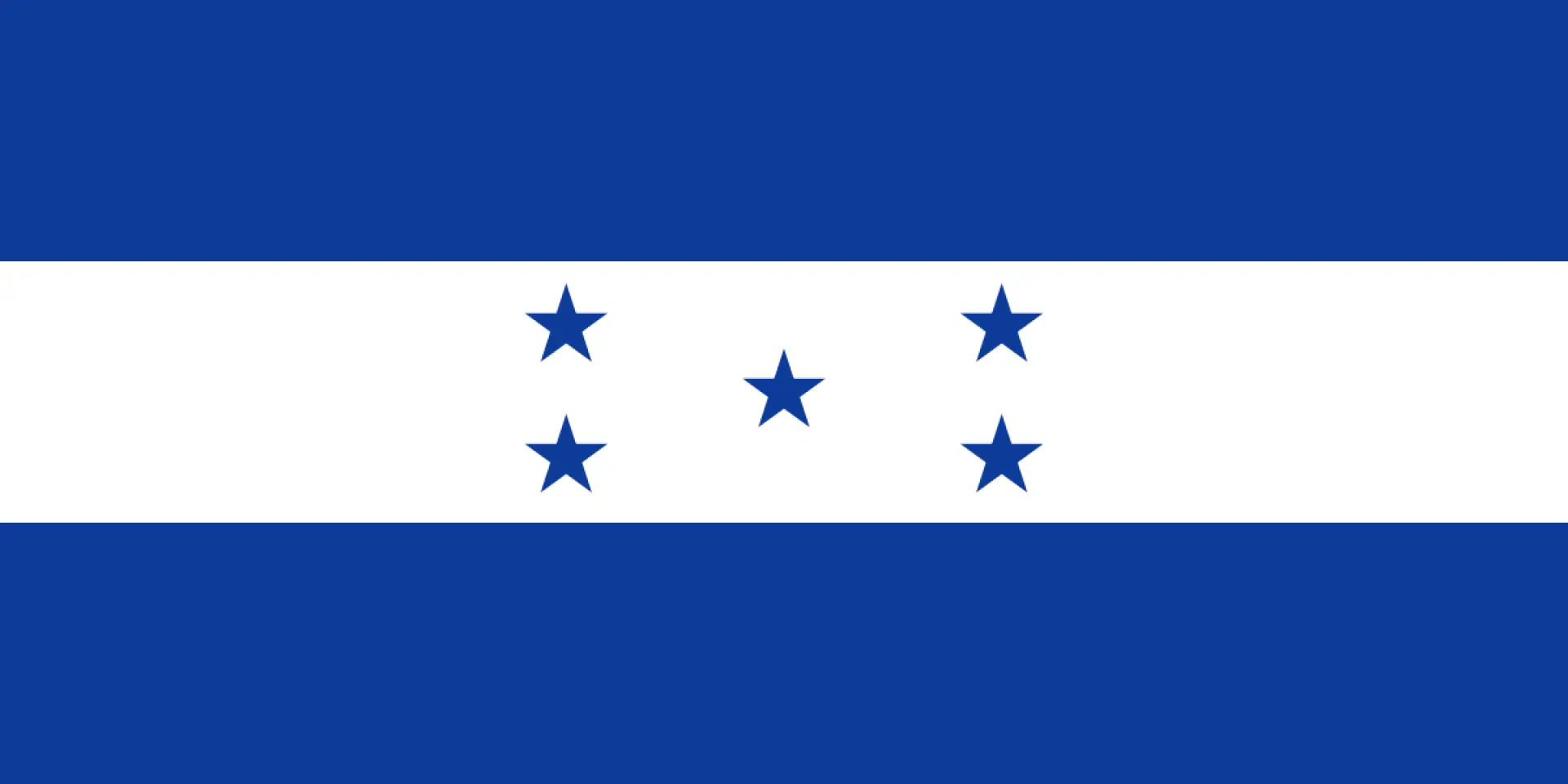

Edited by:
Massimo Martini
Access
Honduras can be reached from Europe by air with stopovers in Miami, Houston or Atlanta, to the Ramón Villeda Morales International Airport in San Pedro Sula - the main commercial airport - or to the Toncontín International Airport in Tegucigalpa. The city of Roatán, in the Islas de la Bahía, has an international airport with flights from several US cities. By land, the border with Guatemala is crossed at Agua Caliente-Esquipulas; with El Salvador at El Poy and El Amatillo; with Nicaragua at El Espino and Las Manos-Ocotal. The Carretera Panamericana runs through the southern part of the country. The road network is developed in the flat areas of the north and south, but uneven in the mountainous interior, where many communities can only be reached by off-road vehicles. There is no passenger rail network. Intercity transport is mainly by bus. The Islas de la Bahía and the Islas del Cisne off the north coast can also be reached by ferry from La Ceiba.
.Introduction
Honduras is the second largest country in Central America, after Nicaragua, with a predominantly mountainous territory occupying more than 80% of the national surface. It faces the Caribbean Sea to the north and has a short access to the Gulf of Fonseca on the Pacific Ocean to the south-west. It borders Guatemala to the west, El Salvador to the southwest and Nicaragua to the southeast. The relief is characterised by a series of high plateaus and mountain ranges, with peaks approaching 3,000m without reaching the heights of the Guatemalan volcanoes. The country is home to the remains of the Mayan city of Copán, one of the most important archaeological sites in the entire Mayan area due to the richness of its carved stelae and altars. Recent history is marked by political instability, migration and the fight against drug trafficking, which make some inland areas difficult to access.
.Description
The Honduran morphology is dominated by the central plateau, a platform of ancient rocks that stretches between 600m and 2,000m above sea level, cut by deep river valleys and articulated in a series of mountain ranges with no clear orographic continuity. The main peaks are in the Sierra de Celaque, where Cerro Las Minas reaches 2,870m - or 2,827m according to some sources - in the department of Ocotepeque, on the border with El Salvador. The northern Caribbean coast, Costa de los Mosquitos, is flat and rainforest-covered, with lagoons and swampy river systems. Offshore are the Islas de la Bahía - Roatán, Utila, Guanaja - on the first offshoots of the Mesoamerican coral reef, a well-known diving site with some of the lowest prices in the Caribbean.
The country's pre-Columbian history is linked to the Maya peoples - present mainly in the western areas - and to Lenca, Tolupán, Pech and Tawahka peoples inland. Copán, in the department of the same name on the Guatemalan border, was one of the main centres of the Classic Maya world between the 5th and 9th centuries A.D.; its stelae and altars with depictions of rulers and gods represent some of the most elaborate Maya sculptures; the site has been a UNESCO World Heritage Site since 1980. The Spanish conquest was led by Cristóbal de Olid and Pedro de Alvarado from 1524; Honduras became part of the Captaincy General of Guatemala. After independence in 1821 and the dissolution of the Central American federation (1838), the country experienced decades of instability, with frequent coups d'état and US interference - particularly by the large fruit companies United Fruit and Standard Fruit, which controlled its economy and politics for decades, justifying the term banana republic.
The Honduran economy is one of the poorest in Latin America, with a structure mainly based on agriculture - banana, coffee, oil palm, sugar cane - and the maquiladora industry, with free trade zones in the north of the country. Remittances from emigrants - around one fifth of the population lives abroad, mainly in the USA - constitute the second largest item of GDP after agricultural exports. Tourism is growing, driven by ecotourism in the hinterland and the Islas de la Bahía. Honduran cuisine is centred on plato típico, with rice, refried beans, grilled meat, fried banana tajadas and corn tortillas.
Protected areas in Honduras cover about 25 per cent of the territory. The Parque Nacional Celaque, in the Sierra de Celaque, protects the country's highest peak at 2,870m and one of the last cloud forests in Honduras, a refuge for the quetzal (Pharomachrus mocinno) and Baird's tapir (Tapirus bairdii). The Parque Nacional Cusuco, near San Pedro Sula, is home to pine and oak forests at altitudes between 1,500m and 2,242m. The Rio Plátano Biosphere Reserve, a UNESCO World Heritage Site since 1982 and located on the eastern Caribbean coast, is the largest tropical reserve in North Central America; it is home to rainforests, mangroves and one of the last tapir populations in the region, as well as Misquito, Pech and Garifuna communities.
The hiking is mainly in the Sierra de Celaque. The ascent to Cerro Las Minas (2,870m) takes 2-3 days from the village of Gracias and offers routes through cloud forests with a high probability of spotting quetzals and toucans. The Montaña de Yoro National Park, in the department of the same name, and the Cusuco Park offer multi-day trails through high altitude forests. The arqueological sites of Copán are complemented by a small trail in the surrounding forest. The Rio Plátano and northern Mosquitia biosphere reserves require specialised guides and river or air transport.
Honduras' low altitudes limit the development of technical mountaineering. Trail running has a few local races in the national parks; of particular note is the Trail Las Minas, which uses the trails of the Parque Nacional Celaque. The discipline is growing among local runners, with trails that exploit the vertical contours of the inland mountain valleys.
Information
General Data
Capital: Tegucigalpa
Area: 112.492 km²
Minimum elevation: 0m (Caribbean and Pacific coasts)
Maximum elevation: 2,870m - Cerro Las Minas (Sierra de Celaque)
Number of inhabitants: 9,893.000 (estimates 2024)
Official name: República de Honduras
Name of inhabitants: Hondurans
Border countries: Guatemala - El Salvador - Nicaragua
Institutional website: https://www.presidencia.gob.hn