India
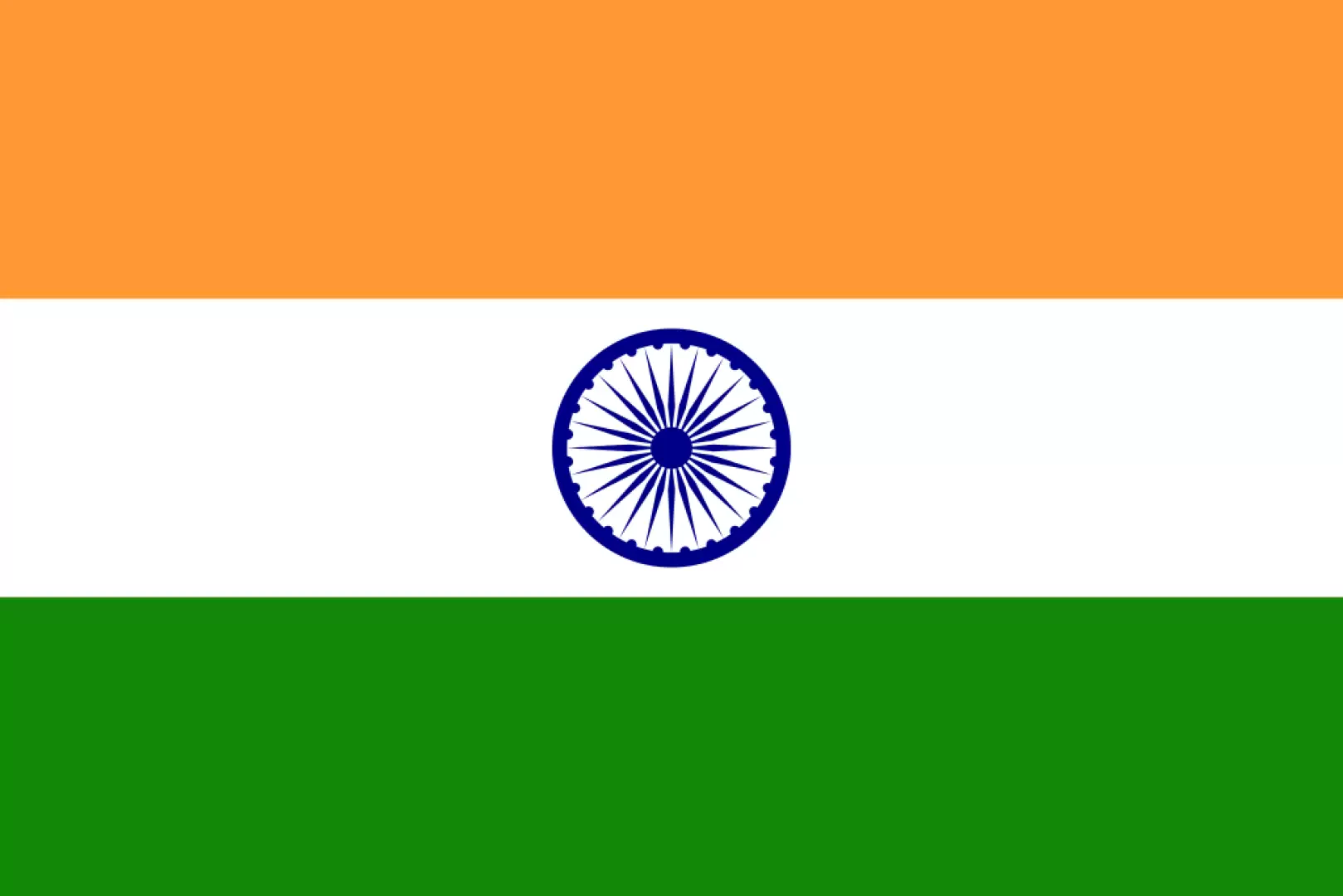

Edited by:
Massimo Martini
Access
India can be reached from Europe mainly by air, with direct flights to the main domestic hubs. New Delhi's Indira Gandhi International Airport is the country's main hub, with extensive intercontinental connections, followed by Mumbai's Chhatrapati Shivaji Maharaj International Airport, Bengaluru's Kempegowda and Calcutta's Netaji Subhas Chandra Bose. For access to the Himalayan areas, the airports of Bagdogra (West Bengal), the gateway to Sikkim and the Kanchenjunga area, and Leh, in Ladakh, are the main points of reference for mountaineers and trekkers; the latter is only operational in the summer months, with variable opening windows depending on weather conditions and military authorisations, given its strategic position in the border area. The railway network, managed by Indian Railways, is one of the most extensive in the world, with over 67,000 kilometres of lines: it connects all the large cities and many medium-sized centres, with Vande Bharat high-speed trains for the main routes and long-distance night express trains. For the Himalayan regions, the narrow-gauge railway from New Jalpaiguri to Darjeeling - included in the UNESCO World Heritage List - is the historic link to the Kanchenjunga area. The road system is divided into National Highways covering major routes and state and district roads of varying quality; in the mountainous areas of Ladakh and Himachal Pradesh, many road passes - including the Khardung La, Rohtang and Baralacha - are only passable between June and October due to snow. For some militarily sensitive areas, such as Ladakh and Arunachal Pradesh, foreign visitors need specific permits (Inner Line Permit or Protected Area Permit).
.Introduction
India occupies the large peninsula of the Indian subcontinent, projecting towards the Indian Ocean between the Arabian Sea in the west and the Bay of Bengal in the east, and extending northwards to the Himalayan ranges that define its border with Nepal, China and Bhutan. The territory, among the largest in Asia, embraces radically different morphologies: the alluvial plains of the Ganges and Indus in the north, highly fertile and densely populated; the Deccan, the great peninsular basaltic plateau; the Western and Eastern Ghati, coastal ranges framing the peninsula; and the Himalayas with their offshoots, from Ladakh to Arunachal Pradesh, with peaks over eight thousand metres on the border with Nepal and China. The country borders Pakistan, China, Nepal, Bhutan, Bangladesh and Myanmar, and its geographical location has made it a crossroads of trade routes, migrations and contacts between civilisations for millennia. Its ethnic, linguistic and religious diversity is among the most articulate in the world: more than twenty languages recognised by the Constitution, hundreds of dialects, and a coexistence of Hinduism, Islam, Buddhism, Sikhism, Jainism and Christianity that has profoundly shaped its culture and landscape. The country is the most populous democracy in the world, with over 1.4 billion inhabitants.
Description
The physical structure of the country revolves around three major morphological domains. The first is the Himalayan belt, which stretches more than 2,500 kilometres along the northern borders: it is home to some of the highest peaks on Earth, including the Kanchenjunga (8,586m), the third highest mountain in the world, bordering Sikkim and Nepal, and numerous other seven-thousanders in the Garhwal and Kumaon ranges. The second domain is the Indo-Gangetic plain, created by the alluvial deposits of the Indus, Ganges and Brahmaputra: a flat strip of exceptional fertility that is home to most of the population. The third is the Deccan Peninsula, a plateau of Precambrian rocks of modest average elevation, bordered by the Western Ghats - a continuous chain between 900 and 2,695 metres, culminating at Anamudi in Kerala - and the less elevated Eastern Ghats towards the Bay of Bengal. The hydrographic system is dominated by the Ganges, a river sacred to Hinduism, which flows for some 2,500 kilometres from its source in Gangotri in Uttarakhand to the Bengal Delta; the Indus has its source in Tibet and flows through Ladakh before entering Pakistan; the Brahmaputra makes a spectacular course around the Namcha Barwa massif before descending into Assam.
The civilisation of India is among the oldest in the world: the Indus Valley culture, with the centres of Mohenjo-daro and Harappa (now in Pakistan), developed between the 3rd and 2nd millennium BC. The Vedic period, with the composition of the sacred texts of the Vedas, marked the emergence of the Hindu tradition; the 6th century B.C. saw the birth of Buddhism under Siddhartha Gautama in Bihar and of Jainism. The Maurya Empire, with Ashoka (3rd century BC), unified much of the subcontinent by spreading Buddhism; the Guptas (4th-6th century AD) produced an intense cultural and scientific flowering. Islamic invasions from the 11th century onwards led to the formation of the Delhi Sultanate and, in the 16th century, the Mughal Empire, which left monuments of extraordinary quality, including the Taj Mahal in Agra, the forts of Agra and Delhi, and the cities of Fatehpur Sikri. British colonisation, initiated by the East India Company in the 17th century and consolidated with direct rule by the Crown from 1858, ended with independence on 15 August 1947, achieved under the leadership of Mahatma Gandhi through non-violence; the simultaneous partition of the subcontinent into India and Pakistan was accompanied by one of the largest population movements in history.
The economy is the fifth largest in the world by nominal GDP and one of the most dynamic among the emerging countries: the service sector, especially IT and outsourcing, is the most developed, with technological hubs in Bengaluru, Hyderabad and Pune; agriculture still employs about half the workforce, with production of rice, wheat, tea, cotton and spices; the manufacturing industry is growing, with internationally important automotive, pharmaceutical and textile sectors. Indian cuisine is among the most diversified in the world, with profound differences between north and south: the tandoor and naan bread in Punjab, Kerala curries with coconut and tamarind, Gujarati dhokla and thali, and vegetarian preparations in Tamil Nadu reflect the multiplicity of ingredients and regional culinary traditions.
Protected areas cover about 5% of the territory: India is home to 106 national parks and over 550 biosphere reserves and wildlife sanctuaries. The Tiger Project, initiated in 1973, has enabled the recovery of Bengal tiger (Panthera tigris tigris) populations, distributed in the Corbett, Bandhavgarh, Ranthambore and Sundarbans reserves. The Nilgiri Biosphere Reserve, in the state of Tamil Nadu and Kerala, is the largest in India and is home to the Asian elephant (Elephas maximus), the leopard (Panthera pardus) and the gaur (Bos gaurus). Kaziranga National Park in Assam is the main refuge of the Indian rhinoceros (Rhinoceros unicornis). India's UNESCO sites are among the most numerous in Asia and include, among the natural, the Sundarbans - the world's largest mangrove forest, shared with Bangladesh - and the Manas National Park; among the cultural, the Taj Mahal, the Agra Fort, Ajanta and Ellora, Hampi, the Elephanta caves and the Darjeeling railway.
Hikers in India are mainly concentrated in the Himalayan belt. The Garhwal and Kumaon valleys in Uttarakhand offer classic treks to the Gangotri and Pindari glaciers and to the Roopkund basins, known for the skeletal remains of medieval pilgrims found at the bottom of the glacial lake. Ladakh, with its high-altitude Buddhist landscape, offers treks between the Lamayuru, Hemis and Phugtal monasteries, and traverses such as the Markha Valley or the Chadar Trek on the frozen Zanskar River. In Sikkim, the routes to the Kanchenjunga base camp pass through forests of rhododendron (Rhododendron arboreum) and bamboo. Himachal Pradesh offers the Hampta Pass, the Pin Parvati Pass and the extensive Kullu Valley trail network. The Great Himalayan Trail crosses the country from east to west in its Indian section, linking Arunachal Pradesh to Uttarakhand in a high altitude trekking route.
India's mountaineering history is linked to the exploration of the Himalayan ranges of Uttarakhand, Sikkim, Himachal Pradesh and Ladakh. Kanchenjunga (8,586m), the highest point in the country, was climbed for the first time on 25 May 1955 by George Band and Joe Brown, of the British expedition led by Charles Evans, with the traditional renunciation of touching the last rock as a mark of respect for local beliefs. The Nun (7,135m) and Kun (7,077m), in Ladakh, were first climbed by European expeditions in the 1930s and 1950s. The peaks of the Garhwal Himalaya - Kamet (7,756m), Trisul (7,120m), Nanda Devi (7,816m) - represent fundamental chapters in the history of 19th and 20th century mountaineering: Nanda Devi, in particular, was first climbed in 1936 by H.W. Tilman and Noel Odell and is protected by a nature sanctuary of controlled access. The figures of Eric Shipton and H.W. Tilman, who systematically explored India's great Himalayan valleys in the 1930s, defined the style of light high-altitude exploration.
Trail running in India has undergone significant development in recent years, particularly in the Himalayan regions. The Himalayan Run & Trek, a stage race in Himachal Pradesh, is among the most historic. The Khardung La Challenge in Ladakh takes place at altitudes between 3,500 and 5,360 metres, with the pass of the same name as the high point. The Tata Steel Kolkata 25K and urban circuits have helped popularise road running, but it is the Himalayan ecosystem - with its valleys, passes and coniferous forests - that has attracted the most international attention. The Salomon Spiti Valley Trail in Himachal Pradesh is among the most scenic events, with trails in the high-altitude landscape at more than 4,000 metres.
Information
General Data
Capital: New Delhi
Area: 3,287,263 km²
Minimum elevation: -2.2m (Kuttanad, Kerala)
Maximum elevation: 8,586m - Kanchenjunga
Number of inhabitants: 1.438.000.000 (estimated 2023)
Official name: Republic of India / भारत गणराज्य - Bhārat Gaṇarājya
Name of inhabitants: Indians
Federated States: 28 - Union Territories: 8
Bordering Nations: Bangladesh - Bhutan - China - Myanmar - Nepal - Pakistan
Institutional website: https://www.india.gov.in