Ireland
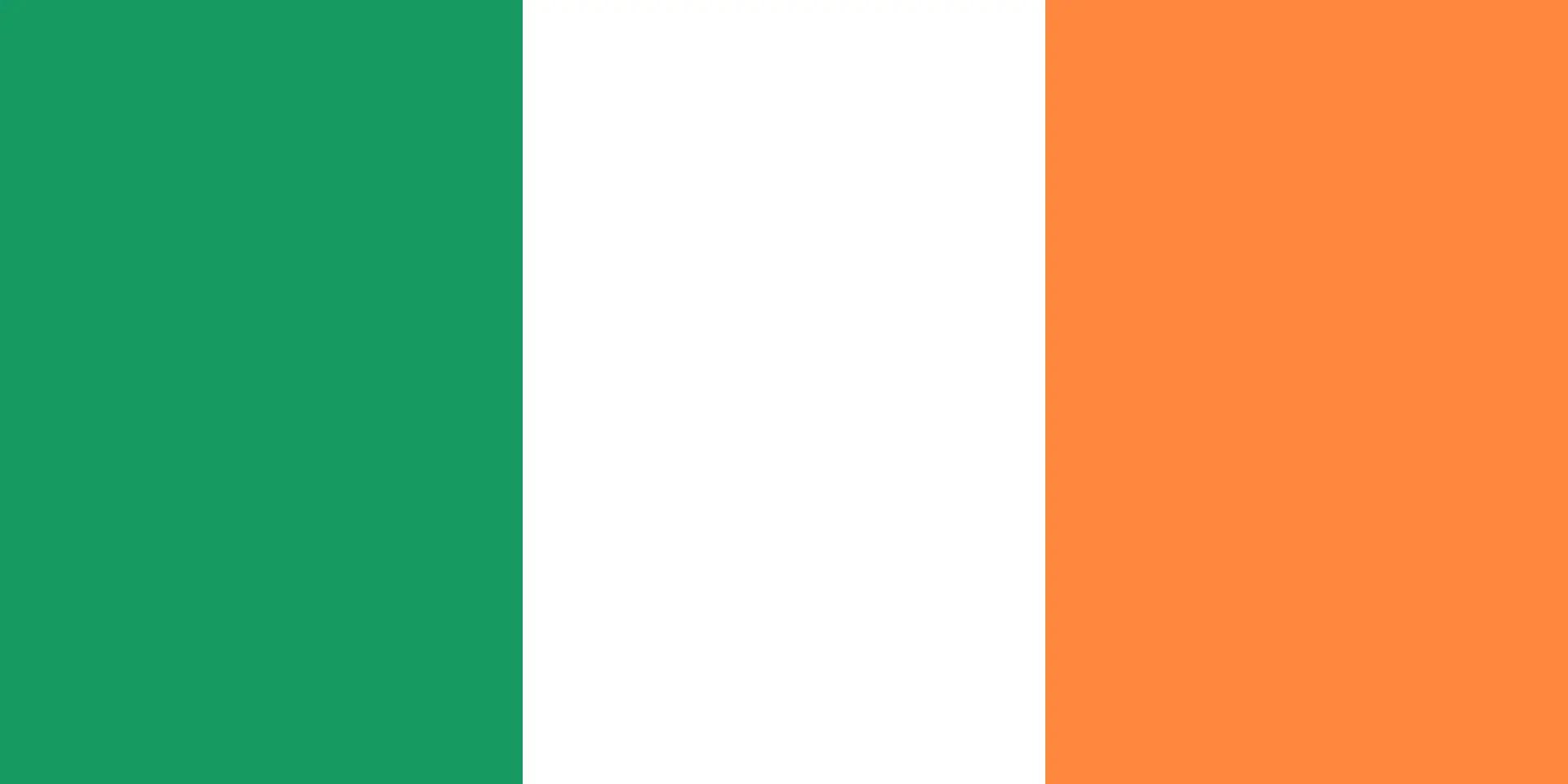

Edited by:
Massimo Martini
Access
Ireland can be reached from Italy mainly by air: Dublin International Airport (DUB) is the main airport, with direct flights from Rome, Milan and other Italian cities; secondary airports are Cork (ORK), Shannon (SNN) and Knock (NOC). There are no direct maritime connections from Italy; the most practical ferries connect Wales or France with the Irish ports of Dún Laoghaire, Rosslare and Pembroke. Ireland has no land borders with the European continent and Northern Ireland (part of the United Kingdom) is the island's only land border. The Irish road network is well developed; driving is on the left-hand side. Motorways (M1, M7, M8, M50) connect Dublin with major cities. The Iarnród Éireann rail network connects Dublin with Cork, Galway, Limerick, Sligo and Waterford. Access to mountain areas - particularly the MacGillycuddy's Reeks in Kerry (Carrauntoohil) and the Wicklow Mountains - requires private transport to reach the trailheads; local public transport is limited in rural areas. The island has no toll motorways in the traditional sense, but does have some tolled sections (M50 ring road in Dublin, East Link Bridge).
Introduction
Ireland - officially the Republic of Ireland - is an island state in north-western Europe, a member of the European Union since 1973. It occupies about 85% of the land area of the island of Ireland (70,273 km²); the remaining 15% is Northern Ireland, a constituent part of the United Kingdom. The population is approximately 5.3 million, with one of the strongest population growth rates in Europe in recent decades due to immigration and a relatively high birth rate. The capital is Dublin. The land is predominantly flat or hilly in the centre, with more pronounced coastal relief in the west and south: the MacGillycuddy's Reeks range in Kerry is home to Carrauntoohil (1,038 m), the island's highest peak. The Irish landscape is characterised by green pastures, bogs, lakes (loughs) and rugged coastlines with cliffs (the Cliffs of Moher, up to 214 m high). The climate is temperate oceanic, mild and humid throughout the year, with very little snow in the lowlands. The official languages are Irish (Gaelic) and English; Gaelic is only spoken fluently by 15% of the population, mainly in the Gaeltacht areas (West Connacht, Donegal, Kerry).
.Description
The Irish territory stretches across a central plain, surrounded by hill ranges and coastal mountains. The main mountain systems are the MacGillycuddy's Reeks and the Iveragh Peninsula in Kerry (with Carrauntoohil, 1,038 m, Beenkeragh, 1,010 m, and Caher, 1,001 m - the only European country with three peaks above 1.000 m outside the Alps and Pyrenees), the Wicklow Mountains to the south of Dublin, the Connaught Mountains (Croagh Patrick, 764 m) in Mayo, the Donegal Mountains and the Antrim Mountains in the north of the island. The Shannon (360 km) and Boyne rivers are the main waterways; Lake Corrib (176 km²) is the largest in the Republic. Peat bogs (blanket bog and raised bog) cover about 17% of the land and are among the largest such ecosystems in Europe.
Ireland's history is among the richest and most tragic in Europe. Prehistory is documented by megalithic monuments - the Newgrange (3,200 BC), the oldest building in European history - and the Celtic culture of the Gaels, who arrived on the island between the 6th and 3rd centuries BC. The conversion to Christianity (5th century A.D.) occurred mainly through the work of St. Patrick (Patricius, c. 385-461), later the patron saint of the island. The Irish monastic period (6th-8th cent.) produced extraordinary illuminated manuscripts such as the Book of Kells and the Book of Durrow. The Viking invasions (8th-9th cent.) led to the founding of Dublin, Cork and Limerick. The Norman (1169) and then English conquest began the Anglo-Saxon rule that would last 750 years. The Great Famine (An Gorta Mór, 1845-1852), caused by the destruction of potato crops by the Phytophthora infestans fungus and the indifference of the British government, killed about one million Irish and drove another 1.5-2 million to emigrate, mainly to the United States. The 1841 census counted 8.2 million inhabitants; by 1901 they had fallen to 4.4 million. The Easter Rising (1916), the War of Independence (1919-1921) and the subsequent Civil War (1922-1923) led to the proclamation of the Irish Free State in 1922 and the Republic in 1949. Ireland remained neutral in the Second World War.
The Irish economy has undergone an extraordinary transformation since the 1990s, known as the "Celtic Tiger": lower corporate tax rates and entry into the Eurozone attracted multinational technology (Apple, Google, Facebook/Meta, Intel, Microsoft have their European headquarters in Dublin) and pharmaceutical (Pfizer, Johnson & Johnson) companies. After the severe financial crisis of 2008-2013, the Irish economy resumed growth at one of the highest rates in the European Union. Technology, pharmaceuticals, finance and tourism (the green landscape, cultural traditions and folk music) are the pillars of the current economy. Irish gastronomic culture has undergone a renaissance with excellent productions: artisanal cheeses, beef, Atlantic salmon, craft beer, whiskey (Jameson, Bushmills, Tullamore D.E.W.). Irish literature has produced world-class figures: Jonathan Swift, Oscar Wilde, W.B. Yeats (Nobel 1923), George Bernard Shaw (Nobel 1925), James Joyce, Samuel Beckett (Nobel 1969), Seamus Heaney (Nobel 1995).
The protected area system comprises five national parks: Killarney (in Kerry, at the foot of MacGillycuddy's Reeks), Connemara (western Connacht, with the Twelve Bens), Wicklow Mountains (30 km from Dublin), Burren (Clare, unique karst landscape) and Glenveagh (Donegal). The Irish fauna is limited in species compared to the continent: noble deer (Cervus elaphus), marten (Martes martes), otter (Lutra lutra), grey seal (Halichoerus grypus) and numerous species of seabirds (gannets, puffins) along the cliffs. The Burren, a karst landscape in Clare, is home to exceptional flora - Mediterranean and alpine-arctic orchids coexist in the same habitat due to exposure and microclimate.
Irish hiking is characterised by low altitude but dramatic landscapes. The Wicklow Way (127 km, first reported long-distance trail in Ireland, 1981) traverses the Wicklow Mountains from Dublin to Clonegal. The Kerry Way (214 km) circumnavigates the Iveragh Peninsula. The Dingle Way (179 km) runs along the Dingle Peninsula, between the Atlantic coast and Mount Brandon (952 m). The Croagh Patrick's Way (Croagh Pádraig, 764 m, Mayo) is Ireland's most important pilgrimage: every last Sunday in July, tens of thousands of worshippers climb to the summit, sometimes barefoot. The Wild Atlantic Way, a 2,500 km long trail and road route, is the longest coastal route in the world.
Mountaineering in Ireland is practised in Kerry, the Wicklow Mountains and Donegal. The Carrauntoohil (1,038 m) is the main destination: the ascent from Devil's Ladder (from Cronin's Yard, 12 km round trip, 1,000 m D+, about 5-7 hours) is the normal route; the Coomloughra Horseshoe loop includes the three peaks above 1,000 m. Climbing is developed in the crags of Fair Head in Donegal and the Dalkey Quarries near Dublin.
Irish trail running has seen significant growth. The Connemara Ultra Trail (39 km or 56 km), the Wicklow Round (every year in summer, 130 km and 6,000 m D+ in less than 24 hours), the Kerry Mountain Marathon and the Glen of Imaal Race in the Wicklow Mountains are the signature events. The Wicklow Round - mountain round style, with no formal organisation - is considered the Irish equivalent of the British Bob Graham Round
.Information
General Data
Capital: Dublin
Area: 70,273 km²
Minimum elevation: 0m (Atlantic coast)
Maximum elevation: 1.038m - Carrauntoohil (County Kerry)
Number of inhabitants: 5,309,495
Official name: Poblacht na hÉireann / Republic of Ireland
Name of inhabitants: Irish
Provinces: 4 (historical, not administrative)
Bordering nations: United Kingdom (Northern Ireland)
Institutional site: https://www.gov.ie