Kosovo

Edited by:
Massimo Martini
Access
Kosovo can be reached from Italy mainly by air: the Adem Jashari International Airport in Pristina (PRN) is the main airport, with direct flights from Milan, Rome and other Italian cities operated by Air Kosovo, Wizz Air, easyJet and other European carriers. The overland route from Italy passes through Slovenia, Croatia, Bosnia and Herzegovina and Serbia, with access to Kosovo from the passes of Merdare and Dheu i Bardhë with Serbia, Vërmicë with Albania, and Kulla and Merdar with Montenegro; the state roads are passable but do not have motorway status. The Kosovan road network is gradually improving: the [A1] motorway (Ibrahim Rugova Highway) connects Pristina with the Albanian border to Durrës. Serbia does not recognise Kosovan passports (nor Kosovo as an independent country): Kosovan citizens who have travelled to Kosovo generally cannot enter Serbia from that crossing point; Italian citizens with European passports can freely cross all crossings. Internal public transport - buses and minibuses (vans) - are the most common mode of transport in Kosovo; the railway network is limited and little used.
Introduction
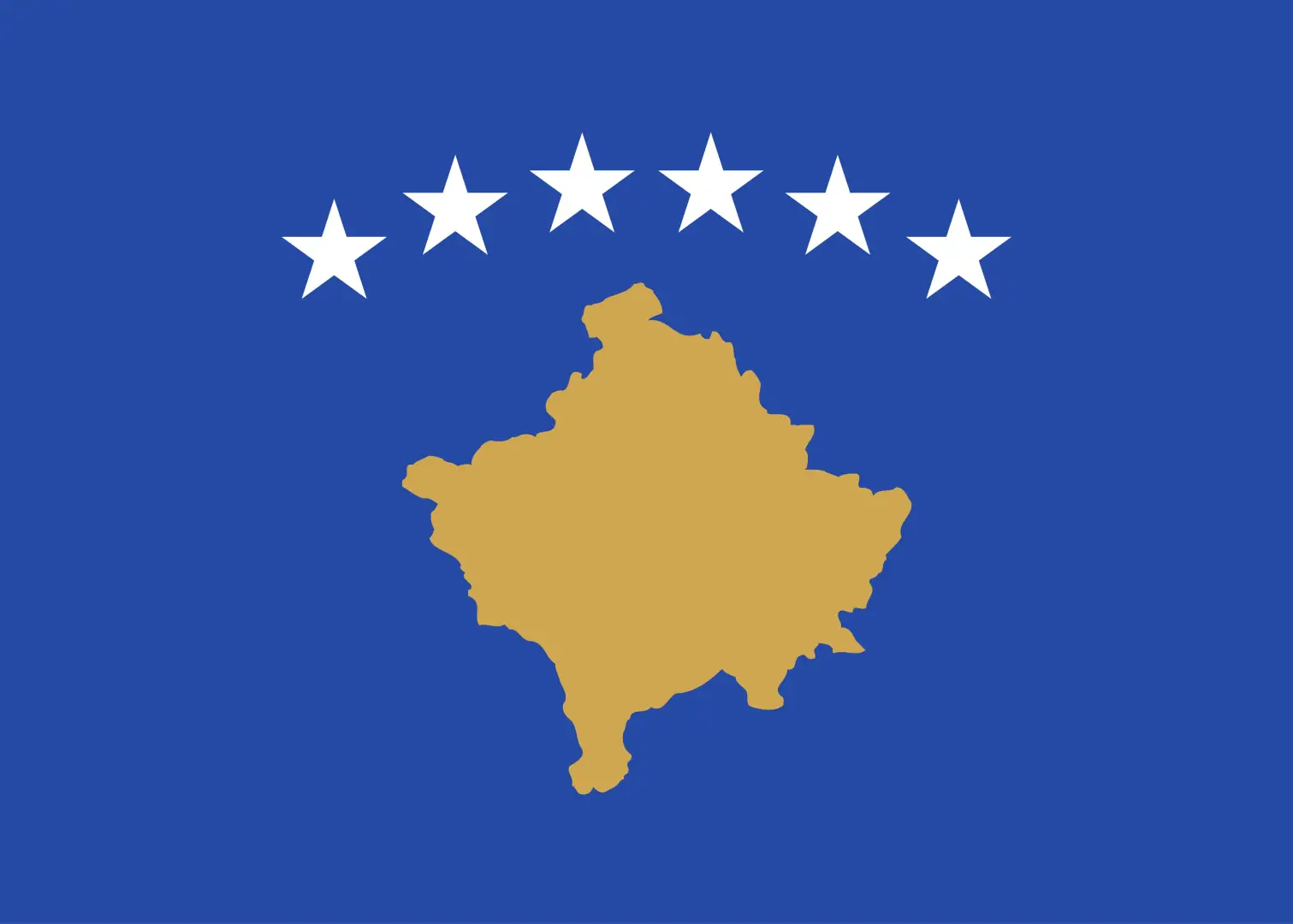
Kosovo is a partially recognised state in south-eastern Europe, located in the centre of the Balkan Peninsula. It unilaterally declared independence from Serbia on 17 February 2008, and is recognised by 109 of the 193 UN member states (as of 2025), including Italy, the United States and the majority of EU countries (22 out of 27). Serbia, Russia, China and other countries do not recognise it as an independent state. The International Court of Justice ruled in 2010 that the declaration of independence did not violate international law. The territory covers 10,887 km² and is entirely landlocked, surrounded by Albania to the southwest, Montenegro to the northwest, Serbia to the north and east, and North Macedonia to the southeast. The population is estimated at about 1.8 million (as of 2024), of which about 92-93% are ethnic Albanians; Serbian minorities (about 1.5%) live mainly in the northern enclave on the border with Serbia. The capital is Pristina. The official languages are Albanian and Serbian. Kosovo adopts the euro as its official currency despite not being a member of the European Union.
.Description
The territory of Kosovo is predominantly mountainous and hilly. The tectonic basins of Kosovo proper (in the east) and Metohija (Dukagjin in Albanian, in the west) are depressions surrounded by mountain ranges exceeding 2,500 m. In the south-west, the Sharr Mountains (Šar Planina, 2,736 m with the peak Titov Vrv - or Rudoka, 2,658 m on Kosovar territory) form the border with North Macedonia. In the north-west, the Albanian Alps (Prokletije, Bjeshkët and Namuna) with the Đeravica peak (2,656 m) are the highest peak in Kosovo. To the north-east, the Kopaonik Mountains (Serbia) close the landscape. The main rivers are the Sitnica (a tributary of the Ibar) and the White Drino (Beli Drim), which drains the Metohija towards the Adriatic. The Kosovo basin drains towards the Danube (Black Sea) while the Metohija basin drains towards the Adriatic, one of the few transnational watershed lines in the region.
The history of Kosovo is deeply disputed between Serbian and Albanian narratives. For the Serbian tradition, the region is the spiritual and historical heart of medieval Serbia: the Orthodox monasteries (Patriarchate of Peć, Dečani, Gračanica, Banjska - all listed by UNESCO as endangered sites) date back to the 13th-14th centuries, and the Battle of Blackbird Plain (1389), where the Serbs and their allies faced the Ottoman army of Murad I, is the founding moment of Serbian identity. According to Albanian narrative, the region has been inhabited by an Albanian majority - descendants of the Illyrians - for centuries before the arrival of the Slavs. Ottoman rule (1389-1912) brought massive Islamisation of the Albanian population. Annexation to Serbia in 1912 and inclusion in the Kingdom of Yugoslavia (1918) and socialist Yugoslavia (1945) characterised the 20th century. The Tito period granted Kosovo Albania some internal autonomy (Constitution of 1974); the revocation of this autonomy by Slobodan Milošević in 1989 triggered tensions that led to war (1998-1999) and NATO intervention. After the war, Kosovo was placed under international protectorate UNMIK and KFOR, until the declaration of independence in 2008.
The Kosovan economy is among the weakest in Europe. GDP per capita - around EUR 5,000-6,000 - is the lowest in continental Europe. The main sectors are services (around 60 per cent of GDP), agriculture (agribusiness, viticulture in the Istog Valley) and mining (lignite, zinc, lead, nickel). Kosovo possesses some of the largest reserves of lignite in the world. The informal economy and remittances from the diaspora (mainly from Germany, Switzerland and Austria - Kosovars abroad number around 800,000 out of a total of 1.8 million) make up a significant share of the national income. Unemployment, particularly among young people, is structurally high. Tourism is growing thanks to the mountainous landscape, the cultural heritage of the Orthodox monasteries and the traditional cuisine: flija (a dish made of layers of batter cooked over a fire), tavë kosi (lamb with yoghurt) and pastas in the Balkan style are the local specialities.
Kosovo's UNESCO heritage includes four endangered sites: the 14th century Dečani Monastery (with the largest Romanesque-Gothic church in the world), the Kosovo Monastery of Dečani (with the largest Romanesque-Gothic church in the world), the Kosovo Monastery of the Holy Trinity (with the largest Romanesque-Gothic church in the world) and the Kosovo Monastery of the Holy Trinity (with the largest Romanesque church in the world), with the largest surviving Romanesque-Gothic church in the Balkans), the Peć Monastery (13th-14th century, seat of the Serbian Orthodox Patriarchate), the Monastery Church of the Nativity of Christ in Gračanica (14th century) and the Church of the Virgin of Ljeviš in Prizren (14th century). The Šar Planina National Park - established in 2012 in the massif of the same name - is the main protected area in the country. Mountain fauna includes the brown bear (Ursus arctos), wolf (Canis lupus), Balkan chamois (Rupicapra rupicapra balcanica) and golden eagle (Aquila chrysaetos).
Mountaineering in Kosovo is mainly developed in the Sharr Mountains and the Albanian Alps (Prokletije). The Sharr National Park offers trails to peaks over 2,000 m; the Brezovica ski resorts on the Sharr, with facilities that were once among the most important in Yugoslavia, are in the process of being restored. The Albanian Alps - between Kosovo, Albania and Montenegro - offer the wildest and most challenging trekking in the region, with routes to the Đeravica peak (2,656 m). The Peaks of the Balkans Trail, a 192-km cross-border route through Kosovo, Albania and Montenegro, is the most ambitious long-distance trekking project in the region. Lake Gazivoda on the border with Serbia is a popular destination for lake hikes.
Mountaineering in Kosovo focuses on the access to Đeravica (2,656 m) through the Albanian Alps, an ascent without any particular technical difficulties but with challenging terrain. The Sharr Mountains offer some limestone walls for climbing. The local mountaineering tradition is still underdeveloped compared to neighbouring countries.
Kosovan trail running is in its infancy but growing, supported by interest in the Peaks of the Balkans Trail and local events around Pristina and Prizren. The Kosovo Mountain Race and several trails in the Brezovica area are the emerging events on the calendar.
Information
General Data
Capital: Pristina
Area: 10.887 km²
Minimum elevation: 267m (river Drin, border with Albania)
Maximum elevation: 2,656m - Đeravica (Albanian Alps)
Number of inhabitants: 1,800.000 (estimate 2024)
Official name: Republika e Kosovës / Republika Kosovo
Name of inhabitants: Kosovars
Regions: 7 districts
Bordering countries: Albania - Northern Macedonia - Montenegro - Serbia
Institutional site: https://kryeministri.rks-gov.net