Liechtenstein
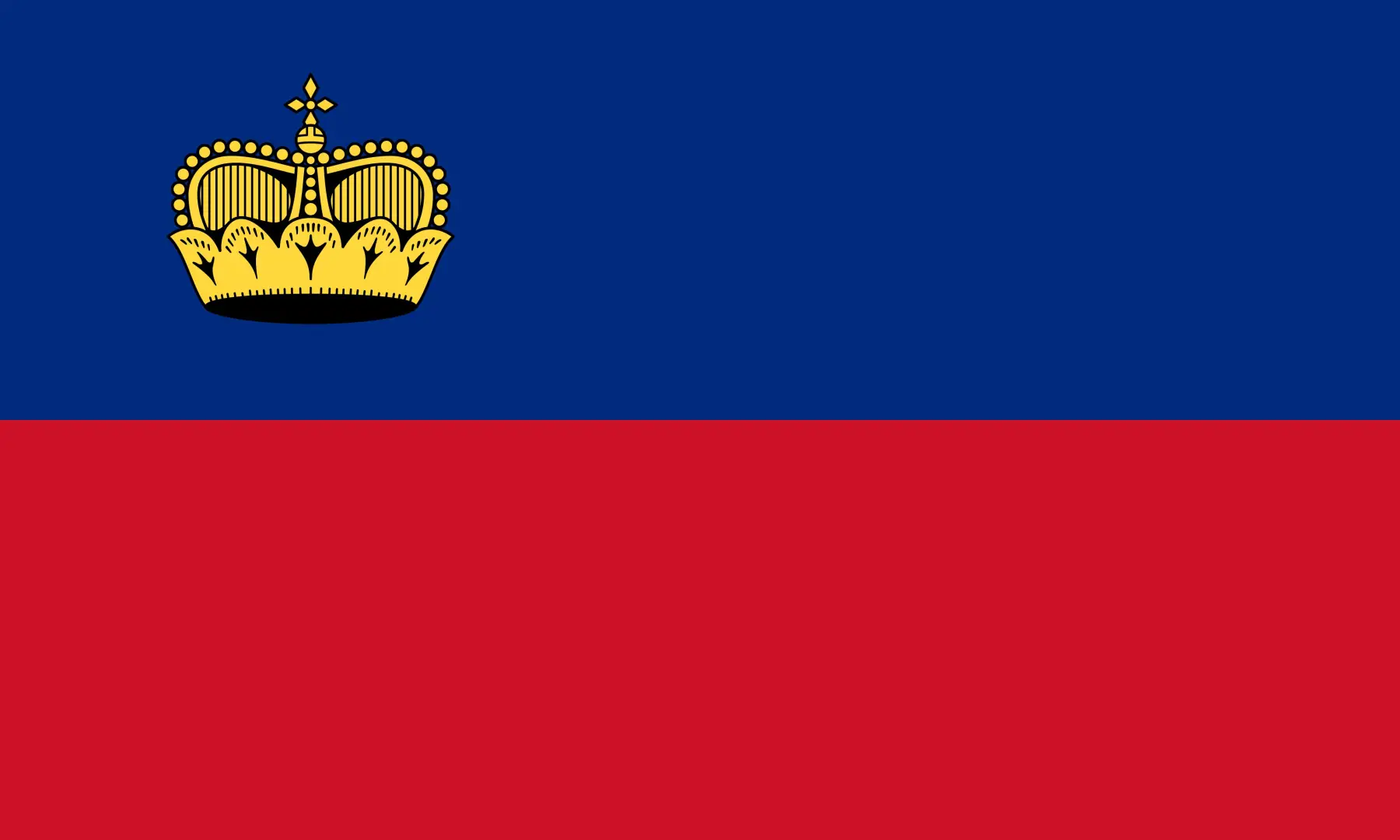

Edited by:
Massimo Martini
Access
Liechtenstein does not have its own airport; the nearest airport is Zurich (ZRH), about 120 km away, followed by Friedrichshafen (FDH, on Lake Constance, about 40 km) and St Gallen-Altenrhein (ACH, about 15 km). The road connection from Italy is via Switzerland: from the Swiss motorway (Gotthard) or motorway (San Bernardino) you can reach the Rhine valley and the border with Liechtenstein, which can be crossed on foot or by car without customs formalities thanks to the customs union with Switzerland. The borders with Austria and Switzerland are open and free of controls in the Schengen area. Liechtenstein's railway network has a single standard-gauge line (Feldkirch-Buchs) operated by the Austrian Railways ÖBB, with stations in Schaan-Vaduz and Nendeln; trains connect the principality with Feldkirch (Austria) and Buchs (Switzerland). The internal road network is developed but without motorways. The main internal road route connects Balzers in the south with Ruggell in the north and is about 25 km long. The bus station (Liechtensteinisches Landesbus, LLB) covers all 11 municipalities. For the Alpine areas of Grauspitz and Triesnerberg, hiking access is from Triesenberg or Malbun for the ski areas.
.Introduction
Liechtenstein is a small central European principality, a hereditary constitutional monarchy, occupying 160 km² between Switzerland to the west (border on the Rhine River) and Austria to the east. It is the fourth smallest country in Europe by area and one of the smallest in the world. The capital is Vaduz, where the famous Vaduz Castle, residence of the princely family, is located. The population is about 40,000, of which about one third are foreigners (mainly Swiss, Austrians, Germans and Italians). Liechtenstein is one of the few countries in the world without its own army, with defence delegated to Switzerland through bilateral agreements. It is not a member of the European Union or NATO, but has been a member of the Schengen Area and the European Economic Area (EEA) since 1995. The currency is the Swiss franc; the postal and customs system has been united with Switzerland since 1923. Liechtenstein has one of the highest per capita GDPs in the world. The official language is German in the Swiss variant (Hochdeutsch), in diglossia with the local Alemannic dialect.
Description
Liechtenstein's territory is divided into two distinct regions: the northern sector (Unterland) is flat, along the Rhine valley and the Gulf of Lake Constance, with the municipalities of Ruggell, Schellenberg, Gamprin, Eschen and Mauren; the southern sector (Oberland) is mountainous, with the Rätikon chain (or Rätikongebirge, in the Rhaetian Alps) and the country's highest peak, the Grauspitz (2,599 m), on the Swiss border. The southern mountains offer prominent alpine landscapes with coniferous forests, high-altitude pastures and some peaks above 2,000 m. The Samina is the main river in the mountain area; the country is criss-crossed by short tributary streams of the Rhine. The climate is continental-alpine, mitigated by the influence of Lake Constance in the northern sector; the Föhn - warm, dry wind from the south - blows frequently in spring and autumn. Forests of beech (Fagus sylvatica) and fir (Picea abies and Abies alba) cover almost 42% of the territory.
Liechtenstein's history is that of a small feudal lordship of the Habsburg Empire that became an independent principality. The Counts of Liechtenstein were a noble family from Lower Austria that acquired the county of Schellenberg (1699) and then the county of Vaduz (1712) from the Hohenems family. In 1719 Emperor Charles VI united the two territories into the Principality of Liechtenstein, elevated to a direct member of the Holy Roman Empire. The principality survived the end of the Holy Roman Empire (1806), the Confederation of the Rhine (1806-1814) and the German Confederation (1815-1866) as a sovereign state, fully with its present-day borders. With the fall of the Habsburgs in 1918, Liechtenstein shifted its political projection towards Switzerland, concluding the currency union treaty in 1921. Neutrality during both world wars was maintained, although the banking system maintained relations with Nazi Germany that earned the country international criticism. Only in 1984 did a referendum grant women the right to vote - the last European country to do so. In 1990, Liechtenstein joined the United Nations. Prince Hans-Adam II has been at the helm of the country since 1989; in 2004 he transferred day-to-day executive powers to his son, Prince Alois.
Liechtenstein's economy is among the most developed and distinctive in Europe. The financial and banking sector - favoured by an advantageous tax regime and banking secrecy (gradually loosened after the 2009 OECD agreements) - is the main pillar; Vaduz is home to numerous international banks, foundations and holding companies. The manufacturing sector is highly specialised: dental equipment (Ivoclar Vivadent), measuring and precision instruments (Hilti), electronic components. Liechtenstein has the highest number of registered companies per inhabitant in the world. Tourism is growing, with Vaduz Castle, the National Museums (art, history, postal/philatelic), hiking trails and the Malbun ski resort as main attractions. Viticulture produces quality white and red wines in the Rhine Valley. The local gastronomy reflects Alemannic-Swiss traditions: Käsknöpfle (flour dumplings with cheese), Ribel (cornmeal), Hafalaab (bread soup) and dairy specialities.
The country has no formal protected areas of national park status, but maintains nature reserves and conservation zones in the Alpine area. Fauna includes chamois (Rupicapra rupicapra), fallow deer (Dama dama), fox (Vulpes vulpes), marten (Martes martes), badger (Meles meles) and over 235 bird species. The forests in the mountainous area are managed as a park and reserve by the princely administration.
Hiking in Liechtenstein takes place in the Rätikon mountains. The trail network has over 400 km of marked trails, including the Liechtensteinweg - a scenic trail connecting all 11 municipalities in the principality (75 km in total). The Grauspitz (2,599 m) can be reached from Triesenberg in about 4-5 hours and offers views of the Rätikon, Lake Constance and the Swiss Alps. The Drei-Schwestern (Three Sisters, 2,052 m), a range of hills on the Swiss border, is the most popular hiking destination with well-marked paths from Balzers. The resort of Malbun (1,600 m) is the main mountain centre and offers hiking trails in the summer and ski slopes in the winter.
Mountaineering in Liechtenstein is mainly developed on the Grauspitz (2,599 m) and the Rätikon peaks. The Grauspitz is the highest peak in the country and in the system of the Rhaetian Alps in the Liechtenstein sector; it can be reached by footpath without any particular technical difficulties in the summer season. The Naafkopf mountain range (2,570 m) and the Falknis (2,562 m) on the Swiss border round off the mountaineering destinations in the Principality.
Trail running in Liechtenstein is practised on the mountain trails of the Rätikon and Rhine Valley. Liechtenstein Trail Running and the Vaduz Alpin Race are local benchmark events. The terrain is varied, with rapid transitions between flat valley floors and Alpine peaks, making the area attractive for trails with significant altitude difference in a limited area.
Information
Capital city: Vaduz
Area: 160 km²
Minimum altitude: 430m (Rhine-Samme confluence)
Maximum elevation: 2,599m - Grauspitz (Rätikon)
Number of inhabitants: 40.000 (estimate 2024)
Official name: Fürstentum Liechtenstein
Name of inhabitants: Liechtensteiners
Municipalities: 11
Border countries: Austria - Switzerland
Institutional website: https://www.llv.li