Lithuania
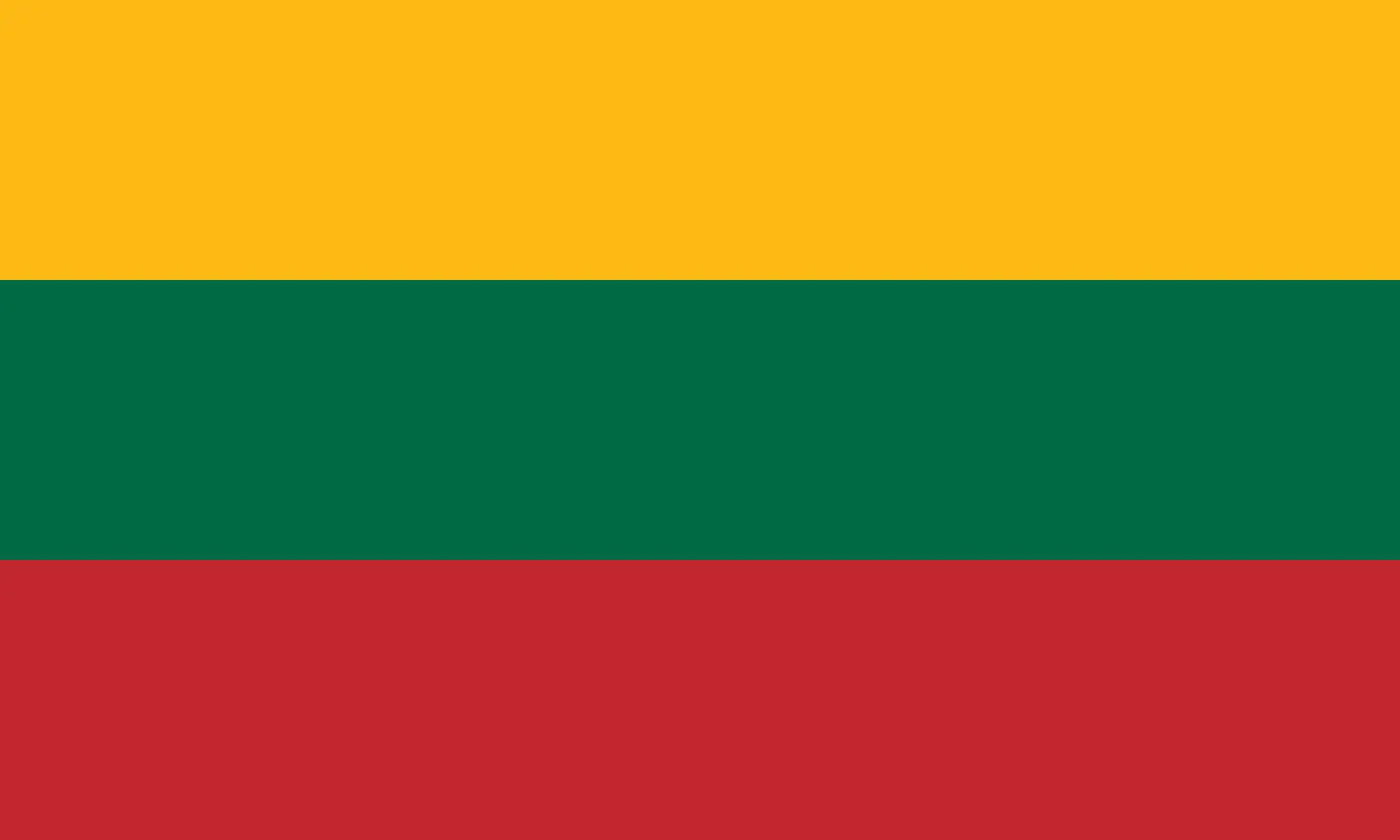

Edited by:
Massimo Martini
Access
Lithuania can be reached from Italy mainly by air: Vilnius International Airport (VNO) is the main airport, with direct flights from Milan, Rome and other Italian cities; secondary airports are in Kaunas (KUN) and Palanga (PLQ). The overland route from Italy follows the Via Baltica ([E67]) through Austria, Germany, Poland and the Polish-Lithuanian border at Kalvarija-Suwalki. The Lithuanian road network is well developed with motorways ([A1], [A5]) connecting Vilnius, Kaunas and Klaipėda. Lithuanian Railways (LTG) operates a network with international services to Warsaw (Vilnius-Warszawa train) and to other Baltic capitals. The port of Klaipėda is the main maritime outlet of Lithuania (and also of Belarus and part of Russia). Ferries connect Klaipėda with Kiel and Karlshamn in Germany and Sweden. Access to the main national parks - Aukštaitija, Žemaitija, Dzūkija, Trakai, Neringa - takes 1-2 hours from Vilnius and Kaunas. The only railway connecting with Courland (Neringa) departs from Klaipėda.
.Introduction
Lithuania is a parliamentary republic in northern Europe, the southernmost and largest of the three Baltic Republics, a member of the European Union and NATO since 2004 and of the Eurozone since 2015. With an area of 65,300 km² and a population of around 2.8 million, it is the country with the largest population of the Baltic Republics, although it has been greatly reduced by the massive emigration of the 1990-2020s. The capital is Vilnius, a historical city with a medieval centre that has been a UNESCO World Heritage Site since 1994. The Lithuanian language belongs to the Baltic group of the Indo-European family and is considered the most conservative Indo-European language still spoken, retaining archaic grammatical features close to Sanskrit. Lithuania was the first Soviet republic to declare independence (11 March 1990). The country is bordered by Latvia to the north, Belarus to the east and south, Poland to the south-west and the Russian enclave of Kaliningrad to the west; it faces the Baltic Sea for about 99 km, with the port of Klaipėda and the Neringa peninsula as its main coastal access.
.Description
The Lithuanian territory is predominantly flat, with a glacial morphology similar to that of the other Baltic countries: moraine plateaus, plains, more than 2,800 lakes and numerous watercourses. The highest point is the Aukštojas (294 m) on the Aukštaitija plateau. The main river system is the Neman (Nemunas), which originates in Belarus, crosses Lithuania for 475 km and flows into the Kurisches Haff (Curland Lagoon). The main lakes - Drūkšiai (the largest, shared with Latvia and Belarus), Dysna, Metelys - are located in the northeastern sector of the country (the Aukštaitija region). Forests of pine (Pinus sylvestris), birch (Betula pendula), oak (Quercus robur) and fir (Picea abies) cover about 32% of the territory.
Lithuanian history has deep and distinctive roots in medieval Europe. The Grand Duchy of Lithuania, founded in the 13th century by Mindaugas, was the last pagan state in Europe to convert to Christianity (1387, under Jogaila, future king of Poland). In the 14th-15th centuries the Grand Duchy expanded over a territory of 900,000 km² - from the Baltic to the Black Sea - becoming one of the largest states in Europe. The Polish-Lithuanian union (Union of Lublin, 1569) created the Polish-Lithuanian Confederation, the dominant power in eastern Europe for two centuries. Partitions of the Confederation (1772, 1793, 1795) between Russia, Prussia and Austria wiped out the Lithuanian state for over a century. Lithuania was occupied by Germany (1915-1918), then proclaimed independence in 1918. Soviet annexation in 1940, Nazi occupation (1941-1944), the return of the USSR (1944-1990) and the Declaration of Restoration of Independence on 11 March 1990 marked the 20th century. The struggle for independence culminated in the defence of the Vilnius Television Tower on 13 January 1991, when 14 civilians were killed by Soviet troops.
The Lithuanian economy, after the post-Soviet transition, has experienced sustained growth in the 21st century. The main sectors are manufacturing (electronics, foodstuffs, furniture, chemicals), finance and IT (Vilnius is home to a growing technology hub), agribusiness (dairy and grain production are of international importance), port logistics (Klaipėda is the northernmost port in the Baltic Sea that is not frozen) and tourism. Lithuanian gastronomy includes cepelinai (potato dumplings stuffed with meat, one of the most representative national specialities), šaltibarščiai (cold beetroot soup with sour cream), kugelis (potato flan), craft beer and midus (mead). Vilnius, Kaunas and Klaipėda are growing tourist destinations.
The system of protected areas includes five national parks. Aukštaitija National Park (in the north-east, with more than 100 lakes, pine and birchwood forests, the moraine plateau) is the largest (405 km²) and the first to be established in Lithuania (1974). Dzūkija National Park (in the south, with the largest pine forests in Lithuania, habitat of the wolf and lynx) is the largest in terms of forests. Trakai National Park - around the historical castle on the island of Lake Galvė, near Vilnius - is the most visited and historically significant. Žemaitija National Park in the north-west is home to Lake Plateliai and prehistoric burial mounds. The Neringa National Park protects the sandy peninsula of Curlandia (Neringa/Kurisches Nehrung), with dunes up to 60 m high and coastal pine forests, shared with the Kaliningrad enclave and listed by UNESCO.
Lithuanian hiking is mainly developed in the Aukštaitija Park, in the forests of Dzūkija and along the Neringa Peninsula. The Klaipėda-Nida Coastal Trail covers 52 km of coastal dunes and pine forests on the peninsula. The network of trails in national parks is well developed with wooden footbridges in wetlands. The Žemaičių Kalvarija is an important religious pilgrimage in the north of the country. The Via Baltica Cycling Trail crosses Lithuania from north to south for more than 400 km.
Mountaineering is not practicable on Lithuanian territory due to the absence of significant relief. Outdoor tourism is oriented towards kayaking on rivers (Nemunas, Neris, Šešupė), bird-watching in wetlands and hiking in forests.
Lithuanian trail running is on the rise, with the Vilnius Marathon Trail, the Aukštaitija Trail and a few races in the Dzūkija forests as landmark events. The flat and forested terrain offers ideal conditions for ultra trails on natural terrain.
Information
General Data
Capital: Vilnius
Area: 65.300 km²
Minimum elevation: 0m (Baltic coast)
Maximum elevation: 294m - Aukštojas (Aukštaitija region)
Number of inhabitants: 2,849.000 (data Wikipedia IT, 2017)
Official name: Lietuvos Respublika
Name of inhabitants: Lithuanians
Regions: 10 counties (apskritys)
Border countries: Belorussia - Lettonia - Poland - Russia (Kaliningrad enclave)
Institutional site: https://lrv.lt