Moldova
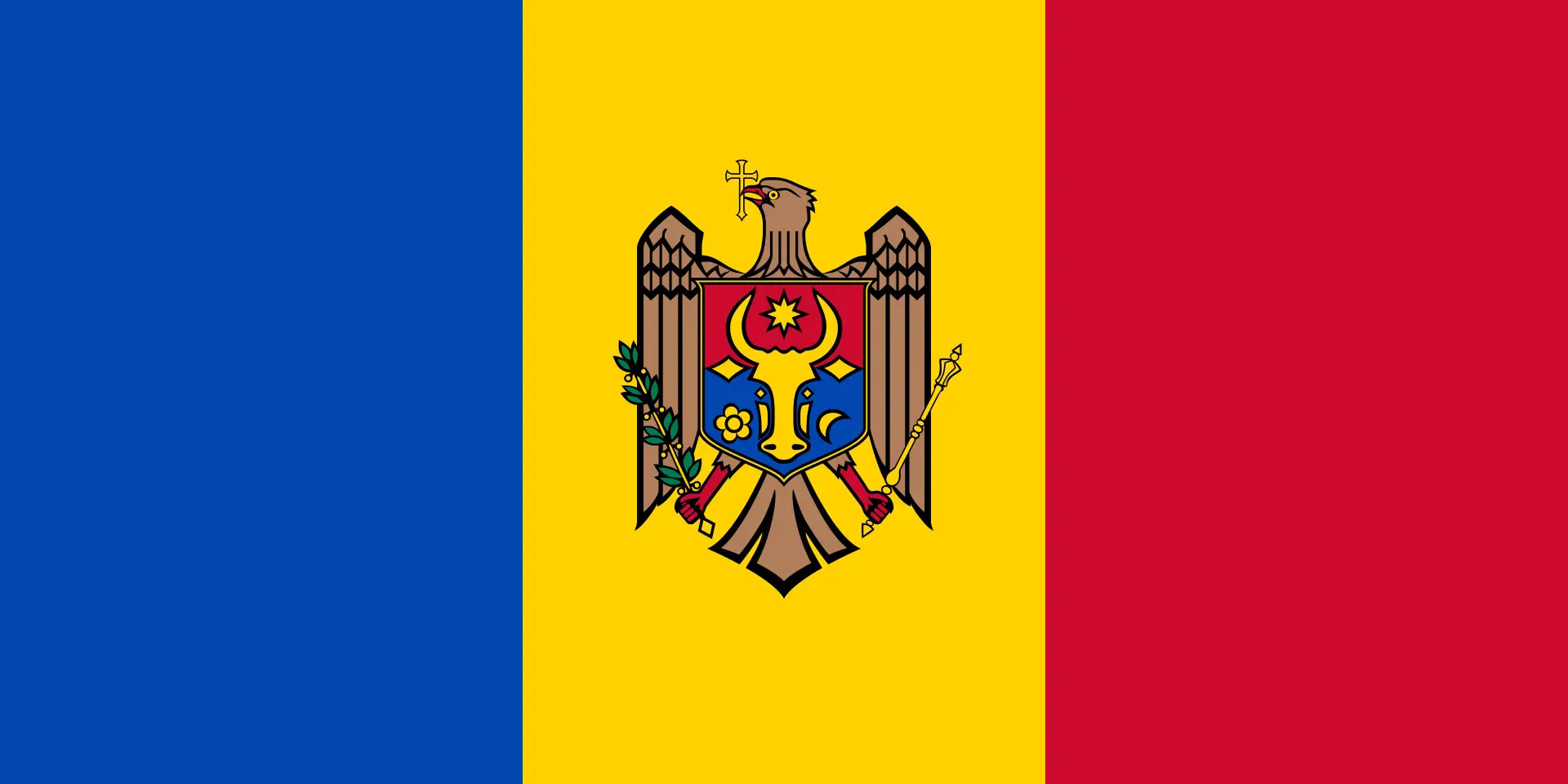

Edited by:
Massimo Martini
Access
Moldova can be reached from Italy mainly by air: the Chișinău International Airport (KIV) is the main port of call, with stopover flights via Vienna, Istanbul, Bucharest or Warsaw; direct flights from Italy are rare but present on some seasonal routes. The overland route from Romania is the most convenient way for those coming from western Europe: from the Albița-Leușeni border crossing (the main one between Romania and Moldova, on the European road [E581]) or by crossing the bridges over the Prut at Sculeni and Cahul, you can reach Chișinău in about 2 hours from north-eastern Romania. The border with Ukraine has been discouraged since 2022 due to the ongoing Russian-Ukrainian conflict. The Moldovan road network is gradually improving but many secondary roads are not paved; the [A1] Chișinău-Romanian border highway is partially completed. The Moldovan Railways (Calea Ferată din Moldova) operates a limited network; trains connect Chișinău with Iași (Romania) and some internal destinations. In Transnistria (a de facto independent region not controlled by the central government), access for EU citizens is generally possible but requires caution and up-to-date information on conditions. The country has no significant secondary airports.
Introduction
Moldova - officially the Republic of Moldova - is an eastern European state, the smallest and one of the least populated countries in the former Soviet Union. With an area of 33,847 km² it is entirely landlocked, surrounded by Romania to the west and Ukraine to the north, east and south. The population is approximately 2.4 million (excluding Transnistria) according to the 2024 census. The capital is Chișinău. Moldova was granted candidate status for EU accession in June 2022, formal negotiations were opened in December 2023, and in the referendum of October 2024 a narrow majority approved to enshrine the goal of European integration in the constitution. The country is politically divided between a pro-European orientation - embodied by President Maia Sandu, who was re-elected in November 2024 with 54% of the vote - and a part of the Russian-speaking population with a pro-Russian orientation, concentrated mainly in Transnistria. Transnistria (Pridnestrovie), a strip of territory on the eastern bank of the Dnestr with about 450,000 inhabitants (mainly Russians and Ukrainians), declared itself independent in 1990 but is not recognised by any state; it hosts a Russian military contingent. The official languages are Romanian (Moldavian) and Russian, with Gagauz recognised in autonomous Gagauzia.
.Description
The Moldavian territory is predominantly flat and hilly: there are no mountains or significant ranges. The morphology is determined by Quaternary loessic deposits and Mesozoic sedimentary substrata. The highest point is the Bălănești Hill (428 m), in the central Moldavian plateau. The two main rivers are the Prut - which marks the western border with Romania for its entire length - and the Dnestr (Nistru), which crosses the country from north to south and separates the main territory from Transnistria. The black lands (chernozëm) that cover much of the country are among the most fertile in Europe, making Moldova one of the agricultural countries par excellence in the former Soviet area. The main lakes are the reservoirs of Dubăsari (on the Dnestr, 67 km²) and Stânca-Costești (on the Prut, 59 km²). The climate is temperate continental, with cold and snowy winters (average January -4°C in Chișinău) and warm and relatively dry summers (average July 21°C); rainfall is about 450-550 mm annually.
Moldova's history is deeply intertwined with Romanian, Russian and Ottoman history. The medieval Principality of Moldavia (14th-19th centuries) covered a much larger area than the present country, including historical Romanian Moldavia (now part of Romania). Under voivoda Ștefan cel Mare (1457-1504), the principality reached its political and military apogee, resisting assaults by the Ottomans, Hungarians and Poles. Progressive Ottoman penetration in the 16th-18th centuries reduced the principality's autonomy. The Treaty of Bucharest (1812) ceded Bessarabia - the eastern portion of the principality, corresponding to present-day Moldavia - to the Russian Empire. Between 1918 and 1940 Bessarabia was part of Romania; the Molotov-Ribbentrop Pact of 1939 and the Soviet ultimatum of 1940 led to its annexation to the USSR as the Moldavian Soviet Socialist Republic. The deportation of some 90,000 people to Siberia and Central Asia (1941, 1949) and the famine of 1946-1947 deeply marked the country. Independence was proclaimed on 27 August 1991.
Moldova's economy is the poorest in continental Europe in terms of GDP per capita. The agricultural sector is the mainstay of the economy: wine-growing (Moldova is among the largest wine producers in Eastern Europe, with wineries such as Cricova and Mileștii Mici - the latter with the largest underground cellars in the world, listed in the Guinness Book of Records), fruit-growing, horticulture, sunflower and tobacco cultivation. Remittances from the Moldovan diaspora (around one million people abroad, mainly in Italy, Russia and Germany) constitute a significant share of the national GDP. Wine tourism - with visits to underground cellars and vineyards - is growing. Moldovan gastronomy combines Romanian and Slavic influences: mămăligă (maize porridge), zeamă (chicken broth with vermicelli), sarmale (cabbage leaf rolls), plăcinte (thin pastry cakes) and local wines (Fetească Neagră, Rară Neagră, Chardonnay and Cabernet Sauvignon) are the main specialities.
The system of protected areas includes the Orhei National Park (Orheiul Vechi) - with its famous rock caves and medieval monastery carved into the limestone rock along the Răut meander - and several nature and landscape reserves. Fauna includes noble deer (Cervus elaphus), wild boar (Sus scrofa), hare (Lepus europaeus), fox (Vulpes vulpes), white stork (Ciconia ciconia) - a symbol of the Moldavian countryside - and numerous migratory bird species along the Prut river corridor.
Moldovan hiking is mainly developed in the limestone hills of the central plateau, along the valleys of the Prut and Dnestr rivers, and in the Orheiul Vechi complex. The trails are poorly signposted by Western European standards; outdoor tourism is being developed, with some ecotourism initiatives in the north of the country (Soroca and Edineț regions).
Mountaineering is not feasible in Moldova due to the absence of technical relief. The highest point, Bălănești Hill (428 m), can be reached in a few minutes on foot.
Trail running in Moldova is in its infancy. The Chișinău Marathon (with trail variants) and some local events in the Prut valleys are the emerging events. The predominantly agricultural and hilly terrain does not offer ideal conditions for high altitude trail running, but the variety of river and rural landscapes is impressive.
Information
General Data
Capital: Chișinău
Area: 33.847 km²
Minimum elevation: 1m (Danube shore at the border with Romania and Ukraine)
Maximum elevation: 428m - Bălănești (central plateau)
Number of inhabitants: 2,409.000 (2024 census, not including Transnistria)
Official name: Republic of Moldova
Name of inhabitants: Moldovans
Regions: 32 districts + Chișinău municipality + autonomous regions (Gagauzia, Transnistria)
Border countries: Romania - Ukraine
Institutional website: https://www.gov.md