Montenegro
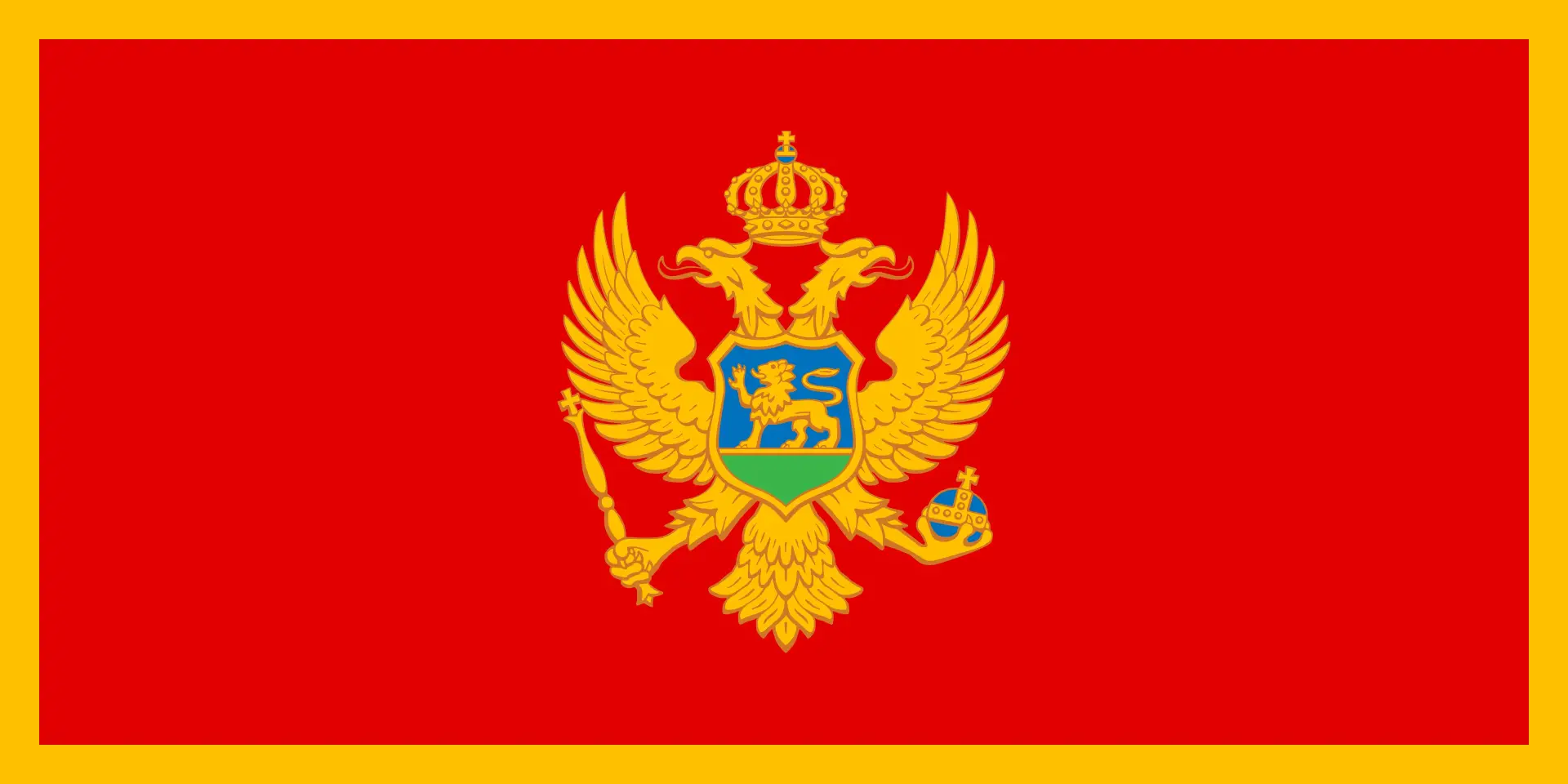

Edited by:
Massimo Martini
Access
Montenegro can be reached from Italy by air and sea. Podgorica International Airport (TGD) is the main airport; Tivat Airport (TIV) on the Adriatic coast operates mainly in the summer season with charter and low-cost flights, closer to the main coastal tourist destinations. Direct flights from Italy are available on some routes (Rome, Milan, Bergamo) with Ryanair and local carriers. Montenegro Lines ferries connect Bar with Bari (about a 9-hour crossing) on a regular basis in the summer season; the route also operates out of season with reduced frequency. The overland route from Italy passes through Slovenia, Croatia and Bosnia-Herzegovina, with access to Montenegro via the Ilino Brdo border crossing (Bosnia) or the Kobila border crossing (Albania) to the south. The Montenegrin road network is improving: the new [A1] Bar-Boljare motorway (built with Chinese financing) connects the coast with the north of the country and Serbia. The mountain roads towards Durmitor and the Tara canyons are passable but may require suitable vehicles. Montenegrin Railways (Željeznice Crne Gore) operates the Podgorica-Bijelo Polje-Serbian border line, with a scenic route through the limestone canyons of the north.
Introduction
Montenegro is a parliamentary republic in south-eastern Europe, a member of NATO since 2017 and a candidate for accession to the European Union. With an area of 13,812 km² and 633,537 inhabitants, it is one of the smallest and least populated countries in Balkan Europe. The capital is Podgorica. The country faces the Adriatic Sea with some 293 km of coastline, from Croatia to Albania, and borders Serbia to the northeast, Bosnia and Herzegovina to the northwest, Kosovo to the north and Albania to the southeast. The name "Montenegro" literally means "Monte Nero" in Italian, referring to Mount Lovćen, the country's symbolic mountain covered in dark vegetation; the Italian name is historically established due to its long ties with the Republic of Venice. About 80 per cent of the territory is mountainous. Mount Durmitor (2,522 m) and Bobotov Kuk (2,523 m) are the highest peaks. The Tara Canyon - up to 1,300 m deep and about 80 km long - is the deepest canyon in Europe and the second deepest in the world after the American Grand Canyon. The country adopts the euro despite not being a member of the EU.
.Description
The Montenegrin territory is among the most diverse on the entire Balkan peninsula in relation to its limited size: in just a few kilometres, it goes from the Adriatic coast with a Mediterranean climate and subtropical vegetation to the high limestone mountains of the north with a subalpine climate and perennial snowfields. The coastal region (the so-called Montenegrin Riviera) is home to the Boka Kotorska Bay - the only fjord in the Mediterranean - and the historic towns of Kotor (Kotor, UNESCO World Heritage 2023 extended), Bar and Ulcinj. Immediately upstream from the coast rises the Lovćen mountain range (1,749 m), from whose mountain Štirovnik the Lovćen National Park starts. The central region is dominated by the Zeta river valley and the Karst plain of Nikšić, the country's second largest city. The north is the mountainous heartland: the Durmitor massif - with Bobotov Kuk (2,523 m), the highest peak in the country - is included in the Durmitor National Park (UNESCO World Heritage 1980), with its 48 glacial lakes (the Glacial Eyes) and the Tara Canyon. The Prokletije (or Albanian Alps), with Mount Zla Kolata on the border with Albania (2,534 m), is the highest mountain system in the country. The main rivers are the Tara, Piva, Morača and Zeta. Lake Shkodra (Skadar), shared with Albania, is the largest lake on the Balkan peninsula (391 km²).
Montenegro's history is closely intertwined with the tradition of resistance against the Ottoman Empire. The Principality of Zeta (12th-15th century) was one of the few Balkan territories never to be completely subjugated by the Ottomans: the Montenegrin tribes, sheltered in the inaccessible mountains, maintained centuries-long resistance. The bishop-princes (vladike) of the Petrović-Njegoš dynasty (18th-19th centuries) guided the country towards independence, which was internationally recognised by the Congress of Berlin (1878). The epic poem The Mantle of the Mount by the Great Vladika Petar II Petrović-Njegoš (1847) is the founding text of Montenegrin literature. Montenegro became a kingdom in 1910 and participated as an ally in the two Balkan Wars and World War I, suffering heavy losses. In 1918 it became part of the Kingdom of Serbs, Croats and Slovenes, later Yugoslavia. As a socialist republic in the Yugoslav Federation, and then as a republic in Serbia and Montenegro (2003-2006), Montenegro achieved independence in a referendum on 21 May 2006 (55.5% yes, with the required 55% threshold almost reached the limit).
The Montenegrin economy is based on tourism (around 20-25% of GDP), the aluminium industry (KAP industry in Podgorica), agriculture (wine, olives, citrus fruits on the coast; livestock farming in the mountainous areas) and remittances from the diaspora. Coastal tourism - concentrated on Budva, Bečići, Sveti Stefan, Kotor and Porto Montenegro in Tivat - has experienced explosive growth in recent years. Montenegrin gastronomy reflects Mediterranean influences on the coast and continental-Balkan influences in the interior: njeguški pršut (smoked raw ham, produced in the village of Njeguši on Lovćen), njeguški sir (cheese), kačamak (maize porridge with dairy products), jagnjetina (spit-roasted lamb), rakija (plum or other fruit brandy) and local wines (red Vranac) are the specialities not to be missed.
The protected area system includes five national parks. Durmitor National Park (390 km²) - with its limestone peaks, glacial lakes and the Tara Canyon - has been a UNESCO World Heritage Site since 1980 and is the country's main mountain area. Shkodra Lake National Park (402 km², the largest in Montenegro) is a lake area of extraordinary ornithological importance, with over 280 bird species. Lovćen National Park (64 km²), with the Mausoleum of Petar II Petrović-Njegoš on its summit (1,657 m), is historic and scenically impressive. Biogradska Gora National Park is home to one of the few virgin forests in Europe (in the Balkans) and Biogradsko Lake. The Prokletije National Park, established in 2009 in the Albanian Alps, completes the system.
Montenegro's hiking is growing rapidly, driven by the country's growing international reputation. The Durmitor National Park offers trekking above 2,000 m with its 48 glacial lakes; Bobotov Kuk (2,523 m) is the main mountaineering destination, accessible from Žabljak in about five to six hours. The Via Dinarica - the long trail that crosses the Balkan Peninsula from Slovenia to Albania - also crosses Montenegro on its White Trail. The Podgorica-Bar trail runs through the Morača valley; the Lovćen trails towards the Boka Kotorska Bay are among the most scenic in the country. The Canyon Trails - routes along the Tara Canyon and the Piva Canyon - are very impressive.
Montenegro's mountaineering history is mainly linked to the Durmitor and Prokletije massifs. Bobotov Kuk (2,523 m) - the highest peak in Durmitor - does not present any technical difficulties in the summer normal route, but requires good mountain experience. Zla Kolata (2,534 m) in the Albanian Alps is the highest peak in the entire country, accessible from Rožaje via less frequented paths. The limestone walls of Durmitor offer high quality rock climbing.
Trail running in Montenegro is on the rise, with the Durmitor Ultra Trail - which circles the massif with a route of more than 50km at high altitude - as the benchmark event. The Kotor-Lovćen Vertical and other local races enliven the summer calendar.
Information
General Data
Capital: Podgorica
Area: 13.812 km²
Minimum elevation: 0m (Adriatic coast)
Maximum elevation: 2,534m - Mount Zla Kolata (Prokletije, border with Albania)
Number of inhabitants: 633.537 (given by Wikipedia EN)
Official name: Crna Gora / Montenegro
Name of inhabitants: Montenegrins
Municipalities: 25
Bordering countries: Albania - Bosnia and Herzegovina - Croatia - Kosovo - Serbia
Institutional website: https://www.gov.me