Malta

Edited by:
Massimo Martini
Access
Malta is only accessible by air or sea, being an island archipelago. Malta International Airport (MLA), located in Luqa about 5 km from the centre of Valletta, is the main hub, with direct flights from Milan, Rome, Catania, Naples, Venice and other Italian cities operated by Air Malta, Ryanair, easyJet and Wizz Air; the frequency of flights increases significantly in the summer season. The ferry connection from Sicily is operated by Virtu Ferries with high-speed catamarans (90 minutes) on the Pozzallo-La Valletta and Catania-La Valletta routes, seasonally from April to October. There are no motorways or railways on the island; internal mobility relies on a bus network operated by Malta Public Transport (Malta Bus) that covers the entire island, and on taxis and hire cars. Inland ferries connect Valletta with Gozo (Mġarr) and Comino with crossings of approximately 30 minutes. On the island one drives on the left, a legacy of British rule. The Maltese territory, flat and densely urbanised, presents no seasonal obstacles to accessibility; sirocco and gregale winds can rarely disrupt sea connections.
Introduction
Malta is a parliamentary republic in southern Europe, a member of the European Union since 2004 and of the Eurozone since 2008. It is an island state located in the centre of the Mediterranean Sea, 80 km south of Sicily and 284 km from Tunisia. It consists of three inhabited islands - Malta (245 km²), Gozo (67 km²) and Comino (2.7 km²) - and several smaller islets, with a total area of approximately 316 km². With a density of about 1,780 inhabitants per km², it is the most densely populated country in the European Union and one of the densest in the world among countries of a non-infinitesimal size. The capital is Valletta, which with only 5,426 residents is the smallest capital by population in the European Union - but also one of the richest cultural heritages in the Mediterranean. The Maltese language (Malti) is the only Semitic language with official language status in the European Union; it is derived from medieval Maghrebi Arabic and written in the Latin alphabet. Along with Maltese, English is the official language; Italian is widely understood by the population (around 62% speak it at elementary level) and is traditionally linked to the island's history. Malta is the country with the highest percentage of practising Catholics in the European Union.
Description
The Maltese territory is predominantly flat or slightly hilly, shaped by coral limestone - the local limestone - which characterises the landscape with karst formations, caves and cliffs. There are no permanent surface watercourses: the karstic subsoil drains rainwater to groundwater, while the coastline features high cliffs (the Dingli Cliffs reach 253 m) and deep inlets. The highest point is Ta' Dmejrek (253 m) in the municipality of Dingli. The island of Gozo is morphologically more varied and rugged, with the medieval Citadel perched on a hill and the spectacular cliffs of Wied il-Mielaħ. The climate is Mediterranean: mild and rainy winters (average January 12°C), hot and dry summers (average August 32°C), with annual rainfall of around 500-600 mm concentrated from October to April. Vegetation is sparse due to the arid summer climate and karstic soil; Mediterranean scrub, carob (Ceratonia siliqua) and olive (Olea europaea) predominate. The sea surrounding the archipelago has a temperature of 28-30°C in summer and 14-16°C in winter.
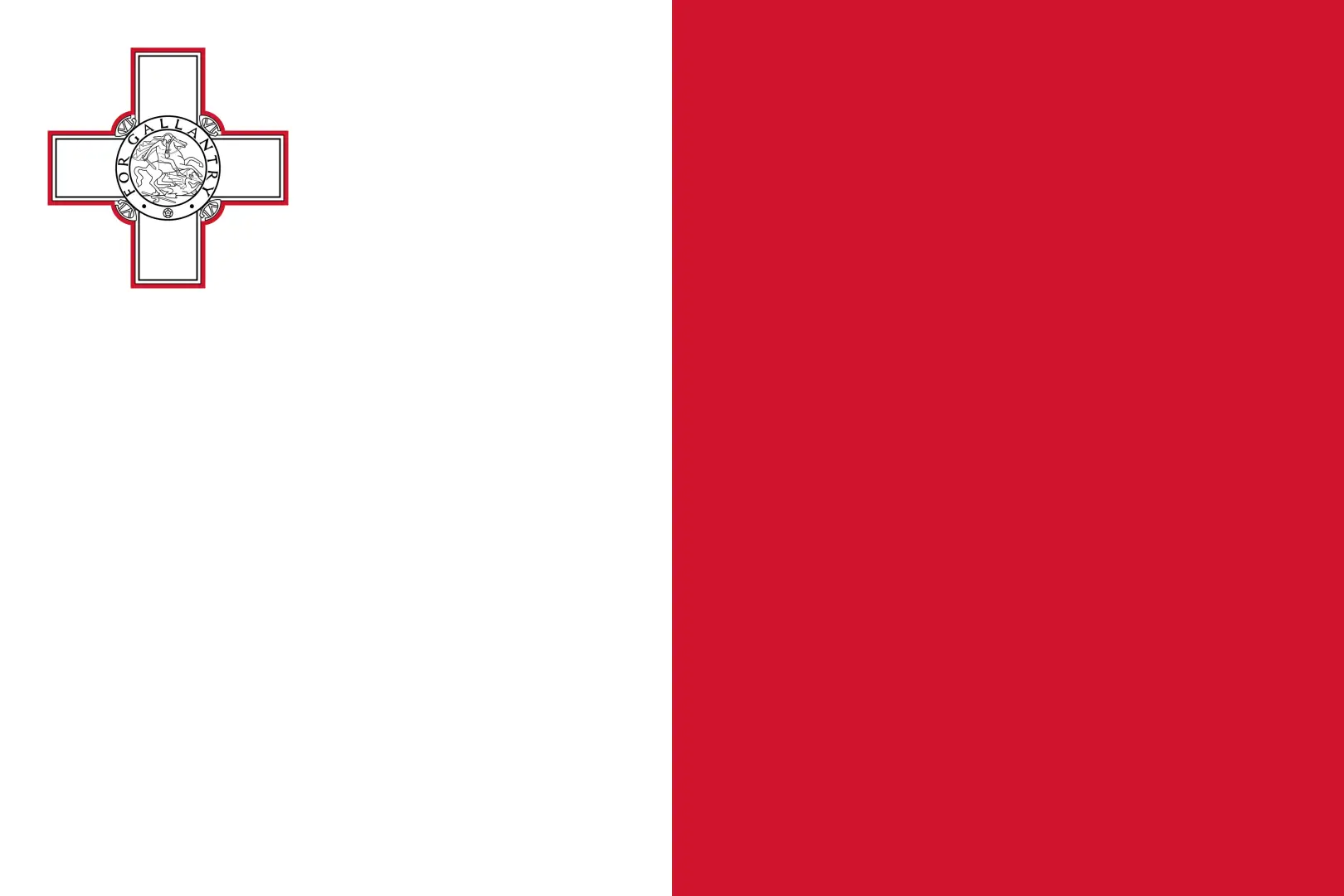
Malta has been inhabited since around 8,000 B.C., when the first populations arrived from Sicily at the height of the Neolithic period. Between 3,600 and 2,500 BC, one of the most advanced Neolithic civilisations in the ancient Mediterranean flourished, which built the Megalithic Temples - Ħaġar Qim, Mnajdra, Ġgantija, Tarxien and the Ħal Saflieni Hypogeum - limestone structures predating the pyramids of Egypt and Stonehenge, now listed by UNESCO. Phoenicians, Greeks, Carthaginians and Romans succeeded each other on the island; the name "Malta" probably derives from the Greek "Melitè" (honey). Conversion to Christianity is traditionally attributed to the shipwreck of St Paul on the island in 60 AD. The Arabs ruled from the 9th to the 11th century, leaving a fundamental imprint on the Maltese language. The Norman conquest (1091) brought Christianity back; Angevins, Aragonese and Spanish followed. In 1530 Charles V ceded Malta to the Knights of St. John (later called the Knights of Malta), who turned it into a fortress and defended it strenuously against the Ottoman siege of 1565 - the Great Siege of Malta. The Knights built Valletta (1566) and numerous fortresses. Napoleon conquered the island in 1798; after a popular uprising and British intervention, Malta became a possession of the British Crown in 1800 (Treaty of Paris, 1814). Its strategic position in the centre of the Mediterranean made Malta crucial in World War II: bombed intensively by Axis forces between 1940 and 1942 (over 3,000 air raids), it resisted and was collectively decorated with the St George's Cross by King George VI - Britain's highest honour to a collective unit. Independence was proclaimed in 1964; the Republic in 1974.
The Maltese economy is based on four pillars: tourism (around 3.5 million annual visitors for a population of less than 600,000), financial and banking services (with a favourable tax regime for international investment), online gambling (with favourable regulation attracting many European digital platforms) and high-tech manufacturing (electronics, pharmaceuticals). In recent decades, Malta has been one of the European countries with the highest economic growth rate. Maltese gastronomy reflects Arab, Sicilian and British influences: pastizzi (puff pastry filled with ricotta or peas), rabbit stew (stuffat tal-fenek, a national dish), lampuki (fish locally known as lampuga), gbejniet (sheep's milk cheese) and Kinnie (local bitter orange soda) are the most representative specialities.
Malta's UNESCO heritage includes the City of Valletta - a capital city built from scratch by the Knights of St John in the 16th century, with a regular grid urban layout unique in the pre-modern Mediterranean - and the Megalithic Temples. UNESCO has also recognised the Feast of Saint Marija and other intangible Maltese cultural traditions. The protected areas system includes the Majjistral National Park (north-west Malta, with limestone garrigue and rocky beaches), marine reserves and coastal wetlands in Ramsar. Terrestrial fauna is limited due to the small size of the archipelago; marine fauna, on the other hand, is rich: the Maltese Mediterranean is a top diving destination, with World War II wrecks, underwater caves and Mediterranean fauna.
Hiking in Malta is adapted to the archipelago's flat terrain: walks along the coastal cliffs - particularly the Dingli Cliffs on Malta's south-western side, the Victoria Lines (19th century British defence line) that crosses the island from coast to coast for 12 km, and the Gozo Walking Trails - are the main outdoor experiences. The Gozo Walking Festival (annual, autumn) is the archipelago's flagship outdoor event. The size of the island makes it possible to walk the entire coastal perimeter in just a few days. The Majjistral area offers garrigue paths with endemic flora. The presence of the sea allows for outdoor activities integrated with swimming, kayaking and diving along the entire coastal perimeter.
Mountaineering is not feasible in Malta due to the absence of technical relief. Coastal limestone cliffs - such as those at Wied iż-Żurrieq and Comino - are used for low-altitude limestone sport climbing, with sea-facing cliff-top routes in a unique landscape setting.
Trail running in Malta takes place on coastal and rural routes of limited extent but high scenic variety. The Malta Trail Run and the Gozo Ultra Trail, seasonal benchmark races, take place on limestone terrain between garrigue, cliffs and traditional countryside. The small size of the island makes it easy to combine several trails in one session.
Information
General Data
Capital: Walletta
Area: 315.6 km²
Minimum elevation: 0m (Mediterranean coast)
Maximum elevation: 253m - Ta' Dmejrek (Dingli)
Number of inhabitants: 563.443 (estimated 2025, NSO Malta)
Official name: Repubblika ta' Malta / Republic of Malta
Name of inhabitants: Maltese
Regions: 5 regions
Bordering nations: none (island state)
Institutional site: https://gov.mt