Nicaragua

Edited by:
Massimo Martini
Access
Nicaragua can be reached from Europe by air with a stopover in the United States at Managua's Augusto César Sandino International Airport. The main connections are from Miami, Houston, Atlanta and New York. By land from Honduras the main crossing points are El Espino-San Marcos de Colón and Las Manos-Ocotal. From Costa Rica you enter at Peñas Blancas, on the Carretera Panamericana. Nicaragua is the largest country in Central America; the Carretera Panamericana forms the main backbone of the road system. The roads to the mountainous areas in the north - where the country's highest elevations are located - are in many places unpaved. The interurban bus system is extensive and also covers the smaller centres. Lake Cocibolca (Lake Nicaragua), the largest in Central America, can be travelled by ferry to the Ometepe peninsula and to San Juan del Sur. There is no passenger rail network.
Introduction
Nicaragua is the largest state in Central America, with a territory between the Caribbean Sea to the east, the Pacific Ocean to the west, Honduras to the north and Costa Rica to the south. The relief is concentrated in the Pacific volcanic chain, which runs parallel to the west coast, and in the Cordillera Isabelia and Cordillera Dariense in the centre-north, where the highest peaks are found. Lake Nicaragua (Cocibolca) and Lake Managua (Xolotlán) are the large basins of the Pacific, while the Coast of the Mosquitos in the east is a forested and sparsely populated plain. In the 20th century, the country experienced the Sandinista revolution of 1979 and the Contra war of the 1980s, which was followed by a difficult process of pacification and democratic development.
Description
The morphology of Nicaragua is divided into three major regions. The flat and densely populated Pacific region is home to the Nicaraguan volcanic chain - part of the Central American Volcanic Arc - with a series of often active volcanoes stretching from the Gulf of Fonseca to the Costa Rican border. Momotombo (1,297m) on Lake Managua, Cerro Negro (728m), the youngest in Central America at only 160 years old, Masaya - with its lava lake accessible directly from the road, one of the most accessible volcanic phenomena in the world - and Concepción (1,610m) on the island of Ometepe in Lake Nicaragua are the most visited volcanoes. The higher and more rugged central region in the north reaches the highest altitudes in the country: Mogotón (2,107m) in the Cordillera Dariense, on the border with Honduras, is the highest peak in Nicaragua. The Mosquitos (Mosquitia) Coast to the east is an alluvial plain of tropical forest, criss-crossed by navigable rivers and inhabited mainly by Misquito, Garifuna and Rama communities.
The history of Nicaragua is marked by the presence of the pre-Columbian Nahua and Chorotegas peoples in the Pacific and the Misquito and Rama peoples on the Atlantic coast. Spanish colonisation began in 1524 with the arrival of Francisco Hernández de Córdoba, founder of Granada and León; these two cities became the centre of the rivalries between conservatives and liberals that would mark the country's history for centuries. Independence was proclaimed in 1821 and the Central American federation dissolved in 1838. In 1856, the US adventurer William Walker proclaimed himself president and established a brief regime that was later defeated by the Central American resistance. The 20th century was dominated by the dictatorship of the Somoza family (1937-1979) and the subsequent Sandinista revolution led by the Sandinista Front for National Liberation (FSLN), followed by the US-funded Contra War (1981-1990), and a long period of economic crisis and alternating political reforms.
The Nicaraguan economy is among the most fragile in Latin America, with a GDP per capita among the lowest in the region. Agriculture - coffee, cattle, sugar cane, sesame, beans - remains the basis of the economy, flanked by tourism and an export-oriented manufacturing sector. The coffee from the northern mountain regions (Jinotega, Matagalpa) is considered among the best in Central America. The traditional cuisine is centred on gallo pinto (rice and mixed beans), vigorón, nacatamal and carne asada. The ceramic handicrafts of Mozonte and the mainsail work of Masaya are among the best known traditional expressions.
Protected areas include the Parque Nacional Volcán Masaya - the most visited park in the country, with the Santiago lava lake accessible by a scenic road - and the Bosawás Biological Reserve, inscribed on the UNESCO World Heritage list in 2005 as part of the Heart of Central America Biosphere Reserve complex; it is one of the largest tropical forests in Mesoamerica outside the Amazon, with some 7,500 km² of territory. The Parque Nacional Archipiélago de Solentiname in Lake Nicaragua protects an archipelago of islands with tropical forest and an indigenous artistic tradition of international significance. Among the fauna are the jaguar (Panthera onca), Baird's tapir (Tapirus bairdii) and the shining quetzal (Pharomachrus mocinno) in the cloud forests of the Cordillera Isabelia.
The hiking focuses on the volcanic arc and the mountains of the north. The ascent to Concepción (1,610m) on Ometepe Island - a volcanic island in Lake Nicaragua formed by two volcanoes - takes 8-12 hours of hiking in dense forest and offers views of the lake; a guide is required. Cerro Mogotón (2,107m) on the Honduran border is the highest peak, reached in two days from Jalapa. Cerro Negro is famous for volcano boarding, sliding over solidified lava into snowboards; the ascent takes about an hour. The forests of the Cordillera Isabelia and Bosawás are accessible with multi-day trails organised by local guides.
Trail running in Nicaragua is on the rise, with the Nicaragua Trail Race around the Concepción volcano on Ometepe and trails in the northern forests organised by local operators. The volcanic terrain and mountains of the north offer significant elevation profiles for the latitude.
Information
General Data
Capital: Managua
Area: 130.373 km²
Minimum elevation: 0m (Pacific and Caribbean Sea coasts)
Maximum elevation: 2,107m - Mogotón
Number of inhabitants: 6,851,000 (2020 estimates)
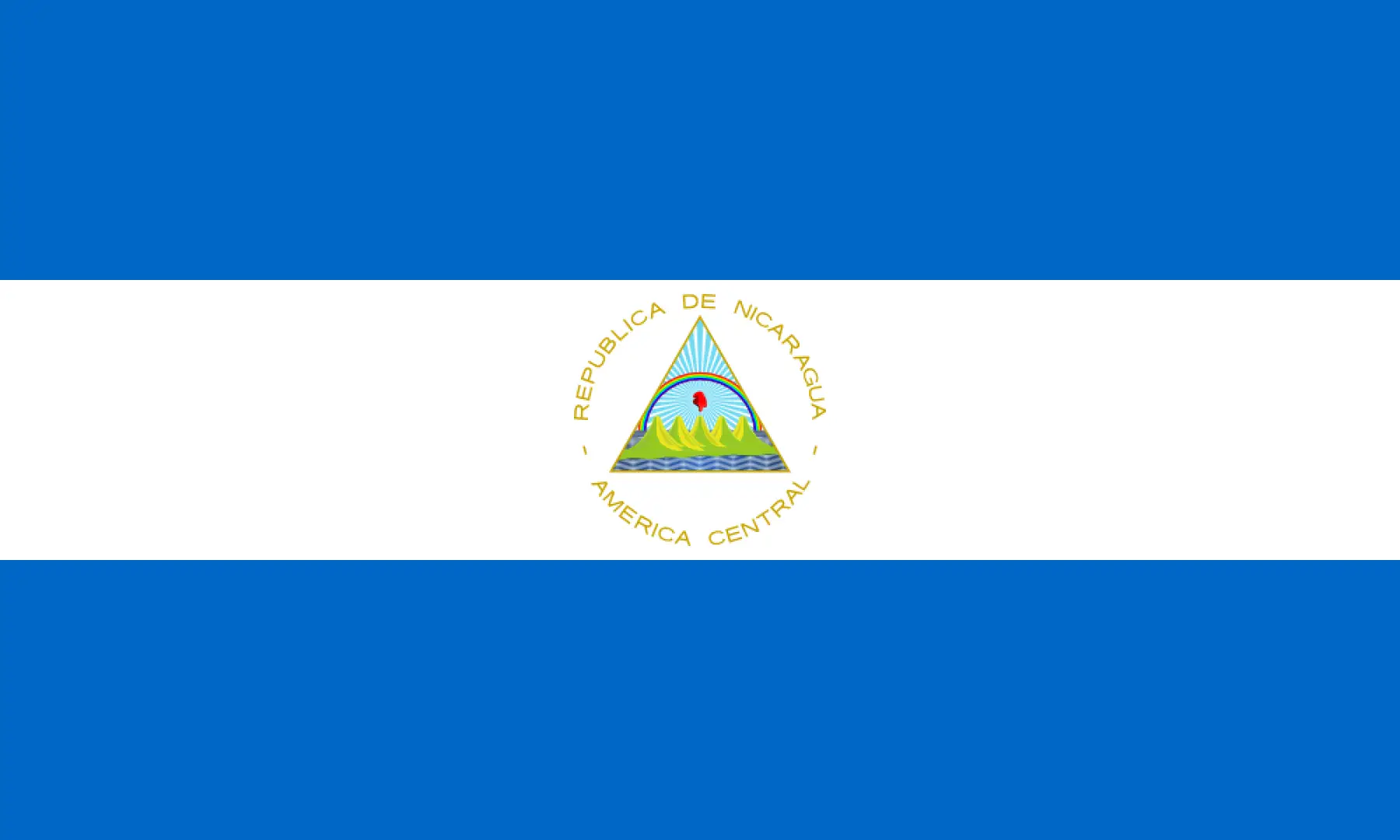
Official name: República de Nicaragua
Name of inhabitants: Nicaraguans
Bordering countries: Honduras - Costa Rica
Institutional website: https://www.presidencia.gob.ni