Panama
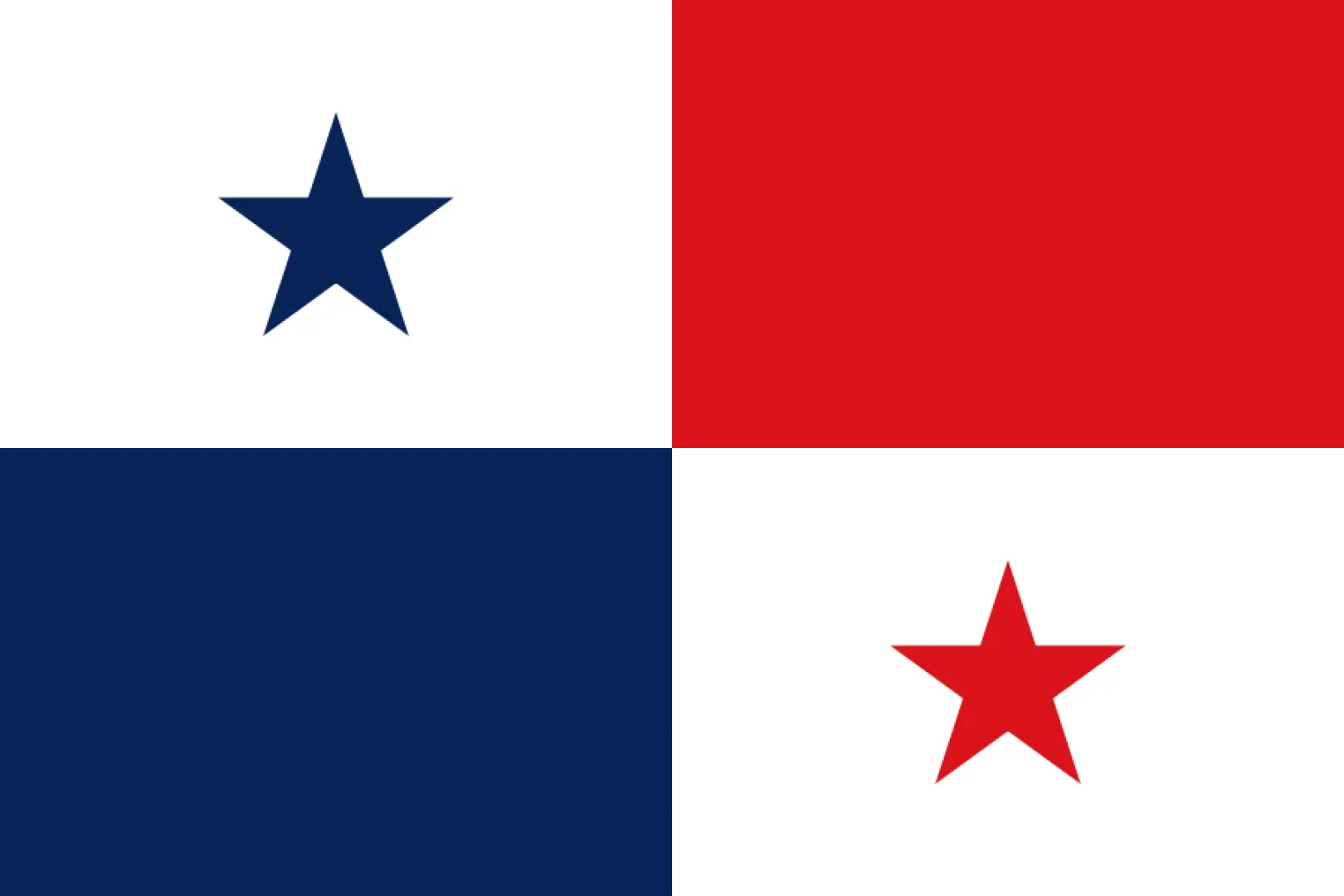

Edited by:
Massimo Martini
Access
Panama can be reached from Europe by air with direct or stop-over flights to Tocumen International Airport in Panama City. Copa Airlines has its main hub in Tocumen, from where it connects the whole of Latin America with high frequencies. By land from Costa Rica one enters Paso Canoas on the Pacific side and Sixaola-Guabito on the Caribbean side. The Carretera Panamericana crosses Panama from north to south but stops at Darién, where impenetrable jungle separates Central America from South America; there is no direct road connection with Colombia. The Transístmica connects Panama City with the Caribbean coast of Colón through 80 km of territory. The passenger rail network is limited to the Canal Line (Panama City-Colón, 77 km), with mainly tourist services. Transport in remote areas relies on small aircraft and river transport. Boquete, the departure base for Volcán Barú, can be reached in 5-6 hours by car from Panama City.
.Introduction
Panama occupies the southernmost tip of Central America, forming the continent's narrowest isthmus between the Caribbean Sea to the northeast and the Pacific Ocean to the southwest. It borders Costa Rica to the west and Colombia to the east; the border with the latter runs through the dense Darién forest, which is one of the wildest and most difficult parts of the entire American continent to cross. The Panama Canal, opened to traffic in 1914 and under Panamanian control since 1999, is the engineering work that has redefined the world trade geography, connecting the two oceans and reducing intercontinental shipping lanes by thousands of miles. The Volcán Barú (3,474m) in the province of Chiriquí is the highest point in the country; from its summit you can simultaneously see the Pacific and the Caribbean on a clear day. The country's extraordinary biodiversity - more than 10,000 plant species, 220 mammal species and 978 bird species - is protected by 13 national parks and numerous reserves.
Description
The Panamanian territory is organised around the isthmus that separates and connects the two oceans. The western part, around the province of Chiriquí, is the most mountainous: the Cordillera de Talamanca, a continuation of the Costa Rican chain, culminates in the Volcán Barú (3,474m), a quiescent stratovolcano with seven craters and the last documented eruption around 500 AD. The province of Chiriquí is known as the "Panamanian Switzerland" due to the temperate climate of its valleys (the average temperature in Boquete is 18°C), the high quality coffee plantations, the diversity of flora and fauna and the building habits of European settlements. The central part of the country comprises the Darién hills and the canal area, with the vast forest of the Parco Nacional Darién to the east. The Caribbean coast is flat and humid, with archipelagos such as Bocas del Toro and the islands of San Blas (or Guna Yala).
Panama was home to several pre-Columbian peoples - including the Guna (Kuna), Ngöbe-Buglé, Emberá and Wounaan - before the arrival of the Spanish. Vasco Núñez de Balboa was the first European to reach the Pacific across the isthmus in 1513. Panama City, founded in 1519, was the first European city on the American Pacific coast and became a crucial hub of colonial trade between the gold and silver of the Andes and Spain. The "old town" (Casco Viejo) has been a UNESCO World Heritage Site since 1997. After independence from Spanish rule in 1821, Panama joined Colombia as a province. The separation from Colombia, on 3 November 1903, took place with the support of the United States, which wanted to secure control of the future canal. Work on the canal, begun by the French under Ferdinand de Lesseps in 1881 and then taken over by the US, was completed in 1914. The Torrijos-Carter treaty of 1977 established the transfer of the Canal Zone to Panama, which was completed on 31 December 1999.
The Panamanian economy is the most robust in Central America, supported by the Canal, the international banking and financial sector, trade from the Colón Free Zone - the largest free zone in the world after Hong Kong - and tourism. The Canal generates around 20% of the national GDP. Panamanian cuisine reflects the mix of influences: corvina ceviche, sancocho (chicken stew with roots and herbs), patacones (fried plantain slices) and arroz con pollo are among the most popular dishes.
Panama is home to three sites on the UNESCO World Heritage List: the Bocas del Toro Archipelago and Parque Nacional Coiba (2005), the second largest island in the eastern Pacific with one of the richest coral reefs in the ocean; Parque Nacional Darién (1981), 5.790 km² of primary tropical forest on the Colombian border, considered one of Central America's most significant national parks in terms of biodiversity; and Panama City's Casco Viejo (1997). The La Amistad International Park, shared with Costa Rica and registered in 1983, also protects the Cordillera de Talamanca on the Panamanian side. The fauna includes the jaguar (Panthera onca), the puma (Puma concolor), Baird's tapir (Tapirus bairdii) the shining quetzal (Pharomachrus mocinno) - easily spotted along the Sendero Los Quetzales in Boquete - and the endemic and critically endangered Panama golden frog (Atelopus zeteki).
The hiking focuses mainly on the Volcán Barú area and the Cordillera de Chiriquí. The ascent to Barú (3,474m) is carried out from Boquete - the most popular route, around 16km round trip with 2,000m of altitude difference, which can be done in 6-10 hours - or from Volcán on the opposite side. The night ascent to the sunrise is the most popular variant: starting around midnight to reach the summit before sunrise, with the possibility of seeing both oceans on a clear day. The Sendero Los Quetzales is a 14 km trail through the cloud forest between Boquete and Cerro Punta at altitudes between 1,300m and 2,480m, with a high probability of spotting quetzals. The Darién National Park offers multi-day treks only with specialised guides and permits; the Darién jungle trek is considered one of the most challenging in Central America due to its plant density and isolation. The Bocas del Toro archipelago and the Soberanía National Park near the canal offer mid-mountain hikes in tropical forest settings.
Mountaineering in Panama focuses on the ascent to Barú; there are no reliefs with developed technical walls. The Sendero Los Quetzales is among the most popular high-altitude trekking routes in the country. Trail running is on the rise, with the Boquete Trail Adventure, a competition in various formats (21 km, 42 km, 60 km) in the Chiriquí mountains at around 1,200-2,000m altitude, which is the main event on the Panamanian scene and attracts international participants. The Chiriquí Trail Challenge offers routes around Barú with significant altitude differences.
Information
Capital city: Panama City
Area: 75.417 km²
Minimum elevation: 0m (Pacific and Caribbean Sea coasts)
Maximum elevation: 3,474m - Volcán Barú [to be verified: some sources indicate 3,475m or 3,478m; check with IGN Panama]
Number of inhabitants: 4,352.000 (2020 estimates)
Official name: República de Panamá
Name of inhabitants: Panamanians
Bordering countries: Costa Rica - Colombia [to be verified slug]
Institutional site: https://www.presidencia.gob.pa