Stelvio Park

Edited by:
Massimo Martini
Access
The Stelvio National Park can be reached from three main sides. From the western side of Lombardy, take the state road from Milan towards Lecco and Colico, continuing on the Stelvio road to Bormio (Alta Valtellina); alternatively, take the Milan-Venice motorway, exit Brescia Ovest, then the in Valle Camonica to Ponte di Legno, entering the Brescian section of the park (Ponte di Legno, Temù, Vezza d'Oglio, Vione). From the South Tyrolean side, take the Brennero motorway and exit at Bolzano Sud, continuing on the road through the Venosta Valley to Malles Venosta; the side valleys of the park (Martello, Trafoi, Val d'Ultimo) can be reached via provincial roads. From the Trentino side, exit the at Mezzocorona-San Michele all'Adige, take the towards Cles and continue on the towards the Passo del Tonale, accessing the Rabbi and Peio valleys. The head office of the Lombardy Park Authority is located in Bormio (SO), via De Simoni 42; the South Tyrol committee is based in Glorenza (BZ); the Trentino committee in Cogolo di Peio (TN). The railway connection for the Lombardy side is the Milan-Sondrio-Tirano line (Trenord), then buses to Bormio and the valleys of Alta Valtellina; for the South Tyrol side, the Bolzano-Merano-Malles lines are used with provincial buses. The main airports are Milan Malpensa and Milan Linate for the Lombardy sector, Innsbruck and Verona for the South Tyrol and Trentino sector. The Stelvio Pass (2,757m) is accessible by car from the end of May to the beginning of November, a season that regulates direct access between Bormio and Val Venosta.
Introduction
The Stelvio National Park is one of Italy's oldest natural parks, established by law no. 740 of 24 April 1935, published in the Gazzetta Ufficiale no. 129 of 3 June 1935, with the aim of protecting the flora, fauna and landscape of the Ortles-Cevedale mountain massif. It extends in the heart of the Central Alps over an area of 130,734 hectares, in the provinces of Sondrio and Brescia for Lombardy, in the provinces of Bolzano and Trento for Trentino-Alto Adige, comprising twenty-four municipalities. Seventy-five per cent of the territory lies above an altitude of 2,000m, with an exceptional difference in altitude from 650m on the valley floor to 3,905m at the summit of the Ortles, the highest peak in Trentino-Alto Adige. The park is bordered to the north by the Swiss National Park Engadine, to the south by the Adamello-Brenta Nature Park and the Adamello Regional Park: the combination of these protected areas forms a continuum of almost 400,000 hectares in the heart of the Alps, one of the largest protected macro-areas in Europe. The governance of the park is unique among Italian national parks: it is administered by a consortium formed by the Ministry of the Environment, the Lombardy Region and the Autonomous Provinces of Trento and Bolzano, with three operational sectoral management committees.
.Description
The geographical heart of the park is the Ortles-Cevedale massif, which encompasses some of the highest peaks in the eastern Alps: the Ortles (3,905m) is the highest peak, followed by the Gran Zebrù (3,857m), Cevedale (3,769m) and Punta Thurwieser (3,652m). The main ridge, which runs along the border between Lombardy and Trentino-Alto Adige, gives rise to the Stelvio Pass (2,757m) - the second highest paved pass in the Alps, a historic link between Bormio and the Venosta Valley. The road that reaches it, built between 1818 and 1825 to a design by engineer Carlo Donegani at the behest of Emperor Franz II of Habsburg, runs through 88 hairpin bends (48 on the South Tyrolean side, 40 on the Lombardy side) over a difference in altitude of about 1,900 metres. Numerous side valleys branch off from the slopes of the massif, each with its own character: the long Val Martello with its head dominated by Cevedale, the green and water-rich Val d'Ultimo, the Trafoi valley overlooked by the Ortles, the Val Zebrù famous for its ibex and deer populations, the Valle di Rabbi and Valle di Peio on the Trentino side with their mineral and healing waters. On the Lombardy side, Valfurva is home to the Forni Glacier - the largest alpine valley glacier in Italy - which is one of the most significant glacial masses in the Alps and a fundamental indicator of climate change.
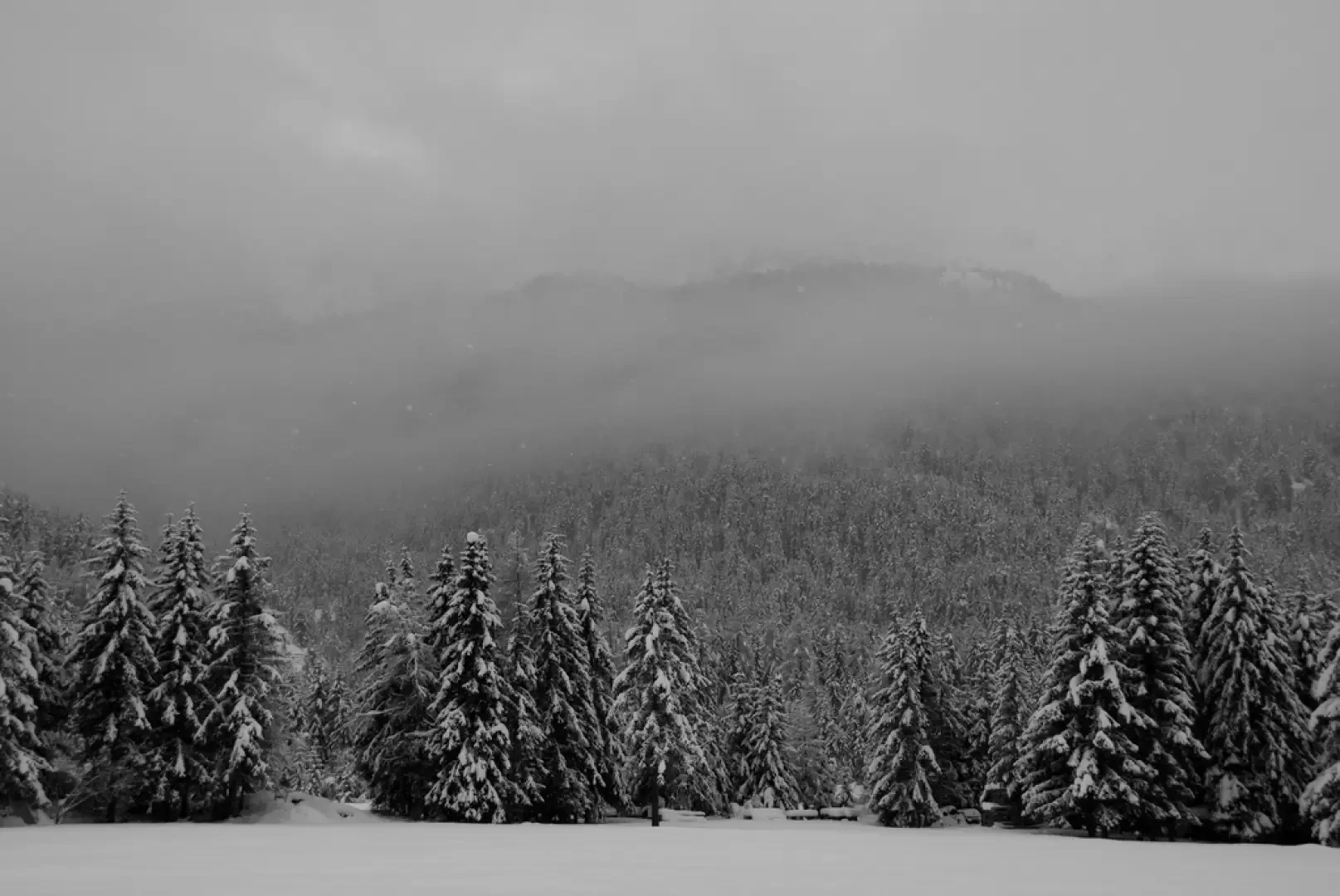
The vegetation is divided into distinct altitudinal bands. The most protected valley bottoms (in particular the Vinschgau) present xerothermal conditions with steppe vegetation; As one ascends, spruce (Picea abies), larch (Larix decidua), silver fir (Abies alba) and stone pine (Pinus cembra) forests appear - the stone pine, the symbolic species of the Alps, forms the characteristic "cembreti" up to the edge of the forest. Above the forest is the alpine meadow, rich in rare species such as edelweiss (Leontopodium alpinum), gentians, saxifrage and numerous bluebells. Above 2,500 to 2,700 metres, the vegetation becomes increasingly sparse, with the pioneer communities of the screes and windy ridges, up to the perennial glaciers that cover large areas of the massif. The total flora exceeds 2,000 vascular species. In the Vinschgau Valley, where precipitation is scarce, ancient irrigation channels known as "Waale" bring meltwater from the glaciers to the cultivated terraces, in a centuries-old agricultural practice. Alpine pastures and mountain farms - at altitudes of up to 2,000m - characterise the park's man-made landscape.
The fauna includes over 260 species of vertebrates and represents one of the most intact Alpine ecosystems in Italy. The park's "Big 5" species - ibex (Capra ibex), chamois (Rupicapra rupicapra), red deer (Cervus elaphus), golden eagle (Aquila chrysaetos) and bearded vulture (Gypaetus barbatus) - are the iconic species. The ibex, which became extinct in Lombardy in the 19th century, was reintroduced in 1967 in Val Zebrù with the release of 29 animals and now numbers several hundred. The bearded vulture - the largest bird of prey in Europe, with a wingspan of up to 2.8m - had become extinct in the Alps at the beginning of the 20th century due to human persecution: the coordinated reintroduction project, launched in the Alps in the 1980s, brought this species back to nest in the park, with a stable pair in Val Zebrù. The golden eagle (Aquila chrysaetos) nests in several pairs in the area. Alpine galliformes are represented by all the Italian species: ptarmigan (Lagopus muta), rock partridge (Alectoris graeca), capercaillie (Tetrao urogallus), black grouse (Lyrurus tetrix) and black grouse (Tetrastes bonasia). Mammals also include marmot (Marmota marmota), white hare (Lepus timidus), ermine (Mustela erminea) and, with occasional sightings from the nearby Adamello-Brenta Park, brown bear (Ursus arctos), lynx (Lynx lynx) and wolf (Canis lupus italicus).
The park territory preserves numerous stratified historical and cultural testimonies. The Cadorna Line - a defence system built by Italy in the First World War along the Alpine ridges - crosses the Trentino sector with trenches, tunnels and emplacements that are still visible. The alpine pastures and traditional dairies keep alive the forms of alpine farming in Valtellina and Val Venosta. The thermal baths of Bormio, already known to the Romans and widely frequented in the Middle Ages, constitute one of the oldest high mountain bathing traditions in Italy. The Stelvio Pass is one of the most celebrated climbs of the Giro d'Italia: its conquest was the scene of some of the most memorable feats in cycling history. The Alta Via dell'Ortles - a 119km loop route in seven stages between Valtellina and Val Venosta - is the main hiking route in the park; the Giro del Confinale offers a two-to-four-day alternative in the Lombardy sector.
Information
General Data
Typology: National Park
Institution year: 1935 (Law no. 740 of 24 April 1935; G.U. no. 129 of 3 June 1935); enlargement: Presidential Decree 23 April 1977; new perimeter: Presidential Decree 7 July 2006; Consortium: Presidential Decree 26 November 1993
Managing body: Stelvio National Park Consortium (Ministry of the Environment + Lombardy Region + Autonomous Provinces of Trento and Bolzano)
Reference body: Ministry of the Environment and Energy Security
Area: 1.307.34 km²
Minimum elevation: ~650m
Maximum elevation: 3,905m
Maximum elevation: 3,905m - Ortles / Ortler (Stilfs / Stelvio BZ)
Region(s): Lombardy - Trentino-Alto Adige
Provinces: Bolzano - Brescia - Sondrio - Trento
Municipalities involved - Lombardy, Province of Brescia (BS): Ponte di Legno - Temù - Vezza d'Oglio - Vione
Municipalities concerned - Lombardy, Province of Sondrio (SO): Bormio - Livigno - Sondalo - Valdidentro - Valdisotto - Valfurva
Municipalities concerned - Trentino-Alto Adige, Province of Bolzano (BZ): Glorenza (Glurns) - Laces (Latsch) - Lasa (Laas) - Malles Venosta (Mals) - Martello (Martell) - Prato allo Stelvio (Prad am Stilfser Joch) - Silandro (Schlanders) - Stelvio (Stilfs) - Tubre (Taufers im Münstertal) - Ultimo (Ulten)
Municipalities concerned - Trentino-Alto Adige, Province of Trento (TN): Peio - Pellizzano - Rabbi - [24th municipality to be checked on MASE]
Official website: https://www.stelviopark.it