
Edited by:
redazione
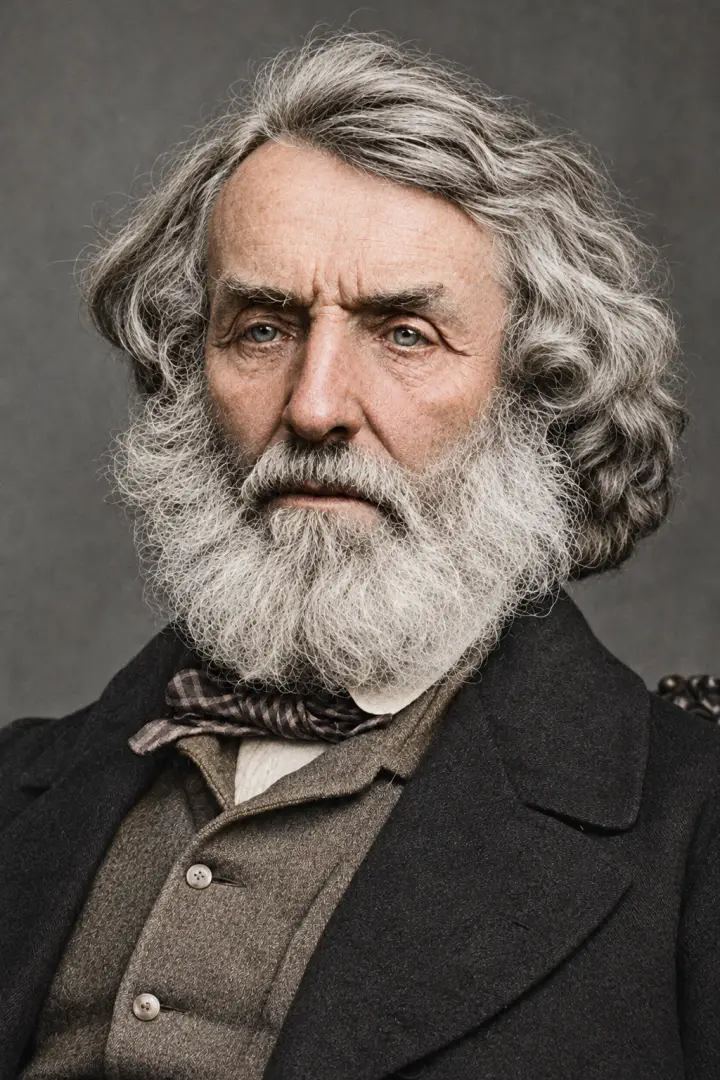
British surveyor and cartographer, Surveyor General of India from 1830 to 1843.
Personal details
Name: Sir George Everest
Date of birth: 4 July 1790 – place unknown (Greenwich or Gwernvale, near Crickhowell)
Died: 1 December 1866 – London
Nationality: British
Occupation: surveyor, cartographer and officer in the service of the East India Company
Memberships: Royal Society (from 1827), Royal Asiatic Society, Royal Geographical Society
Biography
George Everest was born on 4 July 1790. The place of birth is uncertain: the Oxford Dictionary of National Biography cites Greenwich, then in Kent, whilst the Welsh Academy Encyclopaedia of Wales cites Crickhowell, in Brecknockshire, where his father, William Tristram Everest, a lawyer, owned the estate of Gwernvale. The baptism certificate, issued at St Alfege’s, Greenwich, on 27 January 1791, states the date of birth but not the place. He studied at the Royal Military College in Marlow and for one year at the Royal Military Academy in Woolwich. In 1806, before reaching the required age of sixteen, he joined the East India Company as a cadet and, in the same year, set off for India with the rank of second lieutenant in the Bengal Artillery.
Following a posting to Java, entrusted to him around 1814 by Stamford Raffles, and after working on the rivers of Bengal and on a line of semaphore stations between Calcutta and Benares, in 1818 he joined William Lambton, director of the Great Trigonometrical Survey, in Hyderabad, and became his principal assistant. In 1820 he contracted malaria and convalesced at the Cape of Good Hope, before returning to India in 1821. On Lambton’s death in 1823, he succeeded him as superintendent of the Survey. In 1825, an attack of fever and rheumatism left him partially paralysed and forced him to return to England, where he remained for five years: in March 1827, he was elected a Fellow of the Royal Society; he requested instruments designed by himself from the Company and secured the extension of the meridian arc towards the Himalayas.
In June 1830, he returned to India and was also appointed Surveyor General of India. Under his leadership, the Survey adopted the most accurate surveying instruments available at the time. The meridian arc from Cape Comorin to the northern border of British India, approximately 2,400 km long, was commenced in 1806 and completed in 1841 under the supervision of Andrew Scott Waugh. Fieldwork was marred by illness: in 1835, malaria confined him to bed for six months, and a medical-historical study published in theIndian Journal of History of Science hypothesises, on the basis of archival sources, a combination of malaria, typhoid, hepatitis and Kyasanur Forest Disease, aggravated by chronic mercury poisoning, as he had been prescribed high doses of mercury as a treatment. These are retrospective diagnoses, not corroborated by contemporary sources. His years as Surveyor General were also occupied by administrative duties and criticism from London: in 1837, following a fresh bout of Everest’s illness, the Company provisionally appointed Thomas Jervis as his successor, who subsequently delivered a series of lectures at the Royal Society on the limitations of Everest’s methods. Everest responded with open letters to the Society’s president, the Duke of Sussex, and secured Waugh’s appointment as his successor. He resigned in November 1842; his commission was revoked in December 1843, and he returned to England. In 1846, he married Emma Wing, aged 23, in London; they had six children, two of whom died in infancy. In 1847, the Royal Astronomical Society awarded him its medal; he was subsequently elected a member of the Royal Asiatic Society and the Royal Geographical Society; in 1854 he was promoted to colonel and in 1861 he was created a Knight Bachelor.
Everest never saw the mountain that bears his name, nor did he determine its height. Waugh carried out the first formal observations of Peak XV, originally designated as Peak B, and Radhanath Sikdar, a mathematician with the Survey, calculated its elevation; Sikdar’s precise role in the identification is a matter of debate. According to the most widely accepted account, his calculations identified the peak as the highest as early as 1852, but the announcement was made in 1856, following repeated verifications. In March 1856, Waugh wrote to the Royal Geographical Society and proposed naming the peak after Everest, as he was unaware of any local name for it: Tibetan and Nepali names did in fact exist, but access to those territories was barred to the British. Everest objected in 1857: his surname, he argued, could not be written in Hindi nor pronounced in India. The debate continued for almost a decade, with alternative proposals such as ‘Deva-dhunga’, suggested by Brian Houghton Hodgson, and ‘Gaurisankar’, suggested by Hermann Schlagintweit, and in 1865 the Royal Geographical Society officially adopted the name Mount Everest.
He died in London on 1 December 1866 and was buried on 8 December at St Andrew’s Old Church in Hove, near Brighton, in the same grave as two of his sons who had died in infancy. Local sources do not indicate any connection between the family and Hove, nor the reason for this choice.
Places and names
peak Everest (8,849 m) - Himalayas, on the border between Nepal and China – name adopted in 1865 for Peak XV
home and laboratory Sir George Everest’s House and Laboratory (Park Estate) – Mussoorie, Uttarakhand, India – built in 1832, inhabited by Everest for around eleven years, opened as a museum in December 2021 following restoration
Works
An Account of the Measurement of Two Sections of the Meridional Arc of India, 1847
Bibliography
As a writer
no study dedicated to his written output has been found
As a key reference
James R. Smith, Sir George Everest, F.R.S. (1790–1866), *Notes and Records of the Royal Society of London*, 1992
James R. Smith, *Everest: The Man and the Mountain*, Caithness, Whittles Publishing, 1999
John Keay, The Great Arc, London, HarperCollins, 2001
S. Mishra and B. Trikamji, The medical maladies of Sir George Everest during the Great Trigonometric Survey of India, Indian Journal of History of Science, vol. 49, no. 1