
Edited by:
redazione
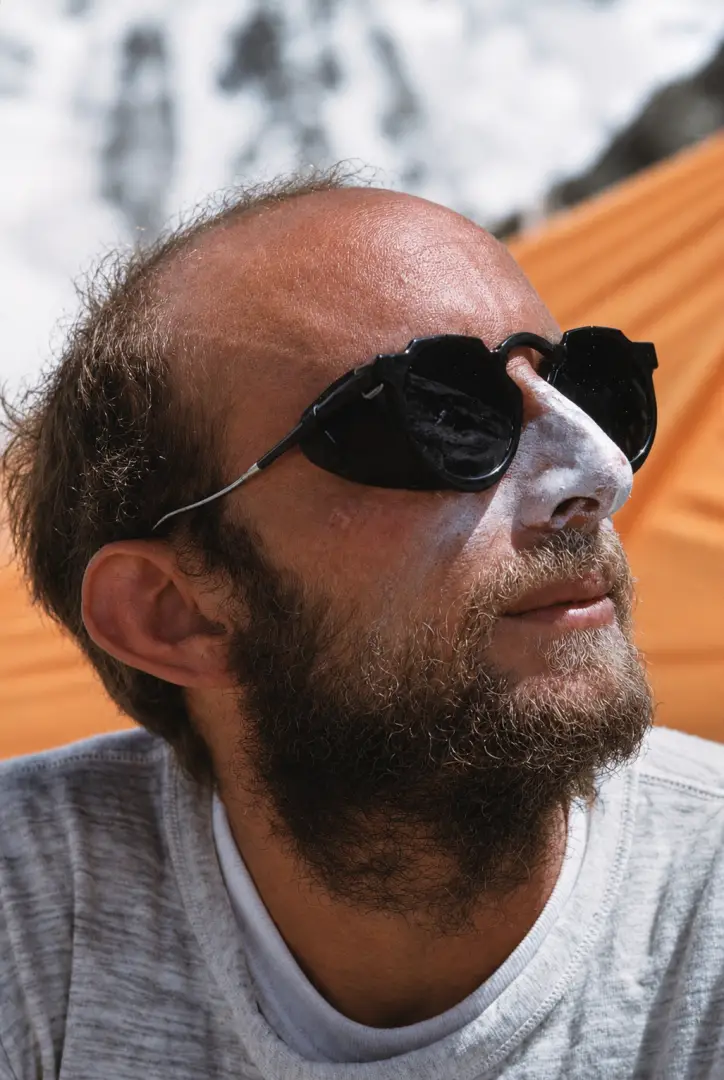
An American mountaineer and anaesthetist, he completed the first traverse of Everest with Willi Unsoeld in 1963.
Personal details
Name: Thomas Frederic Hornbein
Date of birth: 6 November 1930 – St Louis, Missouri, United States
Died: 6 May 2023 – Estes Park, Colorado, United States
Nationality: American
Occupation: mountaineer, anaesthetist and physiologist
Biography
Thomas Hornbein grew up in St. Louis, a city without mountains, and as a child he used to climb trees and the roofs of houses. At the age of thirteen, his parents sent him to a summer camp in Colorado: he later described this as the most important event of his life, the one that shaped every subsequent choice he made. He enrolled at the University of Colorado in Boulder, where he studied geology and climbed whenever his lectures allowed. He then went on to study medicine at Washington University in St Louis, without giving up mountaineering.
Medicine and mountaineering soon became intertwined. During his specialisation in anaesthesiology, he worked with Albert Roos on the study of respiratory physiology, and this interest remained with him throughout his professional life: from 1963, he taught anaesthesiology at theUniversity of Washington in Seattle, where he headed the department for many years, and researched the effects of oxygen deprivation on the body, including the central nervous system.
He joined Willi Unsoeld on the expedition to Masherbrum and then on the American expedition to Everest. On the expedition led by Norman Dyhrenfurth, which aimed to take an American rope team to the summit via the South Col route that had already been climbed, Hornbein and Unsoeld proposed attempting a new route up the West Ridge. Resources were initially allocated to the established route, and only after that had been successfully completed did the West Ridge party set off.
Regarding the night spent outdoors at high altitude after reaching the summit, Hornbein attributed his survival to the absence of wind: had there been wind, he said, he would not have made it back to tell the tale. He later recounted the expedition in a book.
After retiring, he returned to Colorado and settled in Estes Park, within sight of Longs Peak, the mountain on which he had first started climbing almost seventy years earlier. He died there at the age of 92.
Mountaineering achievements
Masherbrum (7,821 m) - 1960 – US-Pakistani expedition to the Karakoram, as a doctor and mountaineer; the summit was reached on 6 July by George Bell and Willi Unsoeld and on 8 July by Nick Clinch and Jawed Akhter, Hornbein did not reach the summit
Everest (8,849 m) - 22 May 1963 – new route via the West Ridge and the couloir on the North Face, later named the Hornbein Couloir, with Willi Unsoeld; descent via the South Col route, the first traverse of the mountain; open-air bivouac at high altitude with Barry Bishop and Lute Jerstad
Places and names
Hornbein Couloir – north face ofEverest – named after Tom Hornbein
Works
Everest: The West Ridge, San Francisco, Sierra Club, 1965
Bibliography
As an author not applicable: no critical studies of his written work found
As a significant reference
James Ramsey Ullman, Americans on Everest, J. B. Lippincott, 1963
Robert Schoene, Thomas F. Hornbein, 1930–2023, American Alpine Journal, 2024