China
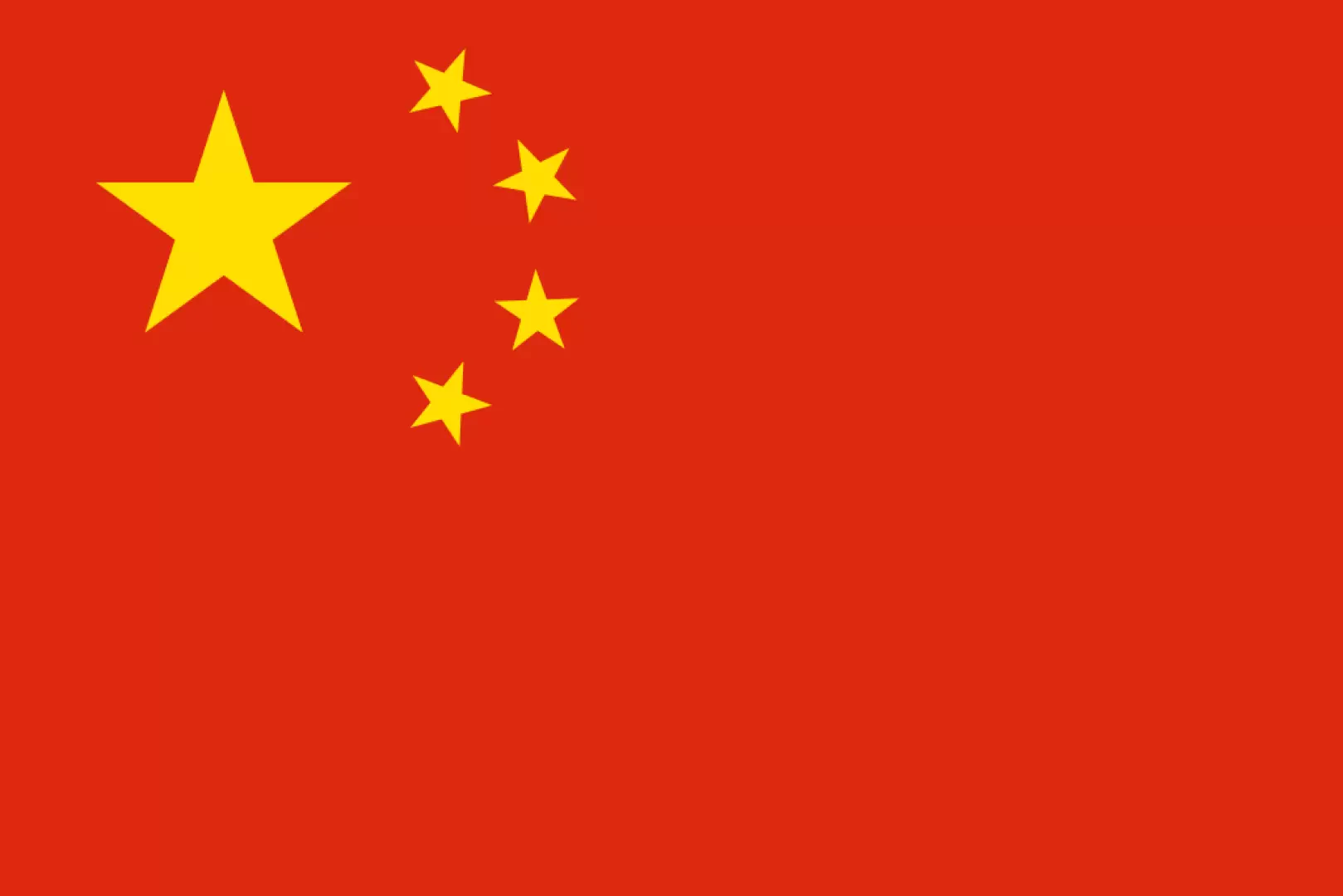

Edited by:
Massimo Martini
Access
China can be reached from Italy and Europe exclusively by air for long-distance flows, while land corridors with neighbouring countries mainly serve regional traffic. The main international airport is Peking Capital International Airport, flanked by the newer Peking-Daxing International Airport; Shanghai has Pudong and Hongqiao airports, while Guangzhou, Chengdu, Shenzhen, Kunming and Xi'an are further major hubs with intercontinental connections. From western China, the airports of Urumqi (Xinjiang) and Lhasa (Tibet) serve the access regions to the great mountain ranges, with domestic flights from Beijing and Shanghai. China's railway network is among the most extensive and developed in the world: the China Railway (中国铁路 - China Railway) operates a high-speed network that connects major cities via Fuxing and CRH series high-speed trains, with short distances. The long-distance trains also reach Kashgar, in Xinjiang, and Lhasa, in Tibet, via the Qinghai-Tibet railway, which runs above an altitude of 4,000 metres. The road system is developed in the eastern and central areas, with highways connecting the main provinces, while the western regions - Tibet, Xinjiang, Qinghai - have routes on secondary roads that are often subject to seasonal closures due to snow and weather conditions. Access to Tibet requires a specific permit (Tibet Travel Permit) for foreign visitors, with limitations on accessible areas and visiting periods.
Introduction
China occupies the eastern and north-central portion of the Asian continent, stretching almost 9.7 million square kilometres between the steppe regions of Mongolia and the Pacific Seas, between the Gobi Desert and the tropical forests of Yunnan. The country is bordered by fourteen states - the highest number in the world - and has a morphological variety ranging from the densely populated alluvial plains of the east to the Himalayan highlands of the southwest and the desert basins of the northwest. The Blue River (Chang Jiang) and the Yellow River (Huang He) define the two great areas of agricultural civilisation on which one of the oldest and most continuous cultures on the planet has developed. The mountain system of the south-west, where the Himalayas, Karakorum, Pamir, Tian Shan and Kunlun converge and articulate, is home to some of the highest peaks on Earth, including the'Everest and the K2. Ethnic multiplicity - 56 recognised nationalities - and profound regional differences make the country a mosaic of distinct linguistic, religious and cultural traditions, unified by a centralised administration.
.Description
Chinese morphology is structured as a series of terraces sloping down from west to east: the highest level is the Qinghai-Tibet Plateau, the so-called "roof of the world" with an average altitude of more than 4,000 metres, home to the sources of great Asian rivers such as the Indus, Ganges, Mekong and Yangtze. To the north-west lie the Tarim and Dzungaria basins, separated by the Tian Shan range, and the depressions of Xinjiang, among which the Turfan Depression, with Lake Ayding at -154 metres, is the lowest point in the country and one of the lowest in Asia. The eastern plains - North China Plain, Lower Yangtze Plain - are the areas of highest population density and most intense agriculture, shaped over millennia by the flooding of the Yellow and Blue Rivers. The southern mountain system includes, in addition to the Himalayas and the Karakorum, the Hengduan Shan ranges in Yunnan and Sichuan, which are home to some of the world's deepest river canyons and exceptional biodiversity.
Chinese civilisation developed in the Yellow River plains in the 3rd millennium BC; the first historically documented dynasty is that of the Shang, around the 17th century BC. The subsequent alternation of dynasties - Zhou, Qin, Han, Tang, Song, Ming, Qing - produced a body of material culture, literature, philosophy and technology of extraordinary complexity and continuity. The Great Wall, whose main sections date back to the Qin and Ming dynasties, is the most extensive defensive work ever built by man. The Forbidden City of Beijing, the centre of imperial power for almost five centuries, and the Terracotta Warriors of Xi'an, dating back to the 3rd century BC, are among the world's most important cultural heritages. The philosophical tradition - Confucianism, Taoism, Buddhism in its Chinese variants - has permeated institutions and daily life for millennia. In the 20th century, the revolution of 1949 led to the founding of the People's Republic of China, initiating a radical transformation of the political, economic and social system that culminated, from the 1980s, in a process of economic opening up that has made the country the world's second economic power.
The Chinese economy is based on a combination of state planning and the market: the manufacturing sector is the most developed in the world in terms of volume, with production ranging from electronics to steel, from textiles to the automobile industry. Agriculture remains fundamental, with the cultivation of rice, wheat, maize and soya in the fertile plains; the country is among the world's leading producers of tea, silk and porcelain. The regional gastronomy is among the most diverse in the world: Cantonese cuisine, Sichuan cuisine with its spicy flavours, Beijing cuisine with its lacquered duck, and Xinjiang cuisine with its Central Asian influence are expressions of a layered culinary heritage that varies profoundly from region to region.
China's protected areas include more than 2,700 nature reserves covering about 15% of its territory. The Jiuzhaigou National Park in Sichuan, inscribed by UNESCO in 1992, protects a sequence of glacial lakes of extraordinary colours in a landscape of mixed forests and mountains. The Wolong Nature Reserve and adjoining areas in Sichuan form the core of the conservation of the giant panda (Ailuropoda melanoleuca), a symbol of China's endemic fauna. The Shennongjia Reserve in Hubei protects a temperate primary forest of great floristic value. In Yunnan, the Yunnan Rhinopithecus Protection Zone (Rhinopithecus bieti) protects one of the rarest monkeys on the planet. The UNESCO sites in China are among the most numerous in the world, including, in addition to Jiuzhaigou, the Wulingyuan in Hunan, the Huanglong Landscape, the Zhangjiajie National Park - formed by quartzite sandstone pillars that have inspired the iconographic representations of numerous film productions - and, in the Himalayan sphere, the areas on the Tibetan side of the mountain system shared with Nepal and India.
Mountaineering in China takes place in some of the most diverse morphological contexts in the world. The northern slopes of the Himalayas and the valleys of Tibet offer high altitude treks near the expedition bases of Everest, Cho Oyu and Shishapangma, accessible from Lhasa and Shigatse. In south-western China, the Tiger's Leap Gorge route in Yunnan, along the Jinsha River, is one of the most popular routes for international hikers. Sichuan hosts routes in the Siguniang (Four Sisters) massif, with peaks exceeding 6,200 metres, and in the areas around the Wolong Reserve. The Xinjiang regions, with the Tian Shan range and the Chinese Pamir mountains, offer trekking in extensive steppe and glacial environments. Access to many areas requires specific permits, particularly in Tibet and Xinjiang.
China's mountaineering history is inseparable from that of the great mountain ranges that occupy its south-western territory. Everest (8,848.86m), on the Sino-Nepalese border, was climbed from the Tibetan route for the first time in 1960 by a Chinese expedition (Wang Fuzhou, Gonpo and Qu Yinhua), just a few years after the first ascent from the Nepalese route in 1953. The K2 (8,611m), on the Pakistan border in the Karakoram, was first climbed in 1954 by the Italian expedition led by Ardito Desio, with Achille Compagnoni and Lino Lacedelli on the summit. The Chinese Karakorum is also home to Gasherbrum I, Gasherbrum II and Broad Peak. In Xinjiang, the Kongur Range (7,649m) and Muztagh Ata (7,546m) in the Chinese Pamirs were climbed during the 20th century by British and Chinese expeditions. Mountaineering in Tibet lives under regulatory restrictions that limit foreign expeditions, with access windows regulated annually by the authorities.
Trail running in China has developed rapidly in recent years, with the emergence of a national circuit and the spread of international events. The Transgrancanaria China, the Skyrunner China Series and numerous local races take place in the alpine settings of Yunnan, Sichuan and Guizhou. One of the most internationally renowned events is the Lavaredo Ultra Trail China in Yunnan. In Xinjiang, the Tian Shan Skyrace, a high altitude race near Urumqi, took place. The Leap of the Tiger Trail in Yunnan, with trails following the Jinsha Jiang canyon, is among the most scenic races in southern China.
Information
General Data
Capital: Beijing
Area: 9,706,961 km²
Minimum elevation: -154m (Lake Ayding, Turfan Depression, Xinjiang)
Maximum elevation: 8,848.86m - Everest
Number of inhabitants: 1.401,586,000 (as of 2020)
Official name: 中华人民共和国 - Zhōnghuá Rénmín Gònghéguó
Name of inhabitants: Chinese
Provinces: 22 - Autonomous regions: 5 - Municipalities: 4 - Special administrative regions: 2
Border countries: Afghanistan - Bhutan - North Korea - India - Kazakhstan - Kyrgyzstan - Laos - Mongolia - Myanmar - Nepal - Pakistan - Russia - Tajikistan - Vietnam
Institutional site: https://www.gov.cn