Villeneuve

Edited by:
redazione
Access
Villeneuve can be reached from the motorway at the Aosta East exit, continuing west along the Valle d'Aosta state road , which crosses the Dora Baltea valley floor and directly serves the town. The provincial road connects the municipal capital with the hamlets and side valleys of Rhêmes and Valsavarenche. The nearest railway service is from Aosta station, served by Trenitalia (TI) on the Turin-Aosta line; from Aosta there are bus connections to Villeneuve. The seasonal closure of access roads to the side valleys - in particular to Rhêmes-Notre-Dame and Valsavarenche - is to be verified year by year, as it depends on snow conditions.
.Introduction
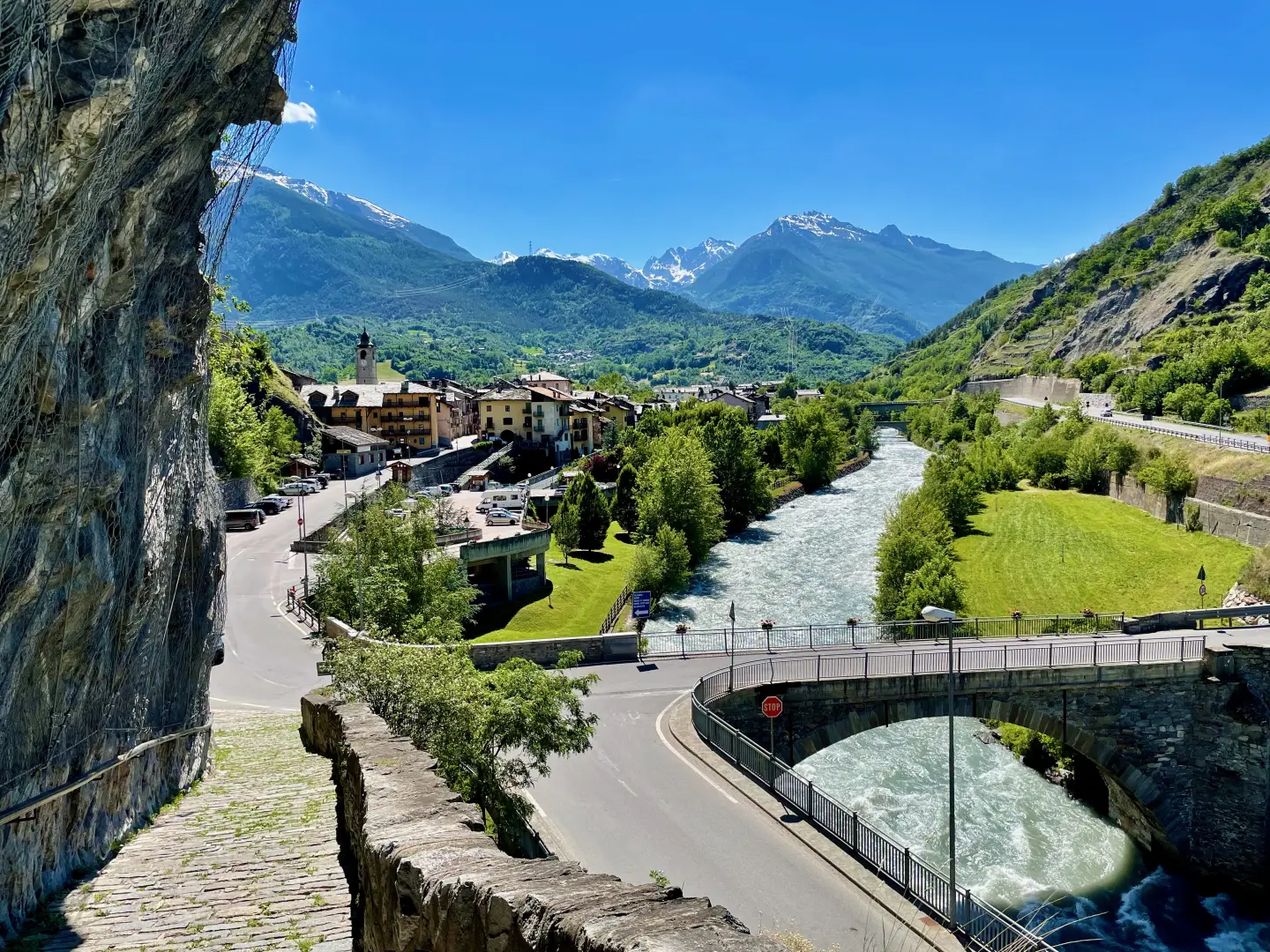
Villeneuve is located in the middle Valle d'Aosta, along the valley floor of the Dora Baltea, a few kilometres west of the regional capital. The municipal territory extends on both sides of the valley, from the floodplain areas of the valley floor to the higher altitudes towards the lateral valleys of Rhêmes and Valsavarenche, which are also access points to the Gran Paradiso National Park. The name, which refers to the Latin expression villa nova, is recurrent in Valdostan toponymy and reflects the frequent reconstruction of settlements on the valley floor, historically exposed to the floods of the Dora Baltea river. Human presence in the area is attested at least as far back as the Eneolithic period, as documented by the grave finds brought to light in the early 20th century. However, the municipality owes its historical importance to the castle of Châtel-Argent, built in the 13th century on a rocky spur dominating the entire plain, the fulcrum for centuries of a seigniorial power that controlled the transits between the Petit St Bernard and Aosta.
.Description
The territory of Villeneuve occupies a nodal position in the valley system of the Valle d'Aosta: the valley floor of the Dora Baltea reaches a width that historically allowed for stable agricultural settlement, while the northern and southern slopes rise rapidly towards the ridges that separate the valley floor from the side valleys. The Dora Baltea flows with a marked torrential regime, with rapids characterising its profile in this segment. The valley floor alternates between floodplain areas and valley floor cultivation, with sunny slopes planted with vines in the most favourable exposures.
Eneolithic finds documented in 1917 during work on a hydroelectric power station - twenty-five tombs with grave goods - attest to the site being frequented over four thousand years ago. The most significant leap in local history, however, took place in the 13th century, with the construction of the Castle of Châtel-Argent on a spur rising on the northern edge of the valley floor. The fortress was the seat of justice and control of Alpine transits, equipped with its own mint; the keep, still preserved, imposes itself on the landscape as the most recognisable architectural sign of the commune. Between the end of the 18th century and the course of the 19th century, the decline of the military function and the growth of the manufacturing economy led to the opening of a foundry that processed iron extracted from the mines of Cogne, setting up an industrial activity in the municipality that was then abandoned in the 20th century.
The contemporary economy is divided between dairy production, hillside viticulture and outdoor tourism. The conformation of the river, with particularly pronounced rapid stretches in this segment, has favoured the development of live water activities - rafting, kayaking, hydrospeed - that have consolidated the municipality as a reference point for this type of sports enjoyment. In terms of nature, the municipal territory is connected to the west with the borders of the National Park of Gran Paradiso, of which the valleys of Rhêmes and Valsavarenche constitute internal sectors. The network of footpaths branching off from the chief town and the hamlets makes it possible to reach the mountain pastures and the lateral valleys, with a hiking offer aimed at both families and more experienced hikers heading for the heights of Gran Paradiso.
Information
General Data
Area: 8.80 km²
Main town elevation: 670m
Maximum elevation: 2,267m - Becca slopes
Name in dialect: Veullanoua
Name of inhabitants: [to be completed: check official Italian demographic]
Patron Saint: St. Blaise (3 February)
Neighbouring municipalities: Arvier - Aymavilles - Introd - Saint-Nicolas - Saint-Pierre - Valsavarenche
Province of affiliation: Valle d'Aosta
Region of affiliation: Valle d'Aosta
Nationality: Italy
Institutional site: https://www.comune.villeneuve.ao.en